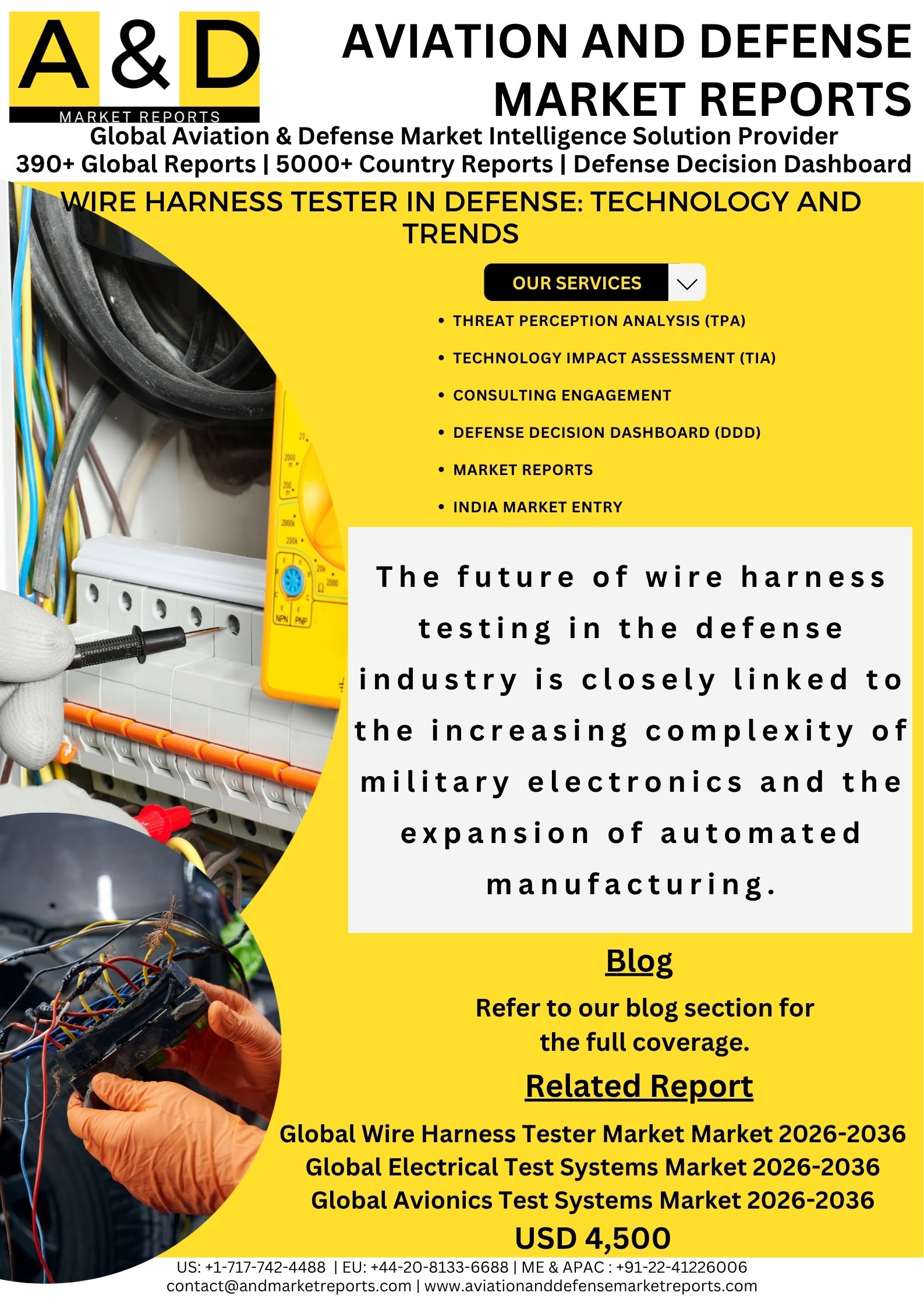
A wire harness tester is an essential electrical testing system used to verify the connectivity, integrity and performance of wiring harnesses in military and defense equipment. Wiring harnesses consist of interconnected wires, cables, connectors, terminals and protective components that transmit electrical power and signals between different subsystems. They are widely used in fighter aircraft, helicopters, military vehicles, naval vessels, radar systems, missile platforms, communication equipment and unmanned systems.
In the defense industry, electrical reliability is critical because wiring faults can affect mission execution, navigation, communication, weapon control and platform safety. Wire harness testers help manufacturers identify open circuits, short circuits, incorrect connections, wiring reversals and other assembly defects before equipment is integrated into operational platforms.
Modern testing solutions range from basic continuity testers to automated systems capable of performing insulation resistance, high-voltage withstand, connector mapping and advanced electrical diagnostics. As defense platforms become more sophisticated and incorporate increasing numbers of electronic subsystems, the demand for accurate and automated wire harness testing is gaining importance across the defense manufacturing ecosystem.
Evolution of Wire Harness Tester
Wire harness testing has evolved alongside advances in military electronics and electrical manufacturing. Early testing methods relied heavily on manual inspection, basic multimeters and simple continuity checks. Although these techniques were useful for identifying straightforward wiring errors, they required considerable operator involvement and offered limited diagnostic capabilities for complex harness assemblies.
The growing use of advanced avionics, electronic warfare systems, digital communication networks and integrated vehicle electronics created a need for more comprehensive testing solutions. Automated wire harness testers emerged to evaluate multiple electrical connections systematically, reducing testing time and improving repeatability.
Modern systems integrate programmable test sequences, computer-based analysis, digital documentation and specialised interface adapters. Some advanced platforms also support automated test fixtures and customised software for complex military wiring architectures.
Today, wire harness testing is increasingly integrated into digital manufacturing and quality assurance processes. This evolution enables defense manufacturers to maintain traceability, standardise inspection procedures and improve the reliability of electrical assemblies throughout their production lifecycle.
Importance of Wire Harness Tester in Defense Applications
Wire harness testers play a critical role in maintaining the electrical integrity of defense platforms. Military systems operate under demanding environmental conditions, including vibration, temperature fluctuations, moisture, dust and electromagnetic interference. Wiring defects can compromise equipment performance and create costly maintenance or operational problems.
In military aviation, testing helps verify harnesses used in flight-control electronics, avionics, engine monitoring, navigation and communication systems. For naval platforms, wire harness testers support inspection of power distribution, sensor networks, combat management systems and communication equipment. In military vehicles, they help validate wiring associated with engine controls, electronic displays, surveillance equipment and mission systems.
Missile systems, radar installations, unmanned aerial vehicles and electronic warfare equipment also depend on reliable electrical interconnections. Accurate testing helps identify manufacturing defects before final assembly and integration.
Beyond reliability, automated testing improves production efficiency by reducing manual inspection requirements and enabling faster fault isolation. It also supports quality documentation, configuration management and maintenance activities. For defense manufacturers operating under stringent quality requirements, these capabilities are important for reducing rework, controlling costs and maintaining consistent product performance.
Key Components of Modern Wire Harness Tester
Modern wire harness testers combine hardware, software and specialised interfaces to evaluate different electrical characteristics.
Test control unit: The central unit manages test sequences, controls measurement operations and processes results. Advanced systems can support multiple test channels for complex harness assemblies.
Switching matrix: This component routes test signals across different pins, wires and connectors, allowing automated evaluation of numerous electrical paths without manually changing connections.
Connector interfaces and test fixtures: Customised adapters and fixtures connect the harness to the tester. They are designed to accommodate specific connector types, pin configurations and assembly geometries.
Measurement modules: These modules assess electrical continuity, resistance, insulation resistance and, where supported, dielectric withstand performance. Additional capabilities may include capacitance and other specialised electrical measurements.
Software and diagnostic tools: Testing software executes programmed procedures, identifies faults, compares measurements against predefined limits and generates inspection reports. Advanced diagnostic functions can help pinpoint wiring errors and reduce troubleshooting time.
Data management and reporting systems: Digital records support traceability, quality audits, production monitoring and maintenance documentation. Integration with manufacturing execution systems and quality management platforms can further streamline production workflows.
The required configuration depends on the harness design, applicable electrical specifications, connector complexity and testing standards.
Technological Advancements Driving Market Growth
Technological developments are transforming wire harness testing across the defense industry. Automation is a major driver, enabling manufacturers to inspect complex wiring assemblies more quickly and consistently than manual methods.
Advanced diagnostic algorithms are improving fault detection and helping technicians locate incorrect connections, damaged conductors and other defects. Software-driven testing also allows manufacturers to adapt test procedures to different harness designs without replacing the entire testing platform.
Digital connectivity is another important development. Integration with manufacturing databases, quality systems and product lifecycle management platforms enables better traceability and data-driven quality control. Portable testers are also valuable for maintenance facilities and field-support environments where wiring assemblies must be checked outside conventional production lines.
As defense platforms adopt more sophisticated electronics, manufacturers increasingly require flexible systems that can accommodate different harness configurations and evolving electrical requirements. These developments are supporting demand for advanced, configurable wire harness testing solutions.
Growing Wire Harness Tester Production Supporting Market Expansion
The expansion of global defense manufacturing is creating opportunities for wire harness tester suppliers. Aircraft production programmes, military vehicle upgrades, naval modernisation and the development of unmanned systems require extensive electrical assemblies, each of which may need testing during manufacturing, integration and maintenance.
Increasing production volumes create demand for additional testing equipment, automated inspection stations, specialised fixtures and software. Defense manufacturers may also invest in additional testers to improve throughput, reduce production bottlenecks and support multiple assembly lines.
Domestic defense manufacturing initiatives are further encouraging investment in electrical testing infrastructure. In India, the expansion of aerospace and defense manufacturing, combined with efforts to increase indigenous component production, creates opportunities for testing equipment providers and local engineering companies.
However, market expansion depends not only on production volumes but also on procurement schedules, manufacturing investment, testing requirements and the adoption of automated quality assurance processes.
Increasing Demand for Wire Harness Tester and Upgrades
Demand for wire harness testers is influenced by new defense programmes and the need to maintain existing military fleets. New aircraft, helicopters, warships, radar systems and combat vehicles require wiring assemblies that must undergo electrical verification before acceptance.
At the same time, avionics modernisation, communication upgrades, electronic warfare integration and the replacement of ageing electrical systems create additional testing requirements. Older testing equipment may not support modern connector designs, higher channel counts or updated diagnostic functions, encouraging manufacturers and maintenance organisations to upgrade their capabilities.
Lifecycle support also contributes to demand. Wiring harnesses may require inspection following repairs, modifications, component replacement or exposure to demanding operating conditions. Portable and automated testers can help maintenance teams identify faults and verify repairs more efficiently.
Recurring demand for calibration, software updates, replacement adapters and technical support can also contribute to the wider wire harness testing ecosystem.
Regional Market Developments
North America remains an important market for defense electrical testing due to its established aerospace and defense manufacturing base, extensive military modernisation programmes and demand for advanced avionics and electronic systems. Investment in automation and quality assurance supports opportunities for specialised testing equipment providers.
Europe offers opportunities through aircraft manufacturing, naval programmes, military vehicle production and multinational defense collaborations. Manufacturers are increasingly focused on production efficiency, electrical reliability and traceable quality processes.
The Asia-Pacific region is gaining importance as countries expand domestic defense production, modernise military fleets and invest in aerospace and electronics manufacturing. India, China, Japan and South Korea represent significant industrial markets, although demand patterns differ according to procurement strategies and domestic manufacturing capabilities.
In India, initiatives to strengthen indigenous defense manufacturing could support adoption of automated testing equipment among public-sector enterprises, private defense manufacturers and component suppliers. Other regions, including the Middle East, may also generate demand as countries invest in defense capabilities and local maintenance infrastructure.
Actual market growth will vary according to defense budgets, procurement priorities, manufacturing capacity and access to specialised testing technologies.
Competitive Landscape of the Market
The wire harness tester market includes specialised electrical test equipment manufacturers, automated test system providers and companies supplying customised testing solutions to aerospace and defense customers.
Competition is shaped by testing accuracy, channel capacity, diagnostic speed, software flexibility, interface compatibility and after-sales support. Suppliers that can configure systems for complex harnesses while maintaining reliable measurement performance may have an advantage in demanding defense applications.
Customisation is particularly important because military wiring assemblies differ in connector types, electrical specifications, physical dimensions and environmental requirements. Equipment providers therefore compete through engineering expertise, specialised fixtures, integration services and the ability to support changing customer requirements.
Other differentiators include cybersecurity considerations for connected test systems, data traceability, calibration support and compliance with applicable customer and industry standards. Partnerships with harness manufacturers, aircraft integrators and defense maintenance organisations can also help suppliers establish long-term business relationships.
Challenges Affecting Market Growth
Despite its importance, the wire harness tester market faces several challenges. Advanced automated testing systems can require substantial initial investment, particularly when customers need specialised fixtures, software development and integration with existing manufacturing infrastructure.
Complex defense wiring architectures can increase system configuration and validation requirements. Different platforms may require customised test programmes, creating additional engineering costs and longer implementation timelines.
The need to maintain measurement accuracy also makes calibration, maintenance and technical support essential. Compatibility with legacy systems can be difficult when older connectors, documentation or test procedures are unavailable.
Defense procurement cycles, certification requirements and programme delays may affect purchasing decisions. Furthermore, shortages of skilled technicians and test engineers can slow adoption, especially when organisations transition from manual inspection to automated testing.
Manufacturers must balance advanced diagnostic capabilities with cost, usability, reliability and long-term support requirements.
Future Outlook of Wire Harness Tester
The future of wire harness testing in the defense industry is closely linked to the increasing complexity of military electronics and the expansion of automated manufacturing. As aircraft, naval platforms, combat vehicles and unmanned systems incorporate more electrical and electronic subsystems, accurate verification of wiring assemblies will remain essential.
Future testing solutions are likely to emphasise higher automation, faster fault localisation, flexible test configurations and improved digital traceability. Artificial intelligence and advanced analytics may help identify recurring defect patterns and improve production quality, although their effectiveness will depend on data quality, validation and appropriate integration into established test processes.
The growing adoption of digital manufacturing, predictive maintenance and connected quality management systems could further increase demand for software-enabled testing platforms. Portable equipment may also become more important for depot maintenance, field servicing and inspection of modified military platforms.
For India and other countries expanding domestic defense production, investment in wire harness testing can strengthen manufacturing quality, reduce dependence on manual inspection and support more reliable indigenous equipment.
Overall, wire harness testers are becoming an increasingly important part of the defense industry’s electrical quality assurance infrastructure. Continued investment in automation, diagnostics and production modernisation is expected to create opportunities for manufacturers capable of delivering accurate, adaptable and dependable testing solutions.