
Description
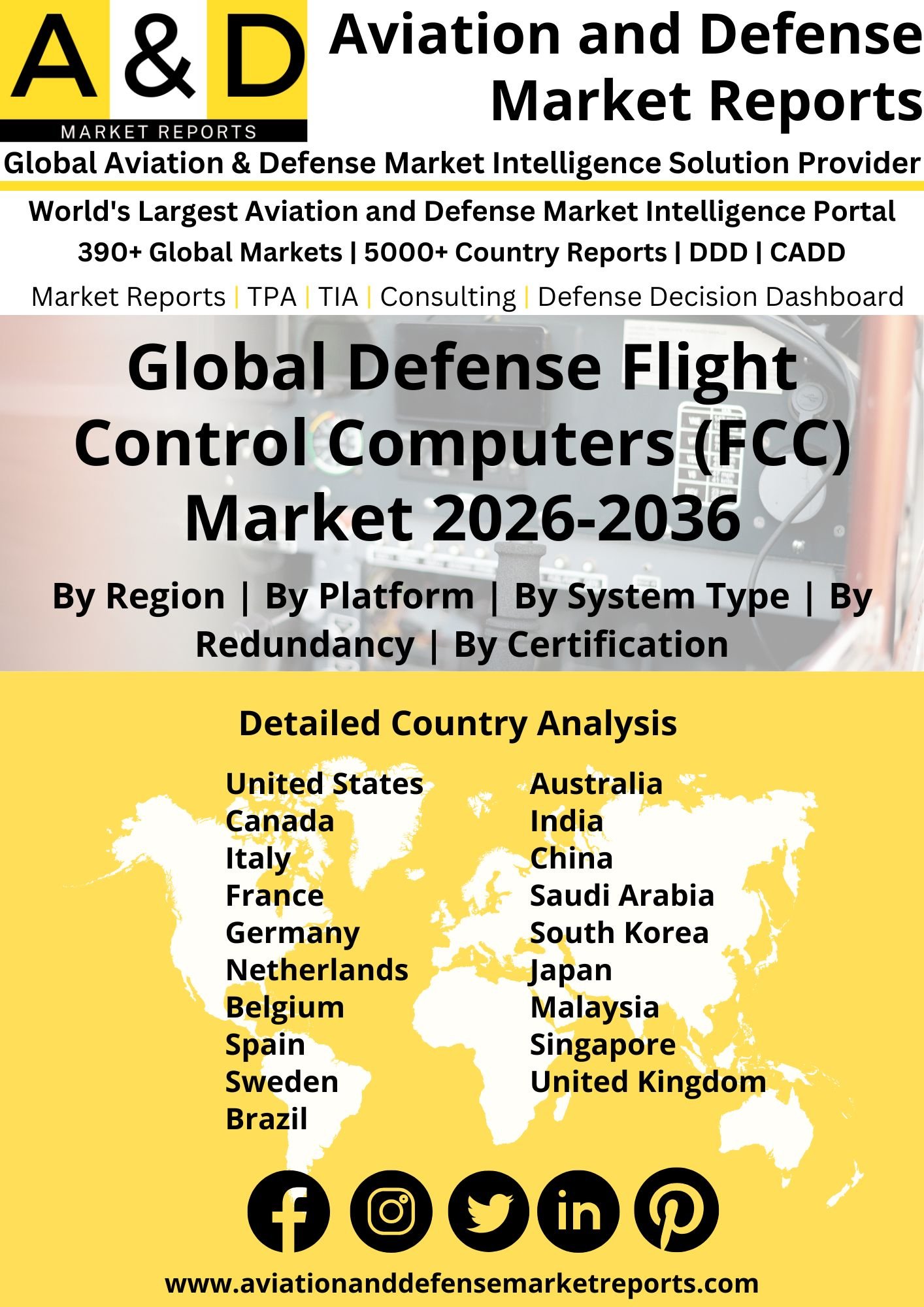
Global Defense Flight Control Computers (FCC) Market are core avionics systems that manage aircraft stability, navigation, and maneuverability. They process inputs from onboard sensors and pilot commands in real time. Based on these inputs, they execute control laws that adjust flight surfaces and engine responses. This ensures precise handling across a wide range of conditions, from routine patrols to extreme combat maneuvers. In fighter aircraft and unmanned aerial vehicles, these computers enable fly-by-wire operation. As a result, electronic signals replace mechanical linkages, improving responsiveness while reducing weight.
Global Defense Flight Control Computers Market: Operational Role and Flight Safety
The global defense flight control computers market plays a critical role in ensuring safe and controlled flight. These systems continuously monitor aircraft behavior and correct deviations instantly. Moreover, fault-tolerant architectures provide redundancy, allowing continued operation even if individual components fail. This resilience is essential during combat missions and long-endurance flights. As automation increases, flight control computers also support envelope protection and autonomous flight modes. Consequently, they help prevent pilot-induced errors and enhance overall mission safety.
Global Defense Flight Control Computers Market: Market Drivers and Demand Factors
Several factors are driving growth in the global defense flight control computers market. First, military forces are upgrading legacy aircraft with digital avionics. At the same time, unmanned aerial vehicle programs continue to expand. These platforms require highly reliable and adaptive control systems. In addition, the transition to digital fly-by-wire technology is accelerating adoption. This shift offers better performance, lower maintenance needs, and higher system reliability. Furthermore, integration with mission and navigation systems improves aircraft effectiveness. Together, these drivers are increasing demand across air combat, surveillance, and support platforms.
Global Defense Flight Control Computers Market: Technology Advancements and Innovation
Technological innovation is shaping the global defense flight control computers market. Manufacturers are developing advanced algorithms to manage stability in complex flight regimes. Artificial intelligence is also gaining traction, enabling adaptive control based on changing conditions. Meanwhile, modular system designs simplify maintenance and upgrades. Lighter materials and compact architectures further improve fuel efficiency and platform endurance. As a result, modern flight control computers deliver higher performance without increasing aircraft burden.
Emerging Trends and Cyber Protection
Key trends in the global defense flight control computers market include stronger cybersecurity integration and increased system intelligence. As aircraft become more connected, protecting control systems from electronic attacks is critical. Therefore, developers embed security features directly into flight control architectures. Additionally, systems increasingly support sensor fusion and data sharing. This enhances coordination with other onboard systems and external platforms. These trends align with broader moves toward networked and multi-domain operations.
Future Outlook and Strategic Importance
The global defense flight control computers market is positioned for steady growth as autonomy becomes a strategic priority. Aircraft designs increasingly support manned-unmanned teaming and collaborative combat operations. Flight control computers are evolving to manage these complex interactions safely. At the same time, standardization efforts are improving interoperability across platforms and allied forces. With continued investment in next-generation aircraft, these systems will remain essential. They will ensure control precision, survivability, and mission success in future air combat environments.