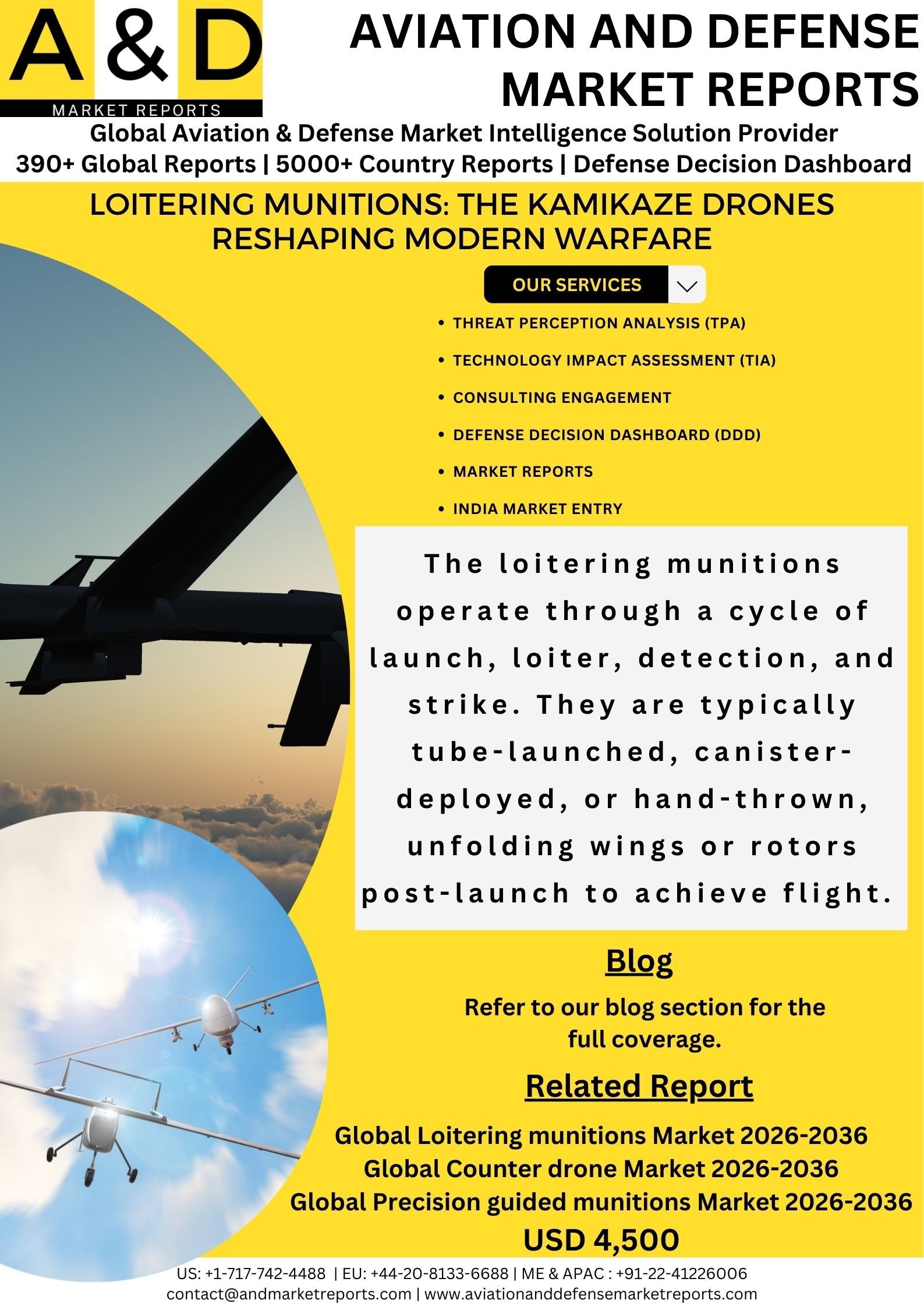
Loitering munitions, often called suicide drones or kamikaze drones, represent a revolutionary fusion of unmanned aerial vehicle technology and precision-guided weaponry. These systems are designed to loiter over a battlefield for extended periods, searching for targets before diving in to detonate on impact. Unlike traditional missiles, which follow a predetermined path, or reusable drones, which return after missions, loitering munitions combine surveillance capabilities with lethal strike potential in a single, expendable platform. This unique attribute allows operators to identify, track, and engage time-sensitive or emerging threats with minimal risk to personnel.
The concept traces its roots to the 1980s, when Israel developed early systems like the IAI Harpy for suppressing enemy air defenses. However, their widespread adoption accelerated in the 2010s and 2020s, driven by advancements in miniaturization, sensors, and guidance systems. By 2025, loitering munitions have become indispensable in asymmetric and conventional conflicts alike, offering cost-effective precision strikes that bridge the gap between artillery and manned aircraft.
Their appeal lies in affordability—many units cost tens of thousands of dollars compared to millions for advanced missiles—while delivering high accuracy and reduced collateral damage through man-in-the-loop controls.
How Loitering Munitions Work
At their core, loitering munitions operate through a cycle of launch, loiter, detection, and strike. They are typically tube-launched, canister-deployed, or hand-thrown, unfolding wings or rotors post-launch to achieve flight. Propulsion varies from electric motors for smaller variants to turbojets for longer-range models, enabling endurance from minutes to hours.
Once airborne, the munition enters a holding pattern over a designated area, using onboard sensors like electro-optical/infrared cameras, radar seekers, or anti-radiation homing to scan for targets. Operators monitor live feeds via data links, retaining the ability to wave off attacks if needed. Advanced models incorporate artificial intelligence for autonomous target recognition, reducing operator workload in contested environments.
Upon confirmation, the system dives at high speed, detonating its warhead—often shaped charges for armor penetration—directly on the target. This vertical attack profile exploits vulnerabilities like thin top armor on vehicles.
Key Systems and Manufacturers
The market features diverse offerings tailored to tactical needs. Israel’s Israel Aerospace Industries pioneered with the Harop, a larger anti-radiation variant capable of autonomous radar hunting and ranges exceeding 200 kilometers.
UVision’s Hero series, including the mid-range Hero-120, provides modular options for infantry and vehicle integration. In the United States, AeroVironment’s Switchblade family dominates, with the backpack-portable Switchblade 300 for dismounted troops and the heavier 600 for anti-armor roles.
Russia’s ZALA Lancet has gained notoriety for its effectiveness against high-value targets, featuring optical guidance and extended loiter times.
Other players include Poland’s Warmate, Germany’s Helsing HX-2, and emerging systems from India and China. Leading firms like AeroVironment, IAI, Elbit Systems, and Rheinmetall drive innovation through partnerships and exports.
Battlefield Impact and Real-World Use
Loitering munitions first proved decisive in the 2020 Nagorno-Karabakh conflict, where Azerbaijan’s Harop systems devastated Armenian defenses. However, their transformative role emerged in the Russia-Ukraine war, where both sides deployed thousands monthly. Russia’s Lancet targeted Ukrainian artillery and armor, while Ukraine countered with Switchblades and domestic variants, disrupting logistics and enabling precise counter-battery fire.
In Middle Eastern conflicts, Israel employs systems like the Hero series against threats from Hamas and Hezbollah, while Iran-supplied Shahed-136 variants challenge air defenses regionally. These weapons democratize precision strikes, allowing smaller units to neutralize expensive assets at low cost, shifting tactics toward dispersion and mobility to evade detection.
Market Growth and Economic Drivers
As of 2025, the global loitering munitions market ranges from approximately $0.6 to $4 billion depending on definitions, with projections for robust growth—some estimates reaching $1-2 billion by 2030 at CAGRs of 9-23 percent, fueled by military modernization and conflict lessons. Demand surges from Europe, Asia-Pacific, and the Middle East, with nations like Germany, India, and Australia initiating procurements. Cost-effectiveness against traditional munitions, coupled with export potential, propels investments from major contractors.
Future Trends: AI, Swarms, and Autonomy
Looking ahead, integration of artificial intelligence promises greater autonomy, enabling target classification in jammed environments and reduced human oversight. Swarm capabilities allow coordinated attacks by dozens or hundreds of munitions, overwhelming defenses through saturation.
Trends include recoverable variants for sustainability, multi-platform launches from air, sea, or ground, and enhanced endurance via advanced propulsion. Electronic warfare resistance and modular payloads will further evolve these systems, potentially incorporating hypersonic elements or non-lethal options.
Challenges remain, including ethical debates over autonomy, proliferation risks, and countermeasures like directed energy weapons. Yet, loitering munitions are poised to define future warfare, offering scalable, precise firepower in an era of peer competition and hybrid threats.