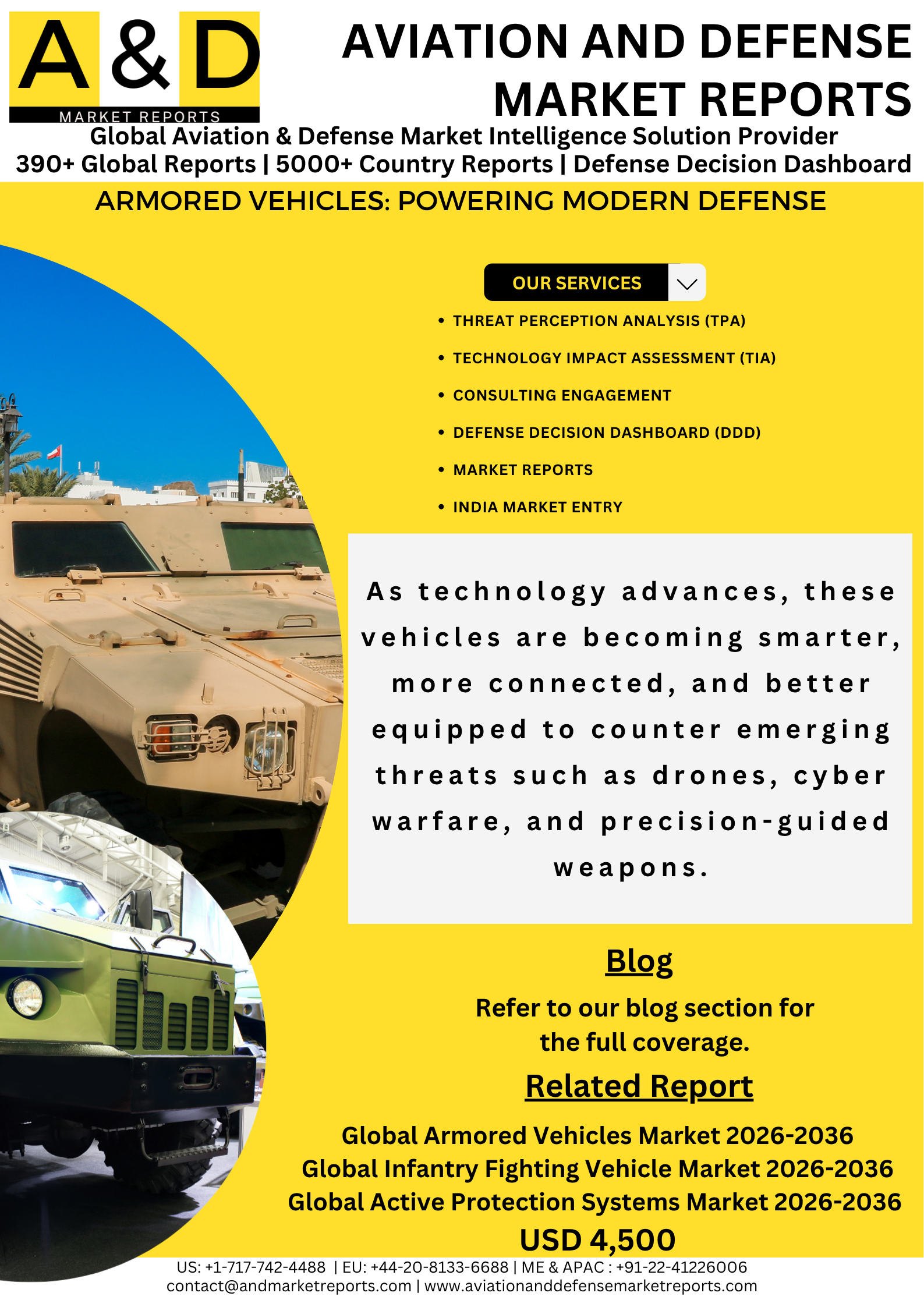
In modern warfare, armored vehicles have become indispensable assets that combine mobility, protection, and firepower. From transporting troops safely across hostile terrain to engaging enemy forces in direct combat, these vehicles play a crucial role in military operations around the world. As conflicts evolve and technology advances, armored vehicles continue to adapt to meet new battlefield challenges, making them one of the most important components of any nation’s defense strategy.
What Are Armored Vehicles?
Armored vehicles are military vehicles designed with protective armor to safeguard personnel and critical equipment from enemy attacks. Depending on their role, they may carry troops, weapons, supplies, or specialized equipment while providing varying levels of protection against bullets, explosives, mines, and artillery fragments.
These vehicles are engineered to operate in diverse environments, including deserts, forests, mountainous regions, urban battlefields, and extreme weather conditions. Their durability and versatility enable armed forces to maintain operational effectiveness even under intense combat situations.
Types of Armored Vehicles
Modern military forces deploy a wide range of armored vehicles, each designed for specific operational requirements.
Main Battle Tanks (MBTs)
Main Battle Tanks are the most heavily armored and armed vehicles in military service. Equipped with powerful cannons, advanced targeting systems, and reinforced armor, MBTs are designed to dominate the battlefield. They provide superior firepower while protecting their crew from enemy attacks.
Modern tanks feature composite armor, reactive armor systems, thermal imaging, and digital battlefield management technologies that significantly enhance combat effectiveness.
Armored Personnel Carriers (APCs)
Armored Personnel Carriers are designed primarily to transport soldiers safely to and from combat zones. Although lightly armed compared to tanks, APCs offer excellent protection against small arms fire and explosive fragments.
Their primary objective is to improve troop mobility while minimizing casualties during transportation across dangerous environments.
Infantry Fighting Vehicles (IFVs)
Infantry Fighting Vehicles bridge the gap between tanks and APCs. Unlike APCs, IFVs allow infantry soldiers to engage enemy forces while remaining protected inside the vehicle.
These vehicles are typically equipped with automatic cannons, anti-tank guided missiles, machine guns, and sophisticated communication systems. Their versatility makes them valuable assets in combined-arms warfare.
Mine-Resistant Ambush Protected (MRAP) Vehicles
Modern conflicts have highlighted the dangers posed by roadside bombs and improvised explosive devices (IEDs). MRAP vehicles are specifically designed to withstand mine blasts and explosive attacks.
Their distinctive V-shaped hull deflects blast energy away from passengers, dramatically increasing crew survivability. MRAPs have become essential for peacekeeping missions, counterinsurgency operations, and convoy protection.
Reconnaissance and Light Armored Vehicles
Reconnaissance vehicles prioritize speed, agility, and situational awareness. Equipped with advanced sensors, surveillance equipment, and communication systems, these vehicles gather intelligence while minimizing exposure to enemy fire.
Their lightweight construction allows rapid deployment across various terrains, making them ideal for scouting missions and border patrol operations.
Importance of Armored Vehicles in Defense
Armored vehicles serve multiple critical functions that directly contribute to military success.
Enhanced Protection
The primary advantage of armored vehicles is their ability to protect military personnel from enemy fire, shrapnel, landmines, and explosions. Advanced armor materials significantly improve survivability while reducing battlefield casualties.
Superior Mobility
Military operations often require rapid movement across challenging terrain. Armored vehicles provide reliable transportation through deserts, forests, muddy fields, mountainous regions, and urban environments where conventional vehicles may struggle.
Increased Firepower
Many armored vehicles carry powerful weapon systems capable of engaging enemy troops, armored vehicles, bunkers, and fortified positions. Their ability to deliver accurate fire support makes them essential during offensive and defensive operations.
Battlefield Versatility
Armored vehicles support numerous military missions, including:
- Troop transportation
- Combat operations
- Border security
- Peacekeeping missions
- Humanitarian assistance
- Disaster relief
- Reconnaissance
- Command and control
- Medical evacuation
Their adaptability enables armed forces to respond effectively to a wide variety of operational scenarios.
Technological Advancements in Armored Vehicles
The defense industry has witnessed remarkable innovations that continue to redefine armored vehicle capabilities.
Composite Armor
Traditional steel armor has evolved into advanced composite armor that combines ceramics, metals, and synthetic materials. This provides higher protection while reducing vehicle weight.
Active Protection Systems (APS)
Modern Active Protection Systems detect incoming missiles and rockets before they strike the vehicle. These systems automatically intercept and destroy threats, significantly improving battlefield survivability.
Artificial Intelligence and Automation
Artificial intelligence is increasingly integrated into armored vehicles for navigation, threat detection, predictive maintenance, and battlefield decision support. Autonomous driving technologies are also being explored to reduce risks to human operators.
Network-Centric Warfare
Today’s armored vehicles function as connected platforms within digital military networks. Real-time communication allows commanders to share intelligence, coordinate operations, and respond quickly to changing battlefield conditions.
Hybrid and Electric Propulsion
Military research organizations are exploring hybrid-electric propulsion systems that reduce fuel consumption, improve operational range, and minimize vehicle noise, making armored vehicles harder to detect during covert operations.
Challenges Facing Modern Armored Vehicles
Despite continuous improvements, armored vehicles face several evolving threats.
Anti-tank guided missiles have become increasingly accurate and powerful, posing serious risks even to heavily armored tanks. Drone warfare has introduced new attack methods, allowing adversaries to target vulnerable areas from above.
Urban warfare presents additional challenges, as narrow streets, concealed ambushes, and civilian infrastructure limit maneuverability. Furthermore, increasing protection often results in heavier vehicles, creating transportation and logistical challenges.
Cybersecurity has also become an emerging concern. As armored vehicles rely more heavily on digital systems and network connectivity, protecting them from cyberattacks has become a strategic priority.
Future Trends in Armored Vehicle Development
The future of armored vehicles will focus on greater intelligence, survivability, and operational efficiency.
Manufacturers are investing in autonomous combat vehicles capable of performing dangerous missions without onboard crews. Swarm coordination between armored vehicles, drones, and robotic systems is expected to enhance battlefield effectiveness.
Advanced materials such as nanocomposites and lightweight alloys may provide stronger protection while reducing overall weight. Artificial intelligence will continue improving target recognition, route planning, maintenance scheduling, and mission coordination.
Energy-efficient propulsion systems, modular armor configurations, and advanced electronic warfare capabilities will likely become standard features in next-generation military vehicles.
Global Importance of Armored Vehicle Programs
Many nations continue investing heavily in armored vehicle modernization to strengthen national security and maintain technological superiority. Defense manufacturers collaborate with governments to develop platforms capable of addressing conventional warfare, asymmetric conflicts, and peacekeeping operations.
Beyond military applications, armored vehicles are also used by law enforcement agencies, border security forces, and specialized emergency response units where enhanced protection is required during high-risk missions.
Conclusion
Armored vehicles remain one of the most vital pillars of modern defense capabilities. Their combination of protection, mobility, and firepower enables armed forces to operate effectively in increasingly complex security environments. As technology advances, these vehicles are becoming smarter, more connected, and better equipped to counter emerging threats such as drones, cyber warfare, and precision-guided weapons.
The future battlefield will demand greater adaptability, and armored vehicles will continue evolving to meet those demands. Whether supporting frontline combat, peacekeeping missions, disaster response, or homeland security, these platforms will remain central to military operations for decades to come. Continued innovation in armor, automation, artificial intelligence, and battlefield networking ensures that armored vehicles will play an even more significant role in shaping the future of global defense.