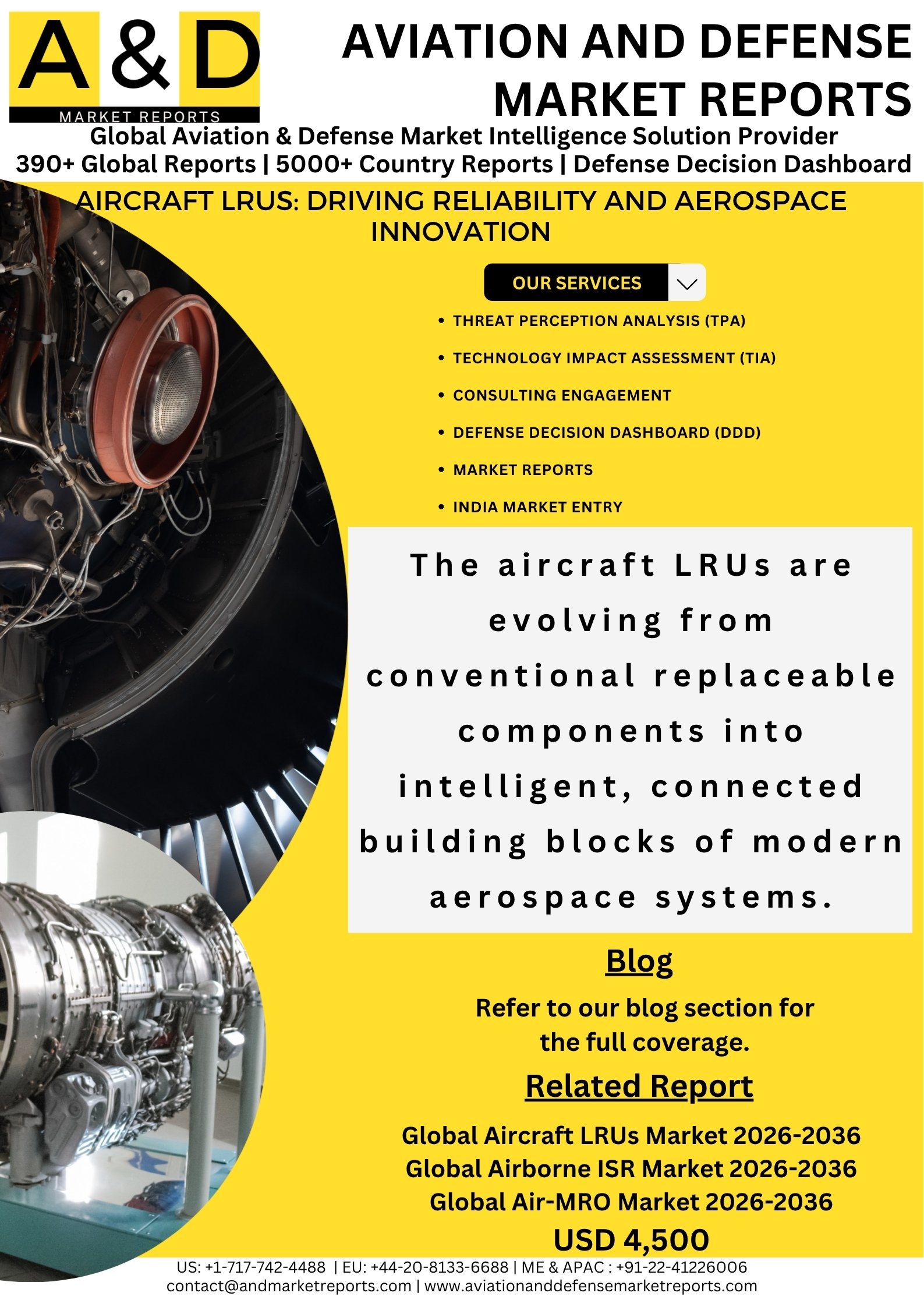
Introduction of Aircraft LRU
Aircraft LRUs are modular components or assemblies designed to be quickly removed and replaced at the aircraft operating location without requiring extensive maintenance or disassembly. LRUs are widely used across commercial aircraft, military aircraft, business jets, helicopters, and unmanned aerial systems. Typical examples include flight control computers, navigation units, communication systems, radar modules, power supplies, avionics computers, engine control units, displays, and electronic warfare equipment.
The LRU concept is closely linked to aircraft maintainability. Instead of repairing a failed component while the aircraft is grounded, maintenance personnel can identify the faulty LRU, remove it, install a serviceable replacement, and return the aircraft to operation. This approach reduces maintenance time, improves aircraft availability, and supports efficient fleet management.
Evolution of Aircraft LRU
The evolution of aircraft LRUs has followed the broader development of aviation electronics and aircraft systems. Early aircraft relied heavily on mechanical and electromechanical components, making maintenance relatively labor-intensive. As aircraft became more sophisticated, modular avionics and replaceable electronic assemblies became increasingly important.
The introduction of digital avionics significantly accelerated LRU development. Integrated navigation, communication, flight management, and mission systems began using standardized modules that could be independently tested and replaced. Military aviation further accelerated this evolution because combat aircraft require rapid maintenance, high mission availability, and the ability to upgrade mission capabilities.
Modern LRUs increasingly incorporate high-performance processors, advanced sensors, data interfaces, embedded diagnostics, and software-defined functionality. Consequently, today’s LRU is no longer simply a replaceable hardware box; it can function as an intelligent node within an aircraft’s broader digital architecture.
Importance of Aircraft LRU
Aircraft LRUs play a critical role in maintaining aircraft availability and operational reliability. Their modular architecture allows maintenance teams to replace defective equipment rapidly, minimizing aircraft downtime. This is particularly important for commercial airlines, where aircraft utilization directly affects revenue, and for military operators, where availability can influence mission readiness.
LRUs also simplify troubleshooting. Built-in test equipment and health-monitoring capabilities can help maintenance personnel identify malfunctioning units and determine whether replacement is required. Standardized interfaces can further simplify integration and maintenance.
Another major advantage is lifecycle flexibility. An aircraft can receive upgraded LRUs as technologies evolve without necessarily requiring a complete redesign of the platform. This makes LRUs particularly valuable for aircraft expected to remain in service for several decades.
Key Components of Modern Aircraft LRU
Modern aircraft LRUs cover a broad range of systems. Avionics LRUs include flight management computers, mission computers, navigation systems, communication equipment, cockpit displays, air-data computers, and identification systems.
Aircraft also use LRUs for engine and propulsion control, power management, environmental control, flight controls, landing gear, fuel management, and monitoring systems. Military platforms may incorporate LRUs for radar processing, electronic warfare, secure communications, targeting, surveillance, and mission management.
Modern units increasingly contain processors, memory, sensors, power-management circuits, high-speed data interfaces, and embedded diagnostic capabilities. Their designs must meet demanding aerospace requirements related to vibration, temperature, electromagnetic compatibility, power consumption, weight, and reliability.
Technological Advancements Driving Market Growth
Technological development is one of the strongest factors supporting the aircraft LRU market. Increasing aircraft digitalization is creating demand for more capable computing and electronic modules. Advanced processors allow LRUs to perform increasingly complex functions while supporting real-time data processing.
Artificial intelligence and machine learning are also beginning to influence aircraft maintenance and onboard processing architectures. Intelligent LRUs can potentially analyze system information, detect anomalies, and support predictive maintenance.
Another important development is the adoption of high-speed aircraft data networks. Technologies such as Ethernet-based avionics architectures enable LRUs to exchange larger volumes of information rapidly. Miniaturization is simultaneously helping manufacturers reduce size, weight, and power consumption.
Modular open systems architectures are also becoming increasingly important, particularly in military aviation. These architectures allow operators to introduce new capabilities by replacing or upgrading individual modules rather than redesigning an entire aircraft system.
Growing Aircraft LRU Production Supporting Market Expansion
Increasing aircraft production is directly supporting demand for LRUs. Commercial aircraft manufacturers are expanding production to address long-term passenger and cargo transportation requirements, while defense organizations continue investing in fighter aircraft, transport aircraft, helicopters, special-mission platforms, and unmanned systems.
Every newly manufactured aircraft requires numerous LRUs covering avionics, communications, navigation, propulsion control, power distribution, and other functions. Consequently, rising aircraft deliveries create opportunities for original equipment manufacturers and LRU suppliers.
At the same time, aircraft modernization programs are generating a second source of demand. Older aircraft often require replacement of obsolete electronics and avionics to remain operational and compliant with evolving requirements.
Increasing Demand for Aircraft LRU and Upgrades
The growing global aircraft fleet is creating significant opportunities in the replacement and upgrade market. Aircraft remain in service for many years, and individual LRUs may need to be replaced multiple times throughout an aircraft’s operational lifecycle.
Airlines are increasingly seeking upgrades that improve fuel efficiency, passenger experience, connectivity, safety, and operational performance. Military operators similarly require enhanced sensors, communications, electronic warfare capabilities, navigation systems, and mission computers.
The increasing adoption of predictive maintenance is another factor influencing LRU demand. Aircraft operators want to identify component failures before they cause significant operational disruption. LRUs equipped with advanced health-monitoring and diagnostic capabilities can therefore offer substantial value.
Regional Market Developments
North America remains an important center for aircraft LRU development because of its large aerospace manufacturing base, extensive commercial aircraft fleet, and significant military aviation industry. The United States hosts numerous aircraft manufacturers, avionics companies, defense contractors, and maintenance organizations.
Europe is another major market, supported by commercial aviation manufacturing, defense modernization, helicopter production, and multinational aerospace programs. European companies are investing in digital avionics, modular architectures, connectivity, and aircraft electrification.
The Asia-Pacific region is expected to offer substantial long-term opportunities because of increasing air passenger traffic, expanding airline fleets, indigenous aircraft development, and growing defense aviation investments. Countries such as China, India, Japan, South Korea, and others are strengthening domestic aerospace capabilities, creating opportunities for local LRU manufacturing and technology partnerships.
The Middle East is also investing in commercial and military aviation infrastructure, while emerging markets in Latin America and other regions are increasing aircraft modernization activities.
Competitive Landscape of the Market
The aircraft LRU market is characterized by competition among major aerospace and defense companies, avionics manufacturers, specialized component suppliers, and emerging technology providers. Companies compete on reliability, weight, power consumption, processing capability, lifecycle support, certification expertise, and integration capabilities.
Leading aerospace suppliers are increasingly focusing on advanced avionics, open architectures, digital maintenance solutions, and highly integrated electronic systems. Partnerships between aircraft manufacturers, system integrators, avionics companies, and semiconductor suppliers are also becoming more important.
The aftermarket represents another major competitive area. Companies that can provide long-term spare parts availability, repair services, upgrades, technical support, and predictive maintenance solutions can establish strong relationships with aircraft operators.
Challenges Affecting Market Growth
Despite strong opportunities, the aircraft LRU industry faces several challenges. Aerospace certification requirements are stringent, requiring extensive testing and validation before equipment can be installed on aircraft. This can increase development costs and lengthen product timelines.
Supply-chain disruptions are another concern. LRUs depend on specialized electronic components, processors, sensors, connectors, and other aerospace-grade materials. Semiconductor shortages or component obsolescence can affect production and maintenance programs.
Cybersecurity is becoming increasingly important as aircraft systems become more connected. Protecting digital LRUs and aircraft networks against unauthorized access and cyber threats is essential.
Weight, power consumption, thermal management, and reliability also remain critical engineering challenges. Manufacturers must continuously increase computing capability without creating excessive weight or energy requirements.
Future Outlook of Aircraft LRU
The future of aircraft LRUs will be closely connected to the digital transformation of aviation. Next-generation units are expected to become more intelligent, compact, connected, and software-driven. Advanced processing, embedded diagnostics, artificial intelligence, cybersecurity, and high-speed networking are likely to become increasingly integrated into LRU designs.
The emergence of connected aircraft and digital twins could further enhance LRU lifecycle management by enabling operators to monitor component performance and anticipate maintenance requirements. Open-system architectures may also make future aircraft easier to upgrade throughout their operational lives.
Aircraft electrification, autonomous systems, advanced military platforms, and next-generation commercial aircraft will create additional requirements for sophisticated electronic and control modules. Meanwhile, the expanding global aircraft fleet will continue generating replacement and aftermarket demand.
Overall, aircraft LRUs are evolving from conventional replaceable components into intelligent, connected building blocks of modern aerospace systems. As aircraft become increasingly digital and operators place greater emphasis on reliability, availability, maintainability, and lifecycle cost, the demand for advanced aircraft LRUs is expected to remain strong