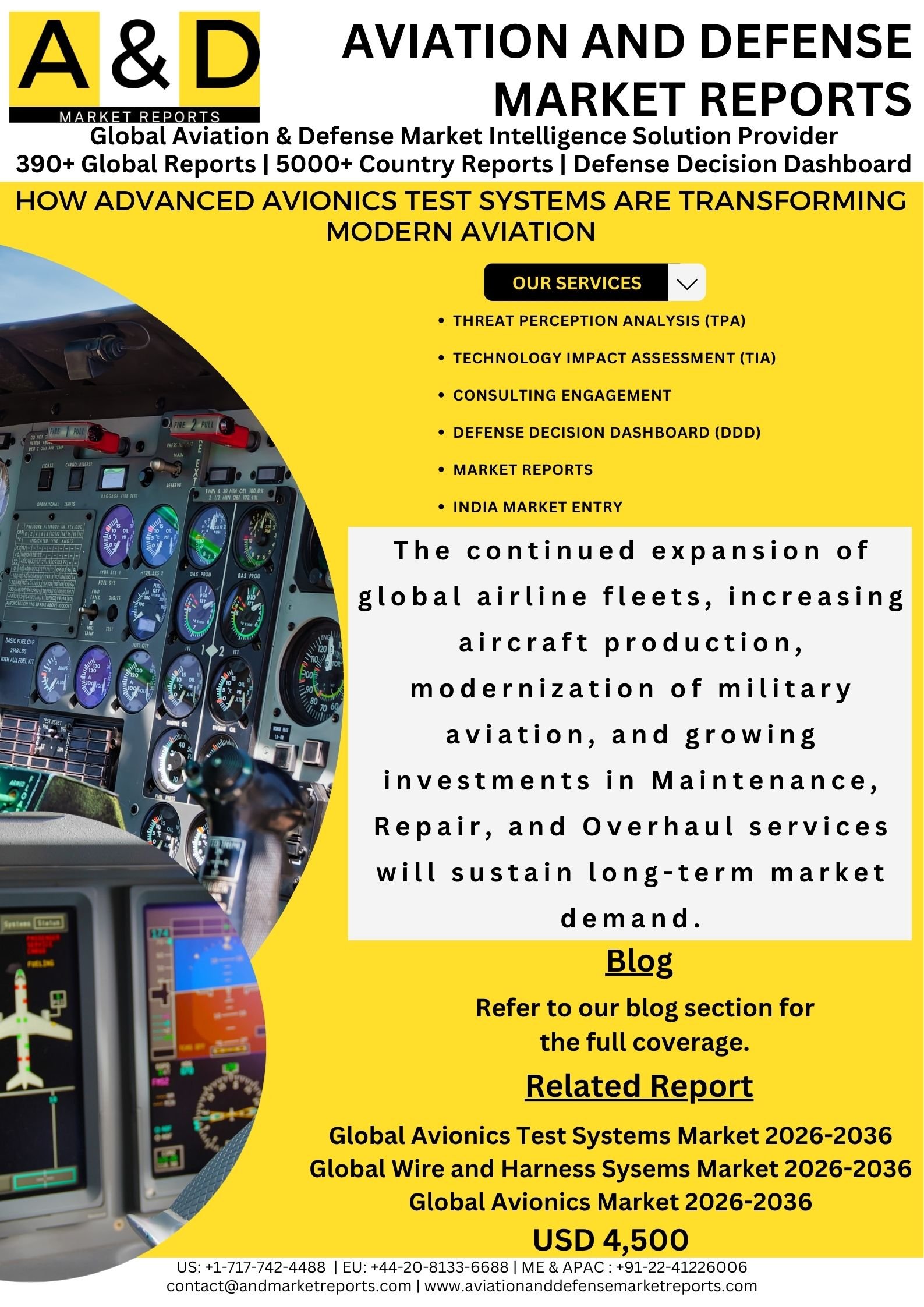
Global Avionics Test Systems Market
The Global Avionics Test Systems Market has become an essential part of the aerospace and defense industry as aircraft systems continue to evolve with advanced digital technologies. Modern commercial aircraft, military platforms, helicopters, business jets, and unmanned aerial vehicles depend on highly sophisticated avionics systems for navigation, communication, surveillance, flight control, weather monitoring, and mission management. These complex electronic systems require accurate testing throughout their design, manufacturing, maintenance, and operational lifecycle.
As aviation organizations prioritize safety, operational efficiency, and regulatory compliance, demand for reliable avionics test systems continues to increase worldwide. The growing production of next-generation aircraft, modernization of aging fleets, and expansion of maintenance activities are supporting the steady growth of the global avionics test systems market.
Evolution of Avionics Testing Technologies
Avionics testing has advanced significantly alongside improvements in aircraft electronics. Earlier testing solutions primarily focused on basic communication equipment, analog instruments, and navigation devices. As aircraft manufacturers introduced digital avionics, fly-by-wire systems, integrated modular avionics, and advanced cockpit displays, testing requirements became considerably more sophisticated.
Modern avionics test systems are capable of evaluating multiple electronic components simultaneously while ensuring seamless integration across different aircraft subsystems. Automated testing platforms, digital simulation technologies, software-driven diagnostics, and high-speed data acquisition have transformed inspection procedures. These advancements enable technicians to identify faults more accurately, reduce maintenance time, and improve aircraft availability across commercial and military aviation sectors.
Importance of Avionics Test Systems in Aviation
Avionics systems perform critical functions that directly influence aircraft performance and flight safety. Navigation systems guide aircraft along designated flight paths, communication systems maintain contact with air traffic control, surveillance equipment enhances situational awareness, and flight management systems optimize operational efficiency. Any malfunction within these systems can affect aircraft reliability and operational performance.
Avionics test systems verify the functionality, calibration, and performance of electronic equipment before aircraft enter service and during scheduled maintenance. They assist maintenance teams in detecting hardware failures, software issues, signal inconsistencies, and communication faults. Comprehensive testing minimizes unexpected equipment failures, enhances flight safety, and supports compliance with international aviation regulations. Airlines, maintenance organizations, aircraft manufacturers, and defense agencies rely on these systems to maintain consistent operational standards.
Key Components of Modern Avionics Test Systems
Modern avionics test systems consist of multiple integrated technologies that evaluate different aircraft electronic systems. Automated test equipment forms the foundation of these solutions by providing programmable testing capabilities for numerous avionics components. Radio frequency testing instruments evaluate communication and radar systems, while navigation testing equipment verifies GPS, inertial navigation, and satellite-based positioning accuracy.
Data bus analyzers monitor communication between onboard electronic systems, ensuring reliable information exchange throughout the aircraft. Signal generators simulate operational conditions to validate equipment performance under different scenarios. Software diagnostic platforms analyze electronic data, detect faults, and generate detailed maintenance reports. Portable test systems also enable field technicians to perform inspections directly on aircraft, improving maintenance efficiency and reducing aircraft downtime.
Technological Advancements Driving Market Growth
Rapid technological innovation continues to strengthen the capabilities of avionics test systems. Automation has become a central feature, allowing testing procedures to be completed with greater speed and consistency. Artificial intelligence supports fault detection by analyzing complex datasets and identifying abnormal system behavior with high accuracy.
Digital twin technology enables virtual simulation of aircraft systems before physical testing begins, reducing development time and improving validation processes. Cloud-based maintenance platforms facilitate remote diagnostics, centralized data storage, and predictive maintenance planning across airline fleets. Advanced software applications provide real-time monitoring and automated reporting, enabling maintenance teams to make informed decisions while improving overall operational efficiency.
The adoption of modular testing architectures also provides greater flexibility, allowing organizations to upgrade testing capabilities as new avionics technologies enter the market.
Growing Aircraft Production Supporting Market Expansion
Global aircraft production continues to expand as passenger traffic increases, cargo transportation grows, and defense modernization programs accelerate worldwide. Commercial airlines are investing in fuel-efficient aircraft equipped with advanced avionics technologies to improve operational performance and passenger safety. Military organizations are introducing next-generation fighter aircraft, transport aircraft, surveillance platforms, and unmanned systems with increasingly sophisticated electronic architectures.
Every newly manufactured aircraft requires extensive avionics testing before certification and delivery. Testing activities continue throughout the operational life of the aircraft during scheduled inspections, component replacements, and system upgrades. This expanding global fleet creates sustained demand for advanced avionics test systems across manufacturing facilities, maintenance organizations, and defense establishments.
Increasing Demand for Aircraft Maintenance and Upgrades
Aircraft maintenance remains one of the strongest contributors to the growth of the avionics test systems market. Airlines operate under strict maintenance schedules established by aviation regulatory authorities to ensure continued airworthiness. Routine inspections include detailed evaluation of avionics systems to verify operational accuracy and detect potential failures before they affect flight operations.
Fleet modernization programs are also increasing testing requirements as operators replace outdated electronic systems with modern digital avionics. Upgrading cockpit displays, navigation equipment, surveillance systems, and communication technologies requires comprehensive testing to ensure compatibility with existing aircraft infrastructure. Maintenance, Repair, and Overhaul (MRO) organizations continue investing in advanced testing equipment to support growing maintenance volumes while improving turnaround times.
Regional Market Developments
North America represents one of the largest markets for avionics test systems due to its well-established aerospace industry, strong defense investments, and extensive commercial aviation network. The presence of major aircraft manufacturers, avionics suppliers, and maintenance providers supports continuous technological innovation and product development. Europe maintains a significant market position through ongoing aircraft manufacturing activities, advanced research initiatives, and stringent aviation safety standards. Regional airlines and defense organizations continue modernizing fleets with advanced electronic systems that require sophisticated testing solutions.
The Asia-Pacific region is experiencing rapid market expansion as countries increase investments in commercial aviation, airport infrastructure, indigenous aircraft manufacturing, and military modernization. Growing passenger demand, expanding airline fleets, and rising defense expenditures contribute to increasing adoption of avionics test systems throughout the region.The Middle East continues strengthening its aviation sector through investments in international airlines, military aviation, and aerospace infrastructure. Latin America and Africa are also gradually expanding aviation capabilities, creating additional opportunities for avionics testing equipment providers.
Competitive Landscape of the Market
The global avionics test systems market consists of established aerospace companies, specialized testing equipment manufacturers, defense technology providers, and software developers. Industry participants focus on developing innovative testing platforms capable of supporting increasingly complex avionics architectures across commercial and military aircraft.
Manufacturers emphasize automation, high-speed diagnostics, software integration, portability, and modular system designs to improve operational flexibility. Strategic collaborations between aircraft manufacturers, avionics suppliers, research institutions, and maintenance organizations accelerate technology development while supporting product innovation. Continuous investment in research and development enables companies to enhance testing accuracy, reduce maintenance costs, and improve overall system reliability.
Challenges Affecting Market Growth
Despite strong market expansion, several challenges influence the adoption of advanced avionics test systems. The increasing complexity of modern avionics requires continuous upgrades to testing equipment, creating significant investment requirements for manufacturers and maintenance providers. Rapid technological advancements demand frequent software updates and technician training to maintain testing accuracy.
Integrating testing systems with diverse aircraft platforms presents technical challenges due to varying avionics architectures and communication protocols. Cybersecurity has also become an important consideration as connected diagnostic systems rely on digital networks and cloud-based infrastructure. Regulatory certification requirements and compliance standards require continuous validation of testing procedures, increasing development complexity for equipment manufacturers.
Future Outlook of Avionics Test Systems
The future of the Global Avionics Test Systems Market remains highly positive as aircraft technologies continue advancing across commercial, military, and business aviation sectors. Greater adoption of artificial intelligence, predictive maintenance, digital simulation, cloud-based diagnostics, and automated testing platforms will further improve testing efficiency and operational reliability.
The continued expansion of global airline fleets, increasing aircraft production, modernization of military aviation, and growing investments in Maintenance, Repair, and Overhaul services will sustain long-term market demand. As avionics systems become more intelligent, interconnected, and software-driven, advanced testing solutions will remain indispensable for ensuring aircraft safety, regulatory compliance, and operational excellence. The market will continue supporting the aviation industry’s commitment to reliable performance, technological innovation, and efficient aircraft lifecycle management.