
Description
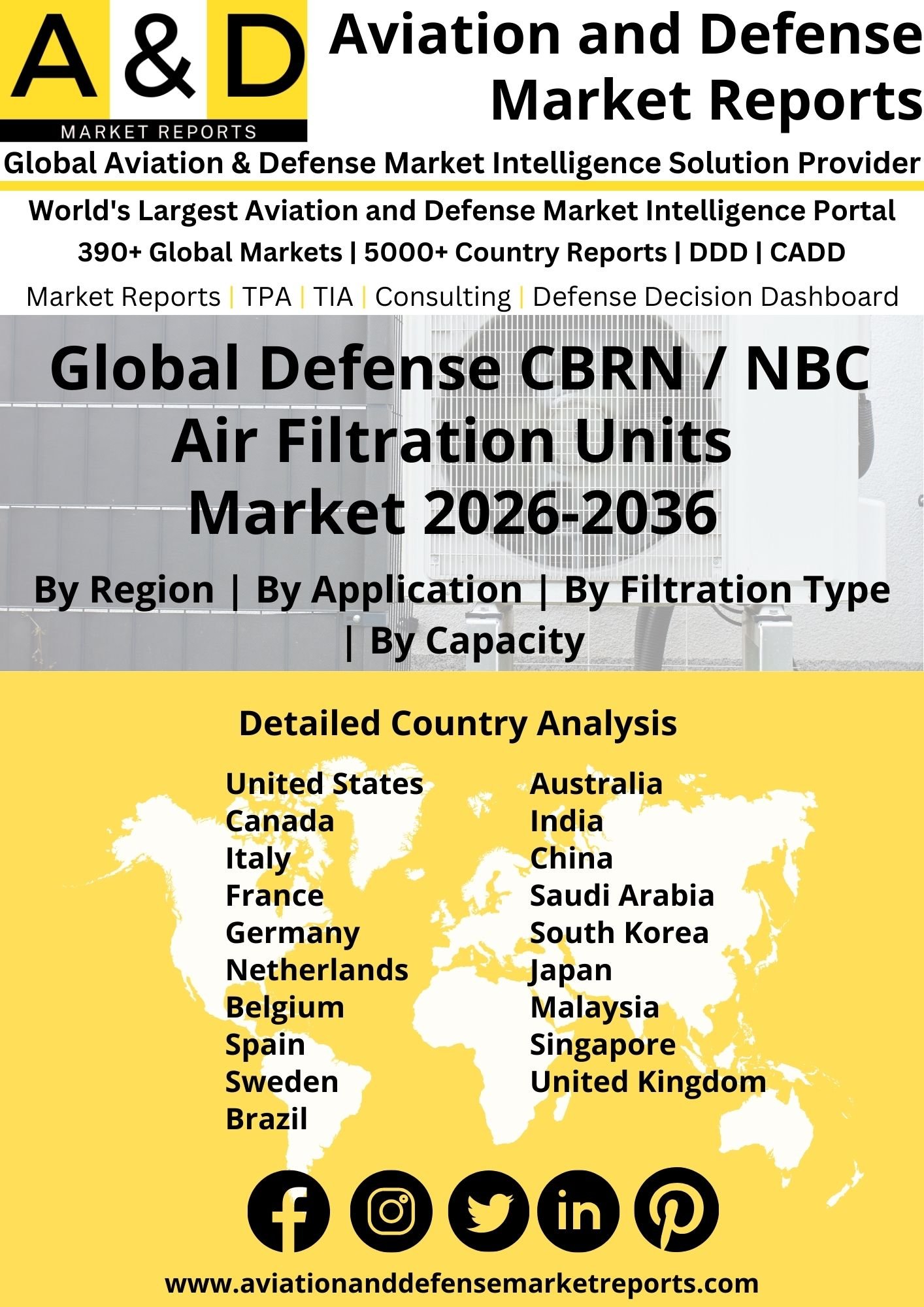
Global Defense CBRN / NBC Air Filtration Units Market Overview
Global Defense CBRN / NBC Air Filtration Units Market Chemical, Biological, Radiological, and Nuclear (CBRN) air filtration units serve as critical life-support systems for protected military platforms. These systems provide clean and breathable air in contaminated environments. Unlike basic filters, they are complex protection solutions designed to detect and neutralize hazardous agents.
Modern battlefields may involve chemical agents, radioactive particles, toxic industrial materials, or biological pathogens. Therefore, CBRN filtration systems are essential for force protection and operational continuity. They are widely deployed in armored vehicles, naval vessels, aircraft, command centers, and field shelters.
Global Defense CBRN / NBC Air Filtration Units Market Technology Advancements
Contemporary CBRN air filtration units use multi-stage filtration processes. First, incoming air passes through a pre-filter that removes large particles. Next, high-efficiency particulate air (HEPA) filters capture biological agents and fine radioactive dust. Finally, advanced gas filters containing activated carbon or specialized sorbents absorb chemical warfare agents and toxic gases.
In addition, many systems now feature broad-spectrum filtration media. This reduces the need for agent-specific filter changes. Sensors monitor for filter saturation or agent breakthrough, while pressure gauges track filter loading. If contamination levels rise beyond safe limits, automatic sealing dampers isolate the system.
Vehicle-based systems also use overpressure technology. By maintaining higher internal air pressure, they prevent contaminated air from entering through small leaks. As a result, crew members remain protected even in high-risk environments.
Global Defense CBRN / NBC Air Filtration Units Market Drivers and Demand Trends
The global CBRN air filtration units market is driven by persistent threat perceptions and strict military safety standards. Modern armored vehicles and naval vessels integrate CBRN protection as a standard feature. This ensures survivability in both conventional conflicts and asymmetric warfare scenarios.
Fleet modernization programs also create strong demand. Older platforms require upgraded filtration systems to meet current protection standards. Additionally, portable filtration units are gaining importance. These systems support temporary shelters, field hospitals, and rapid deployment missions.
Size, weight, and power efficiency remain key design priorities. Military operators require compact systems that do not compromise vehicle mobility or mission performance. Therefore, manufacturers focus on optimizing filtration capacity while minimizing logistical burden.
Market Cybersecurity and Integration
As filtration units adopt digital controls and networked sensors, cybersecurity has become increasingly relevant. Modern systems often connect to platform health management networks. Consequently, secure software and encrypted communication channels are necessary to prevent unauthorized access.
If compromised, a filtration system could provide false safety readings or shut down unexpectedly. Therefore, cyber resilience is now an integral aspect of next-generation CBRN protection systems.
Market Future Outlook
Future developments will emphasize longer-lasting and regenerative filter materials. Research is underway to create media that can be reactivated in field conditions, reducing supply chain strain. In parallel, advanced detection systems may identify specific agents in real time.
Integration with environmental control systems will also deepen. Managing temperature and humidity inside sealed compartments improves both filtration efficiency and crew comfort. For individual protection, lightweight integrated filtration systems in helmets or protective gear are under development.
Ultimately, the global CBRN air filtration units market will continue to evolve toward smarter, lighter, and more resilient systems. By ensuring breathable air in hazardous conditions, these units remain a silent but indispensable safeguard for military personnel.