
Description
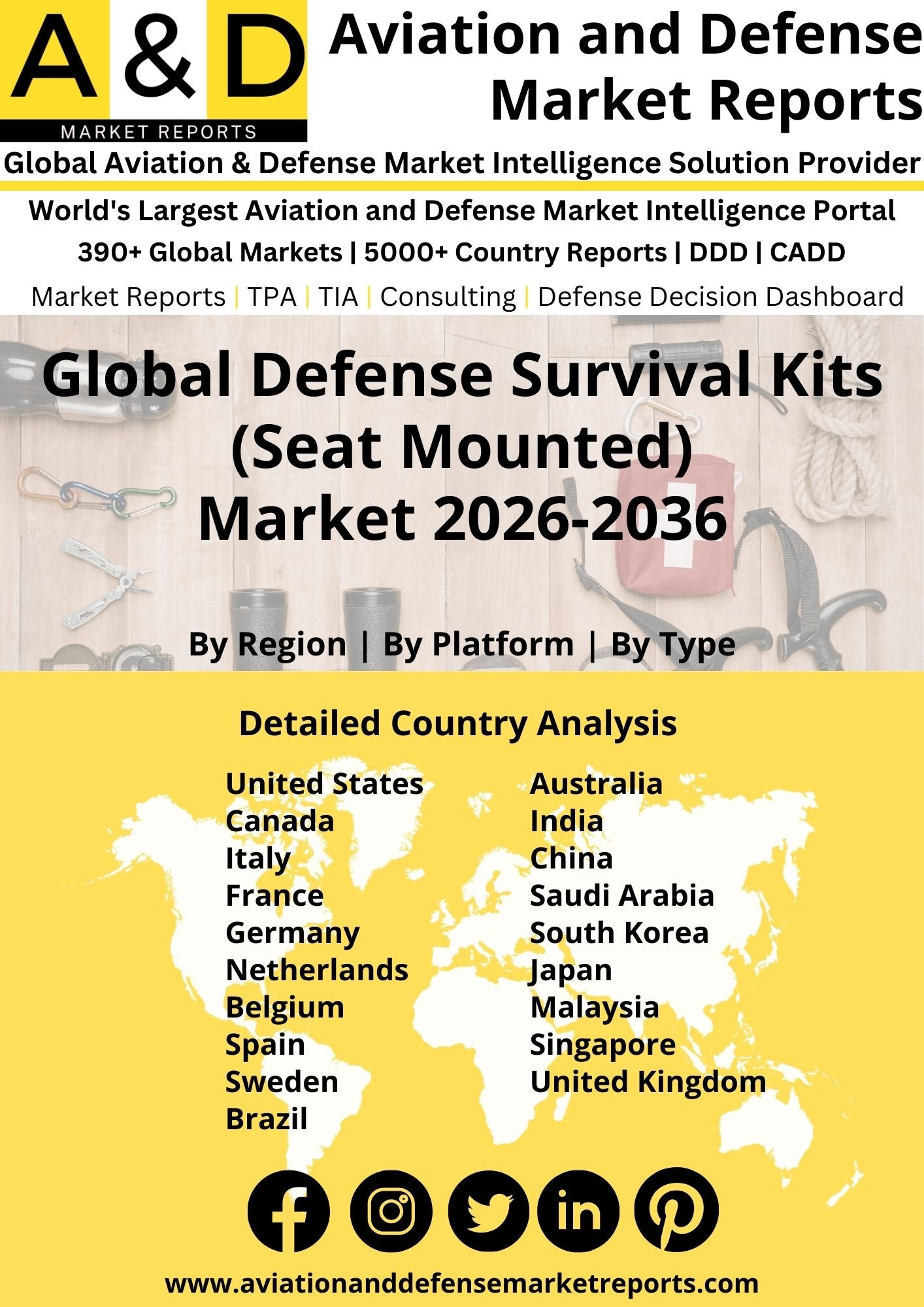
Global Defense Survival Kits (Seat Mounted) Market Overview
Seat-mounted survival kits equip ejection seats in fighter jets and helicopters with essential gear for pilot rescue. Compact packs include rations, medical supplies, signaling devices, and navigation tools. Demand rises with air force expansions and modernization, emphasizing compact, multi-mission capabilities.
Global Defense Survival Kits (Seat Mounted) Market Technology Trends
Technology trends in seat-mounted survival kits prioritize modularity and compactness for diverse missions. Lightweight composites replace bulky fabrics, optimizing parachute integration. Smart sensors monitor kit integrity and deploy auto-inflating life vests or beacons upon water impact. IoT-enabled trackers integrate with global rescue networks for precise location via satellite. Biodegradable materials address environmental concerns in remote crash sites. Personalized kits adapt contents via digital inventories linked to pilot profiles. Advanced medical components feature trauma stabilizers and antibiotic dispensers. Energy harvesting from motion powers electronics indefinitely. AR interfaces aid ground survival training. Cybersecurity safeguards data links against jamming. Hypersonic platforms demand heat-resistant packaging. Overall, trends focus on autonomous activation, extended endurance, and seamless avionics connectivity to enhance post-ejection outcomes.
Market Integration Landscape
Integration embeds survival kits into ejection seat backpacks, synchronizing with canopy jettison and parachute deployment sequences. Avionics buses link kits to cockpit displays for pre-flight checks and real-time status. Modular designs allow mission-specific customization without seat redesigns. Naval variants incorporate sea survival gear like desalination kits. UAV adaptations explore drone-delivered resupply. International standards ensure interoperability across allied platforms. Qualification testing simulates ejection forces, extreme climates, and prolonged exposure. Supply chains emphasize ruggedized components for forward deployment. Retrofitting legacy seats balances cost with capability upgrades. Future landscapes favor plug-and-play architectures compatible with next-gen seats, fostering rapid field adaptations.
Drivers of Defense Survival Kits (Seat Mounted) Market Growth
Geopolitical instability accelerates fighter procurements, heightening focus on pilot recovery post-ejection. Modernization waves upgrade legacy seats, mandating advanced kits. Regulatory emphasis on aircrew survivability spurs innovation. Harsh operational theaters demand versatile, climate-resilient gear. Allied interoperability programs standardize kits, broadening supplier reach. Export demand surges from emerging air forces professionalizing rescue doctrines. Technological convergence with wearables enhances personalization. Budget reallocations prioritize human capital over hardware alone. Simulation-driven design shortens development timelines. Resilience against electronic warfare protects signaling functions.
Market Future Outlook
Future developments center on AI-orchestrated kits that auto-dispense supplies based on biometric feedback. Bioengineered nutrients extend sustenance in austere environments. Quantum-secured beacons evade jamming. Swarm drone integration enables on-demand resupply to downed pilots. Sustainable, zero-waste designs align with green defense mandates. Neural interfaces preview survival scenarios during training. Space-qualified variants support high-altitude ejections. Global networks fuse kit data with SAR assets for faster rescues. Proliferating UAV threats necessitate anti-capture countermeasures. Long-term, kits evolve into multi-role pods supporting special operations, ensuring aircrew dominance across domains.