
Description
Global Defense IFF Transponders Market Overview
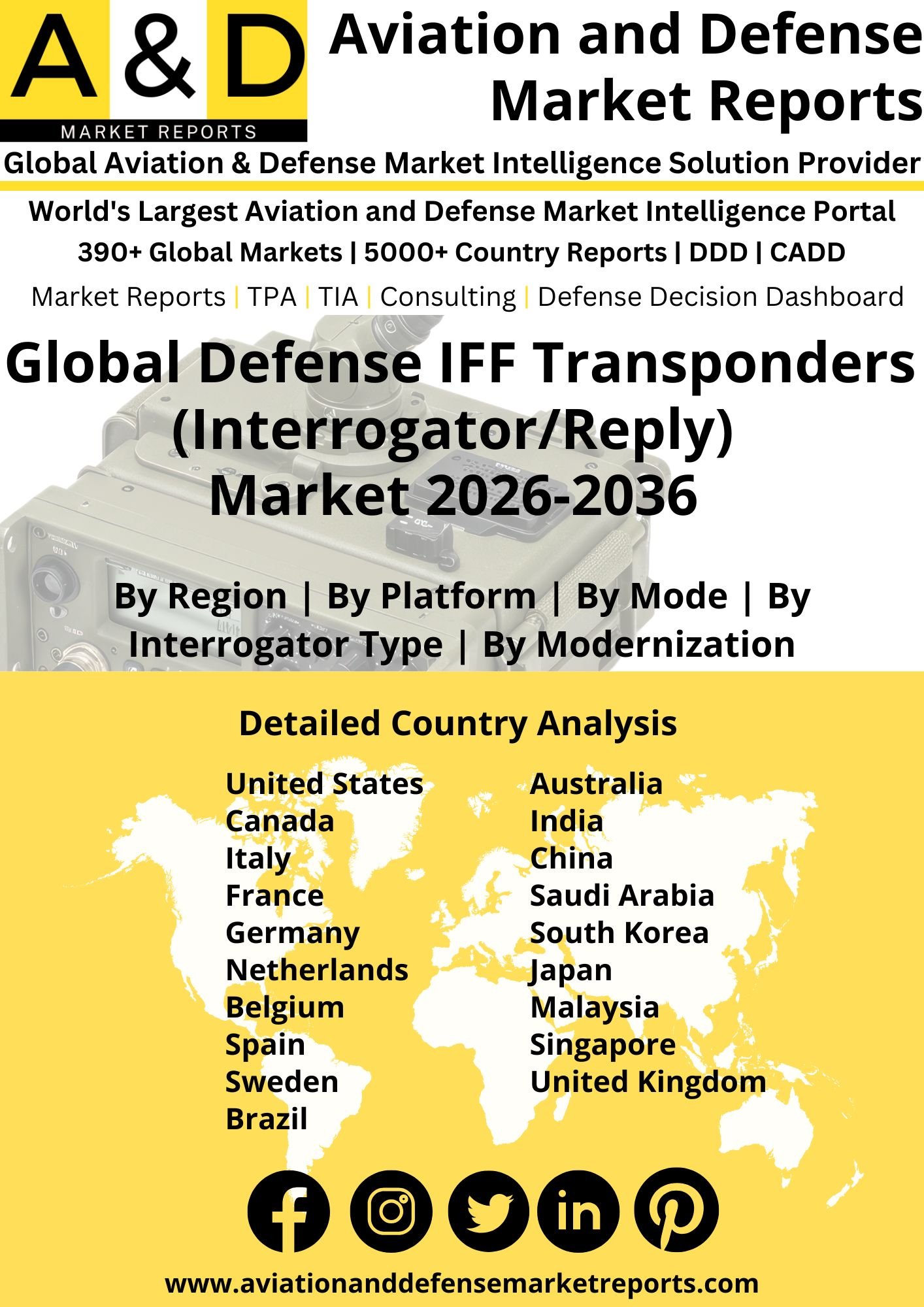
Global Defense IFF Transponders Market is evolving rapidly due to rising electronic warfare threats. Modern battlefields are complex and multi-domain. Therefore, defense forces need fast and accurate identification systems. IFF transponders now play a central role in situational awareness and force protection. They help prevent fratricide and support secure command and control across air, land, sea, and space operations.
Global Defense IFF Transponders Market Technology Evolution
IFF technology has moved beyond traditional Mode 5 and Mode S standards. Today, systems use software-defined and adaptive architectures. As a result, transponders can change waveforms and resist jamming in real time. These capabilities help counter spoofing and deception attacks. In addition, modern IFF integrates directly with tactical networks such as Link 16. This connectivity strengthens joint and coalition operations.
Global Defense IFF Transponder Market AI and Cognitive Capabilities
Artificial intelligence is reshaping the Global Defense IFF Transponder Market. Advanced systems now use machine learning to analyze interrogation signals. Consequently, they can detect abnormal patterns linked to spoofing or hostile activity. When threats appear, the system adjusts its response automatically. For example, it may shift to low-probability-of-intercept modes. This cognitive behavior reduces operator workload and improves survivability.
Global Defense IFF Transponders Market Architecture Trends
Open and modular architecture defines modern IFF development. Standards such as SOSA and VITA support interoperability across platforms. Therefore, forces can upgrade systems without replacing entire aircraft or vessels. Software-defined radios further increase flexibility. A single transponder can support multiple modes and protocols. In addition, miniaturization allows deployment on UAVs and small platforms.
Global Defense IFF Transponders Market Cybersecurity Focus
Cybersecurity has become a top priority in the Global Defense IFF Transponder Market. IFF systems connect directly to command networks, which makes them high-value targets. To address this risk, manufacturers embed hardware-level security and secure boot processes. Continuous monitoring also detects abnormal behavior. If needed, systems isolate themselves to protect the network. These measures preserve trust during cyber and electronic attacks.
Market Sensor Fusion Integration
Integration with other sensors is another major trend. Modern IFF systems combine data from radar, EO/IR, and signals intelligence. As a result, platforms can verify identity using multiple sources. This approach lowers the risk of misidentification in crowded battlespaces. Some systems also detect unauthorized interrogators. This capability provides early warning of spoofing attempts.
Market Supply Chain and Assurance
Supply chain security strongly influences the Global Defense IFF Transponder Market. Governments now demand trusted manufacturing and verified components. Therefore, suppliers track component origin and use anti-tamper protections. These practices reduce dependency on foreign sources. They also improve confidence in system integrity throughout its lifecycle.
Market Outlook
The Global Defense IFF Transponder Market is shifting from basic identification to battlefield trust management. AI, cybersecurity, open architectures, and sensor fusion drive this transformation. As electronic warfare threats grow, secure identification becomes more critical. Consequently, IFF transponders will remain essential to future military operations. Their ability to adapt and protect networks will define success in next-generation warfare.