
Description
Role of Turbines and Compressors in Defense Aircraft
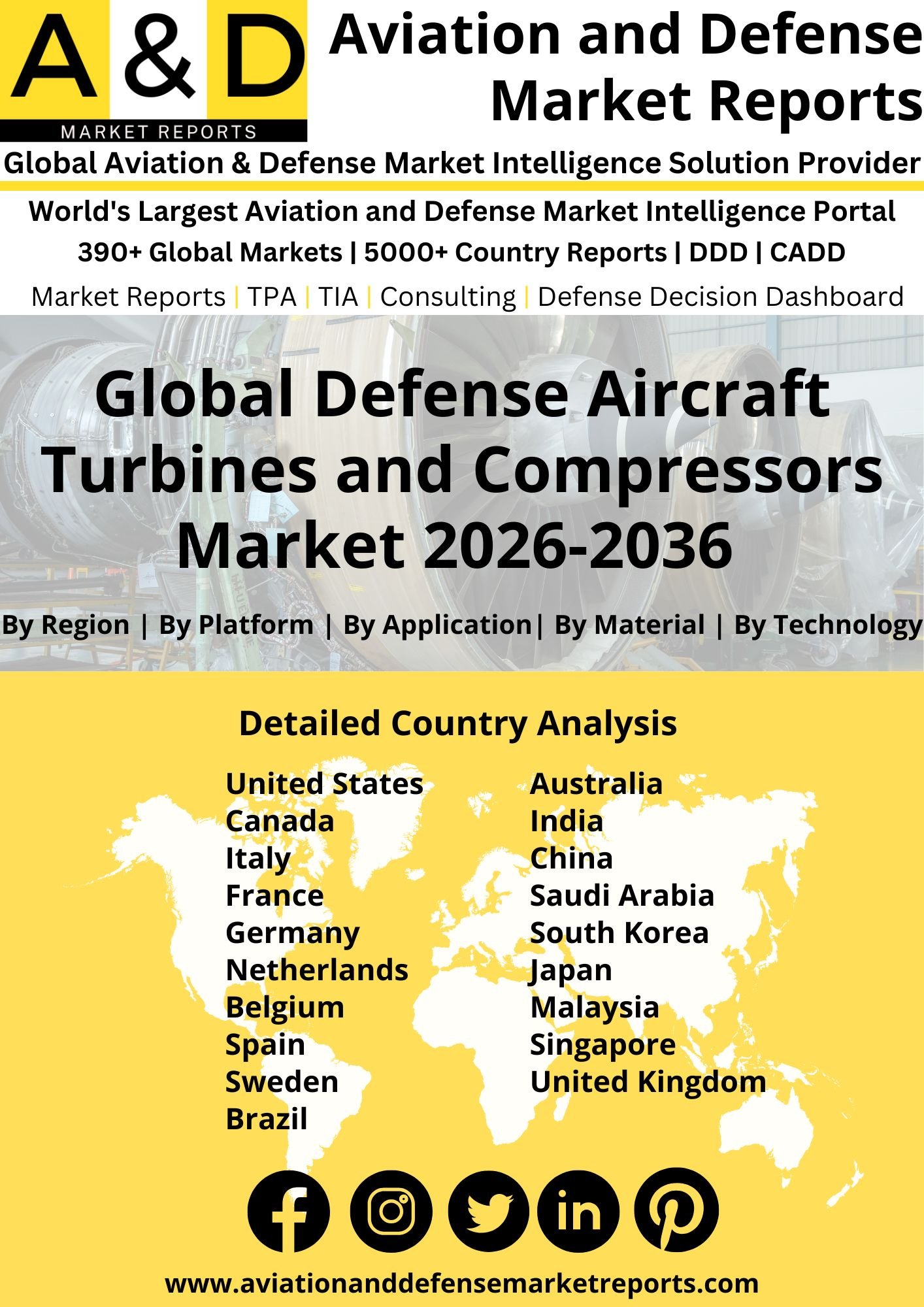
Global Defense Aircraft Turbines and Compressors Market are essential parts of military aircraft engines. They power fighter jets, transport aircraft, and unmanned aerial vehicles. Together, they enable fast, reliable, and efficient flight.
Compressors increase air pressure before combustion. Turbines then extract energy from hot gases to generate thrust. This process allows aircraft to fly at high speeds and operate in extreme conditions.
These components help aircraft achieve high thrust-to-weight ratios. This is critical in combat situations where speed and maneuverability matter. They also support long-range missions by improving fuel efficiency.
Performance, Stealth, and Operational Benefits
Efficient airflow and heat control improve aircraft endurance and reliability. This allows missions to continue longer without frequent refueling. It also reduces wear on engine components.
Turbines and compressors contribute to stealth capabilities. They help lower infrared signatures and reduce engine noise. This makes aircraft harder to detect during sensitive operations.
Modern engines integrate these components with sensors and digital controls. This enables real-time performance adjustments. As a result, aircraft operate more efficiently across different flight conditions.
Key Market Growth Drivers
Advances in propulsion technology are a major growth driver. New designs improve efficiency, durability, and overall engine performance. These improvements give military forces a tactical advantage.
Rising geopolitical tensions are increasing defense spending worldwide. Many nations are upgrading their air fleets with advanced propulsion systems. Turbines and compressors are central to these upgrades.
There is also growing demand for higher-speed and higher-altitude aircraft. These capabilities support faster threat response and early engagement. As a result, advanced engine components are becoming essential.
Emerging Market Trends
Materials innovation is shaping the market. Lightweight composites and heat-resistant alloys reduce engine weight and improve fuel economy. They also allow engines to withstand harsh environments.
Adaptive and variable-cycle technologies are gaining attention. These systems adjust engine performance based on mission needs. They improve efficiency during cruising and deliver high thrust when required.
Sustainability is another emerging focus. Manufacturers are developing components compatible with alternative fuels. These efforts reduce emissions without affecting combat performance or stealth.
Market Outlook and Future Developments
The global defense aircraft turbines and compressors market is expected to grow steadily. Continued innovation and higher defense budgets support this trend. Demand for advanced aerial capabilities remains strong.
Integration with digital engine controls is becoming more common. Health monitoring systems enable predictive maintenance and faster diagnostics. This improves aircraft availability and lowers lifecycle costs.
Future designs focus on higher thermal resistance and adaptive architectures. These features support operations in contested environments. They also enhance survivability and mission flexibility.