
Description
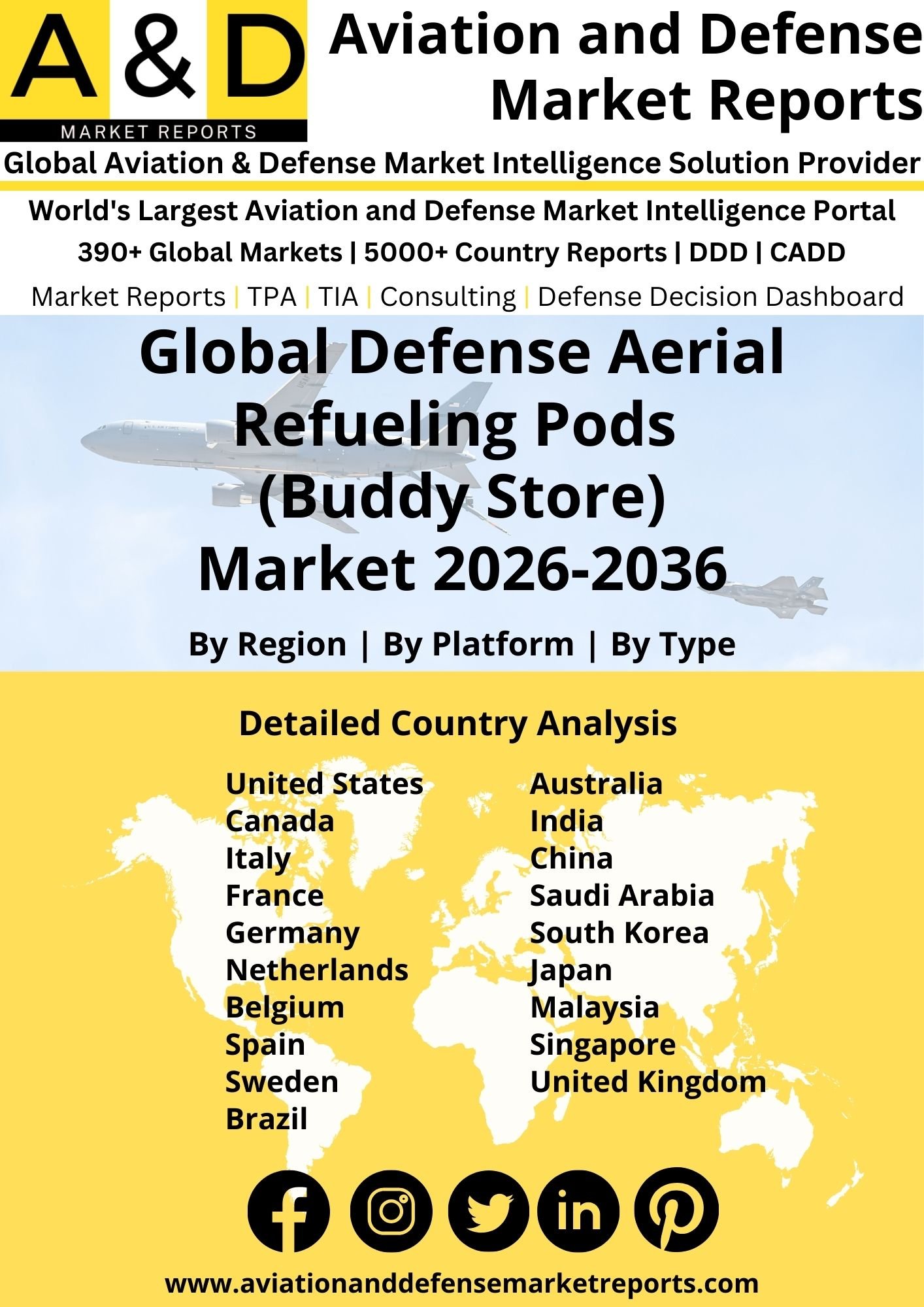
Global Defense Aerial Refueling Pods (Buddy Store) Market Overview
Aerial refueling pods, or buddy stores, enable fighter aircraft to extend mission endurance by transferring fuel mid-air. These systems turn combat jets into tanker assets, enhancing flexibility in contested airspace. Key players include major aerospace firms developing pod variants for legacy and next-gen platforms. Demand stems from modern air forces prioritizing rapid deployment and sustained operations without dedicated tankers.
Defense Aerial Refueling Pods (Buddy Store) Market Technology Trends
Advancements in aerial refueling pod technology emphasize lightweight composites and modular designs for easier integration across aircraft fleets. Digital fly-by-wire controls improve precision during hose-and-drogue connections, reducing pilot workload. Enhanced fuel flow management systems incorporate real-time diagnostics to minimize leaks and optimize transfer rates. Integration of advanced sensors enables compatibility with autonomous refueling trials, paving the way for unmanned operations. Hypersonic flow regulators and stealth-compatible materials address high-speed refueling challenges. Cybersecurity features protect against electronic warfare threats during data-linked transfers. Overall, trends shift toward multi-role pods supporting not just fuel but data relays and sensor fusion, aligning with networked warfare doctrines.
Market Integration Landscape
Integration of buddy store pods spans legacy fighters like F-16s and newer platforms such as F-35s, requiring standardized interfaces for seamless wing-pylon mounting. Challenges include aerodynamic drag minimization and electrical compatibility with varying aircraft avionics. Manufacturers collaborate with OEMs to certify pods under rigorous airworthiness standards, often involving custom adapters for non-standard hardpoints. Recent efforts focus on retrofit kits for fourth-gen jets, enabling quick upgrades without airframe modifications. Naval variants adapt pods for carrier-based operations, incorporating corrosion-resistant materials. Software-defined architectures allow over-the-air updates, easing future-proofing. The landscape favors open-system designs that support multi-nation interoperability, as seen in coalition exercises demanding cross-fleet refueling.
Drivers of Defense Aerial Refueling Pods (Buddy Store) Market Growth
Rising geopolitical tensions fuel demand for extended-range strike capabilities, where buddy pods provide on-demand tanker support without vulnerable large aircraft. Budget constraints push air forces toward cost-effective retrofits on existing fleets rather than procuring dedicated tankers. Evolving threat environments, including peer adversaries with advanced air defenses, necessitate dispersed operations with flexible refueling. Export opportunities grow as emerging powers modernize fighter inventories, seeking proven pod solutions for rapid force multiplication. Technological maturation lowers entry barriers, enabling smaller nations to adopt buddy systems. Standardization efforts by alliances streamline procurement, while simulation-driven testing accelerates certification. Sustainability initiatives promote efficient fuel use, indirectly boosting pod adoption in green aviation mandates.
Market Future Outlook
The market will evolve toward fully autonomous refueling systems, integrating AI for probe-drogue alignment in beyond-visual-range scenarios. Hypersonic and sixth-gen fighters will demand ultra-high-flow pods with adaptive nozzles. Emphasis on swarm tactics positions pods as enablers for loyal wingman drones, extending unmanned endurance. Supply chain resilience will drive localized manufacturing, reducing dependency on single suppliers. Interoperability standards will expand, supporting hybrid manned-unmanned teams. Emerging materials like self-healing polymers enhance durability in contested logistics. Overall, buddy stores will remain pivotal in distributed lethality concepts, with growth tied to rising global airpower investments.