Introduction
Naval ammunition plays a critical role in modern maritime warfare, enabling naval forces to defend territorial waters, protect strategic assets, conduct offensive operations, and ensure maritime security. As global naval modernization programs accelerate and geopolitical tensions continue to rise across key maritime regions, the demand for advanced naval ammunition is witnessing steady growth.
From conventional artillery shells and naval gun ammunition to guided missiles, torpedoes, depth charges, and close-in weapon system (CIWS) ammunition, today’s naval ammunition portfolio has evolved significantly. Modern naval forces require precision, extended range, higher lethality, and compatibility with increasingly sophisticated weapon systems. As a result, defense manufacturers are investing heavily in smart munitions, advanced propellants, and next-generation ammunition technologies.
This article explores the naval ammunition market, major ammunition types, emerging technologies, market drivers, challenges, and future growth opportunities.
What Is Naval Ammunition?
Naval ammunition refers to all types of munitions specifically designed for deployment by naval vessels, submarines, coastal defense systems, and naval aviation platforms. These munitions are used across various combat scenarios including:
- Surface warfare
- Anti-air warfare
- Anti-submarine warfare
- Land attack missions
- Missile defense
- Close-range ship protection
- Naval exercises and training
Unlike land-based ammunition, naval ammunition must withstand harsh maritime environments including saltwater corrosion, humidity, high-pressure storage, and long deployment cycles while maintaining operational reliability.
Major Types of Naval Ammunition
Naval Gun Ammunition
Naval guns remain one of the most versatile weapons aboard destroyers, frigates, patrol vessels, and amphibious ships.
Common calibers include:
- 20 mm
- 30 mm
- 40 mm
- 57 mm
- 76 mm
- 100 mm
- 127 mm (5-inch)
These rounds are used for:
- Surface engagements
- Shore bombardment
- Air defense
- Warning shots
- Anti-piracy operations
Modern programmable ammunition enables greater accuracy and effectiveness against fast-moving targets.
Missile Systems
Missiles represent the most advanced category of naval ammunition.
Examples include:
- Anti-ship missiles
- Surface-to-air missiles
- Cruise missiles
- Land attack missiles
- Anti-radiation missiles
Many modern naval fleets now integrate vertical launch systems (VLS) capable of carrying dozens of guided missiles with long-range precision strike capabilities.
Torpedoes
Torpedoes remain the primary underwater offensive weapon for:
- Submarines
- Surface combatants
- Maritime patrol aircraft
- Naval helicopters
Modern heavyweight torpedoes feature:
- Wire guidance
- Active/passive sonar
- Wake homing
- Long-range propulsion
- AI-assisted target recognition
Lightweight torpedoes are widely deployed for anti-submarine warfare.
CIWS Ammunition
Close-In Weapon Systems protect naval vessels against:
- Incoming missiles
- UAVs
- Aircraft
- Small boats
CIWS ammunition is specially designed for extremely high firing rates, often exceeding several thousand rounds per minute.
Examples include ammunition used by:
- Phalanx CIWS
- Goalkeeper CIWS
- AK-630
- Millennium Gun
Depth Charges and Anti-Submarine Weapons
Although modern torpedoes dominate underwater warfare, depth charges and rocket-assisted anti-submarine weapons remain useful for area denial and submarine suppression.
Many navies continue to deploy advanced anti-submarine rocket systems capable of delivering payloads several kilometers from the launch platform.
Growing Importance of Precision Naval Ammunition
Traditional unguided naval ammunition is increasingly being replaced by precision-guided munitions.
Advantages include:
- Greater strike accuracy
- Reduced collateral damage
- Extended engagement ranges
- Lower ammunition expenditure
- Improved operational effectiveness
Modern guided artillery rounds can strike targets over 100 kilometers away with remarkable precision, making them highly valuable for naval fire support missions.
Key Market Drivers
Rising Naval Modernization Programs
Countries worldwide are investing heavily in naval expansion to safeguard maritime interests.
Major modernization programs include:
- New destroyers
- Frigates
- Aircraft carriers
- Submarines
- Offshore patrol vessels
- Littoral combat ships
Each new platform requires advanced ammunition inventories throughout its operational life.
Increasing Maritime Security Challenges
Global shipping lanes face growing threats from:
- Piracy
- Illegal fishing
- Maritime terrorism
- Smuggling
- Regional territorial disputes
These security concerns are encouraging governments to strengthen naval readiness and ammunition stockpiles.
Expansion of Missile Defense Systems
Modern warships now integrate layered missile defense systems requiring specialized interceptors and high-performance naval ammunition.
Increasing deployment of:
- Vertical launch systems
- Directed-energy weapons
- Electronic warfare
- Integrated combat management systems
is creating additional demand for compatible ammunition solutions.
Growing Demand for Smart Munitions
Defense forces increasingly prefer ammunition capable of:
- Programmable detonation
- Airburst capability
- Precision guidance
- Multi-target engagement
- Network-enabled operations
These technologies significantly enhance battlefield effectiveness while reducing logistics requirements.
Emerging Technologies in Naval Ammunition
AI-Enabled Target Recognition
Artificial intelligence is improving guidance systems capable of distinguishing hostile targets from civilian vessels.
AI-assisted ammunition can optimize flight paths and improve terminal accuracy.
Extended Range Ammunition
Advanced propellants and aerodynamic designs are increasing engagement distances for naval artillery.
Extended-range projectiles allow ships to conduct coastal strike missions while remaining farther from enemy defenses.
Programmable Fuzes
Modern electronic fuzes enable multiple detonation modes including:
- Airburst
- Point detonation
- Delayed impact
- Proximity detonation
This flexibility increases mission effectiveness against diverse target types.
Reduced Signature Propellants
Next-generation propellants produce:
- Lower smoke
- Reduced muzzle flash
- Lower infrared signatures
These improvements enhance ship survivability during combat.
Advanced Materials
Manufacturers are adopting:
- Composite materials
- Corrosion-resistant alloys
- Lightweight casings
- High-energy explosives
These innovations improve ammunition durability and storage life in maritime environments.
Challenges Facing the Naval Ammunition Market
Despite strong growth prospects, the industry faces several challenges.
High Development Costs
Precision-guided naval ammunition requires sophisticated sensors, electronics, and propulsion systems, increasing production costs.
Supply Chain Constraints
Critical materials including energetic chemicals, explosives, and semiconductor components remain vulnerable to global supply disruptions.
Strict Safety Regulations
Naval ammunition must meet rigorous international safety and storage standards to prevent accidental detonations aboard ships and submarines.
Lifecycle Management
Many naval munitions remain in storage for decades, requiring regular inspection, refurbishment, and modernization.
Regional Market Outlook
North America
North America remains the largest naval ammunition market due to continuous fleet modernization, extensive defense budgets, and advanced missile development programs.
The United States Navy continues investing in long-range precision weapons, hypersonic missiles, and next-generation naval gun systems.
Europe
European nations are increasing naval spending in response to evolving regional security challenges.
Several countries are upgrading frigates, destroyers, and submarine fleets while expanding ammunition production capacity.
Asia-Pacific
Asia-Pacific is expected to witness the fastest growth.
Rising naval competition across the Indo-Pacific is driving investments in:
- Aircraft carriers
- Destroyers
- Amphibious ships
- Coastal defense
- Missile systems
Countries such as India, China, Japan, South Korea, and Australia continue expanding indigenous naval ammunition manufacturing capabilities.
Middle East and Africa
Growing investments in coastal defense, anti-piracy operations, and maritime security are creating new opportunities for naval ammunition suppliers.
Future Trends
Several trends are expected to shape the naval ammunition market over the next decade:
- Increased adoption of precision-guided naval artillery rounds
- Wider deployment of hypersonic naval missiles
- AI-enabled autonomous targeting
- Multi-role ammunition compatible with network-centric warfare
- Environmentally safer energetic materials
- Smart inventory management using digital logistics
- Expanded domestic ammunition production for strategic self-reliance
- Integration with unmanned surface and underwater vehicles
As naval warfare evolves toward multi-domain operations, ammunition will become increasingly intelligent, connected, and adaptable to diverse mission requirements.
Conclusion
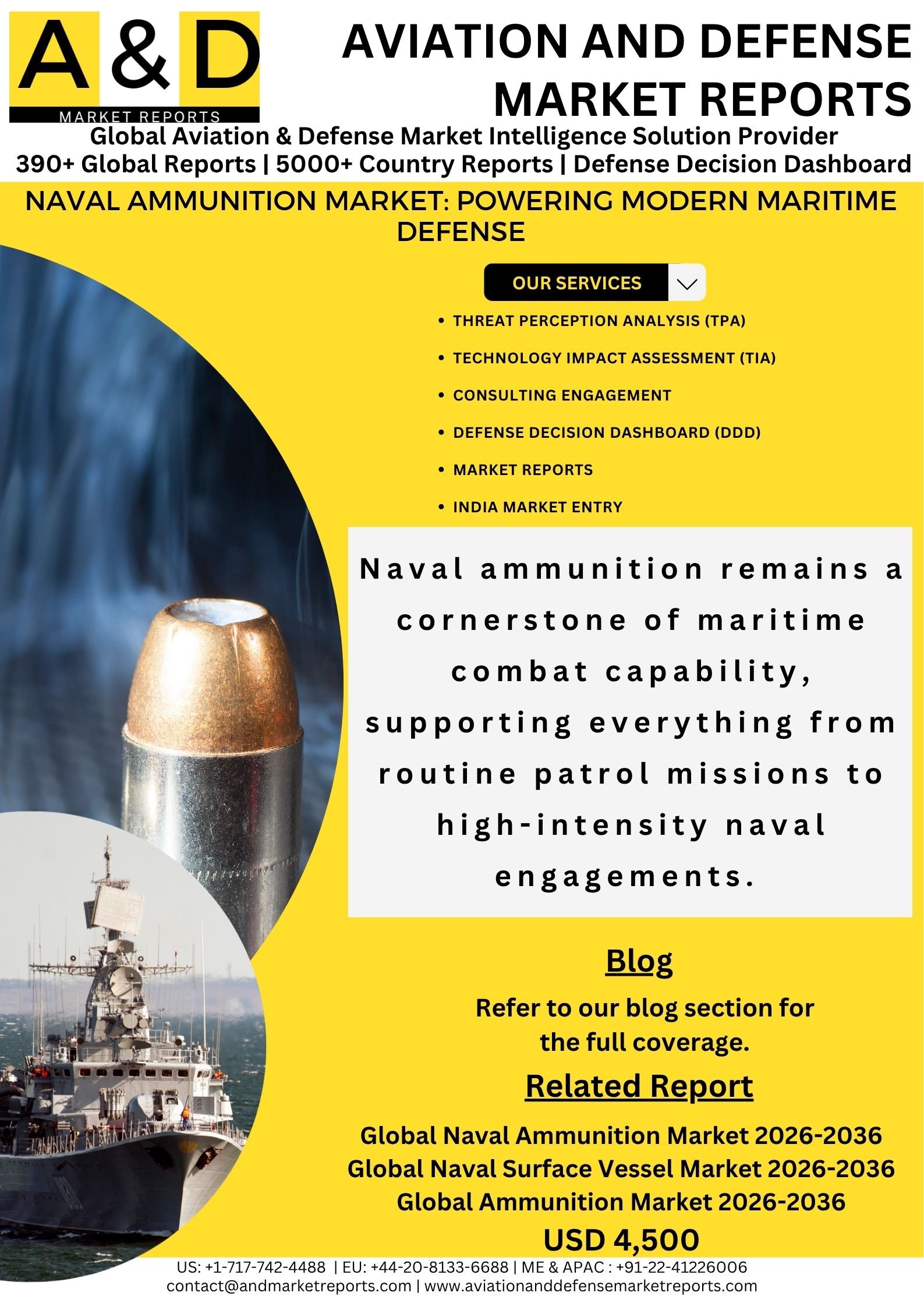
Naval ammunition remains a cornerstone of maritime combat capability, supporting everything from routine patrol missions to high-intensity naval engagements. The shift toward precision-guided munitions, advanced missile systems, programmable artillery rounds, and AI-enabled technologies is transforming the operational effectiveness of modern naval forces.
Driven by naval modernization programs, increasing geopolitical tensions, maritime security concerns, and technological advancements, the global naval ammunition market is expected to experience sustained growth over the coming years. Manufacturers that invest in innovation, production scalability, and next-generation ammunition technologies will be well positioned to meet the evolving needs of naval forces worldwide.
As nations continue strengthening their maritime defense capabilities, naval ammunition will remain an indispensable element of future naval warfare, ensuring superior firepower, operational readiness, and strategic deterrence across the world’s oceans.