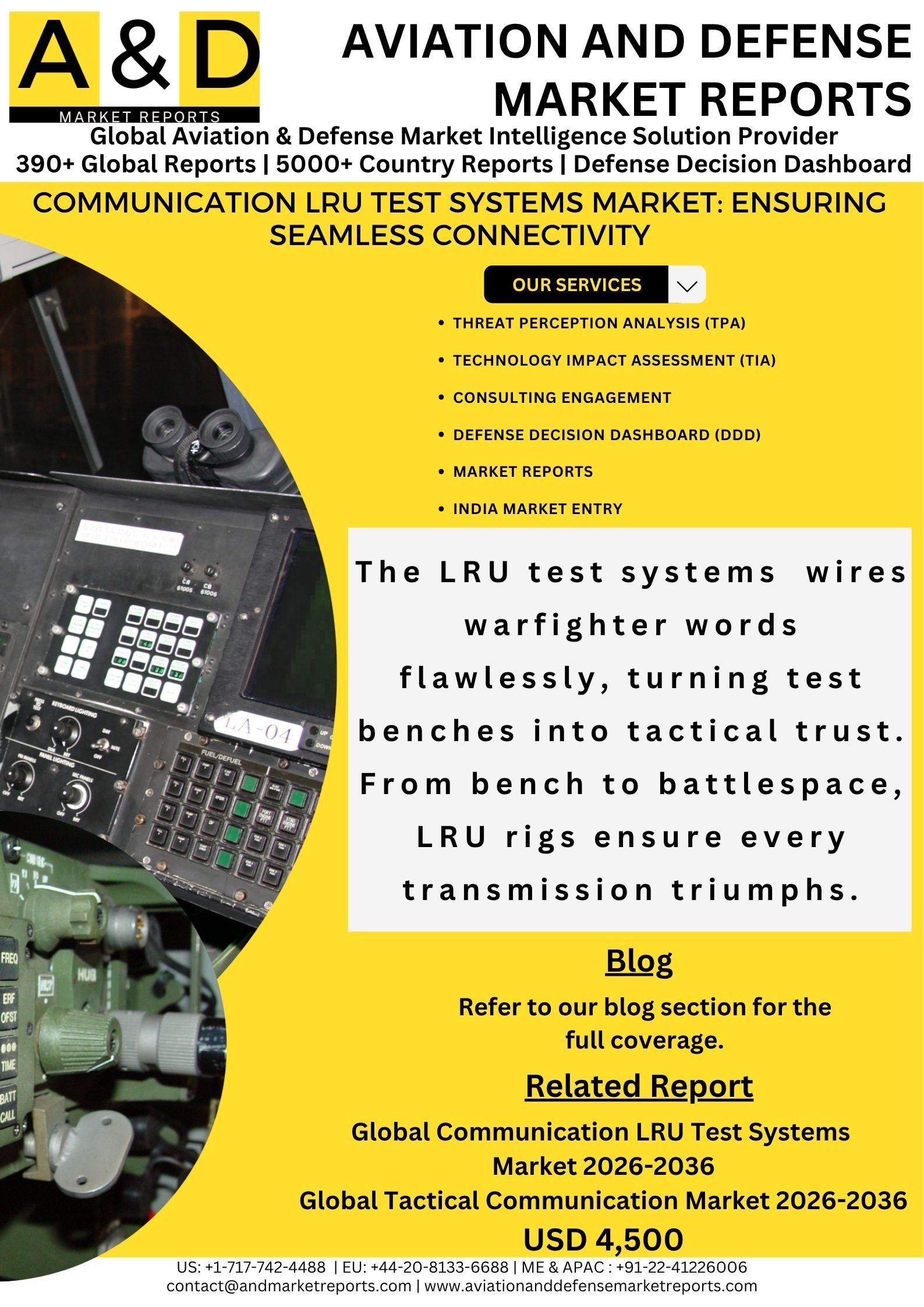
Communication LRU Test Systems form the modular building blocks of complex avionics and defense systems, housing transceivers, amplifiers, modems, and processors critical for voice, data, and video links. LRU test systems provide automated, high-precision validation for these plug-and-play components, simulating operational environments to verify performance before field deployment. This specialized market supports military aircraft, naval vessels, satellites, and ground stations, ensuring mission-critical comms withstand vibration, EMI, and temperature extremes without failures mid-operation.
Core Functionality of LRU Test Systems
Test rigs interface via standardized connectors like MIL-DTL-38999, injecting RF signals across VHF/UHF to SATCOM bands while monitoring bit error rates, power output, and modulation fidelity. Environmental chambers cycle from arctic chills to desert heats, shaking units to MIL-STD-810G profiles. Protocol analyzers decode Link-16 or VMF waveforms, flagging timing violations or encryption mismatches.
Automated test equipment (ATE) sequences diagnostics via PXI chassis, executing health checks from pre-flight to depot-level teardowns. Fault insertion mimics antenna failures or jamming, validating graceful degradation. Data logging feeds predictive analytics, spotting wear before cracks propagate.
These systems cut turnaround from weeks to hours.
Evolution from Bench Testing to Smart Rigs
Manual scopes and spectrum analyzers gave way to 1990s VME-based ATE for F-16 radios. Software-defined radio (SDR) rigs arrived with Joint Tactical Radio Systems (JTRS), emulating agile waveforms. Fourth-gen platforms leverage FPGAs for real-time protocol simulation.
AI now auto-generates edge cases, while cloud-linked testbeds enable fleet-wide regression. Virtual LRUs twin physical units, slashing hardware needs. Depot rigs federate with forward testers for global sustainment.
Strategic Applications Across Platforms
Fighter jets demand LRU validation for HAVE QUICK hops, ensuring ECCM amid SAM belts. Naval AESA consoles test phased-array feeds pre-mast install. SATCOM modems verify error correction under Doppler shifts.
Ground control stations certify crypto modules for drone links. UAV payloads test CNI suites for beyond-line-of-sight ops. Electronic attack pods validate jamming spurs without collateral EMI.
Rapid fielding cycles lean on portable racks.
Market Drivers Fueling Precision
Next-gen networks like MADL demand flawless LRUs for low-probability-intercept links. Platform obsolescence spurs drop-in replacements needing instant quals. Supply chain hardening favors in-house test for security.
Export programs equip allies with sustainment rigs. Diminishing sources drive reverse-engineering validation. Multi-domain ops require interoperable waveforms across services.
Cyber threats mandate secure boot verification.
Technical Innovations Streamlining Validation
PXIe modules pack vector signal generators and analyzers in 1U chassis. Machine learning baselines nominal signatures, alerting drifts early. Digital twins mirror LRUs virtually, iterating firmware sans hardware.
Quantum-safe crypto testbeds preview post-quantum upgrades. GaN PA rigs stress high-power amps to failure envelopes. Blockchain logs test provenance for audits.
Edge AI flags intermittent faults missed by scripts.
Deployment Challenges and Solutions
High-volume production bottlenecks test cells, eased by parallel bays. Firmware regressions slip through, caught by CI/CD pipelines. EMI test chambers book solid, prompting shielded tents.
Obsolescence hits test fixtures, modular COTS refresh. Operator training lags, VR walk-throughs bridge. Cybersecurity seals test networks from leaks.
Scalable racks adapt to LRU families.
Leading Innovators and Ecosystem
Keysight dominates with modular PXI suites for Link-16. Viavi crafts SDR testbeds for tactical radios. Teradyne scales ATE for high-mix production.
Astronics delivers integrated radio test sets, while National Instruments provides the foundational PXI architecture for custom ATE. L3Harris integrates environmental screening. Rohde & Schwarz excels in protocol emulation. Chains link FPGA coders to chamber makers.
Conferences demo waveform captures live.
Regional Sustainment Priorities
Indo-Pacific fleets prioritize HAVE QUICK II for carrier ops. Europe standardizes NATO waveforms. Mideast rigs test desert-durable LRUs.
Ukraine deploys field-expedient testers for donated gear.
Emerging Trends Automating Assurance
Digital twin federations span design to depot. Self-healing test scripts adapt to LRU variants. Blockchain certifies test chains immutably.
Quantum simulators stress crypto LRUs. AR glasses overlay diagnostics on units.
Operational Reliability Secured
LRU test systems slash no-fault-found NFF, maximizing fleet availability. Rapid quals field upgrades swiftly. Predictive maintenance averts mid-mission drops.
They deter through dependability, links unbroken.
Sustainability in Test Cells
Low-power PXI cuts chiller needs. Recyclable fixtures replace custom molds. Virtual twins minimize hardware waste.
Future Test Horizons
LRU test systems evolve to autonomous factories, AI certifying fleets 24/7. Quantum rigs validate unbreakable links. Persistent digital threads trace lifecycle quals.
This market wires warfighter words flawlessly, turning test benches into tactical trust. From bench to battlespace, LRU rigs ensure every transmission triumphs.