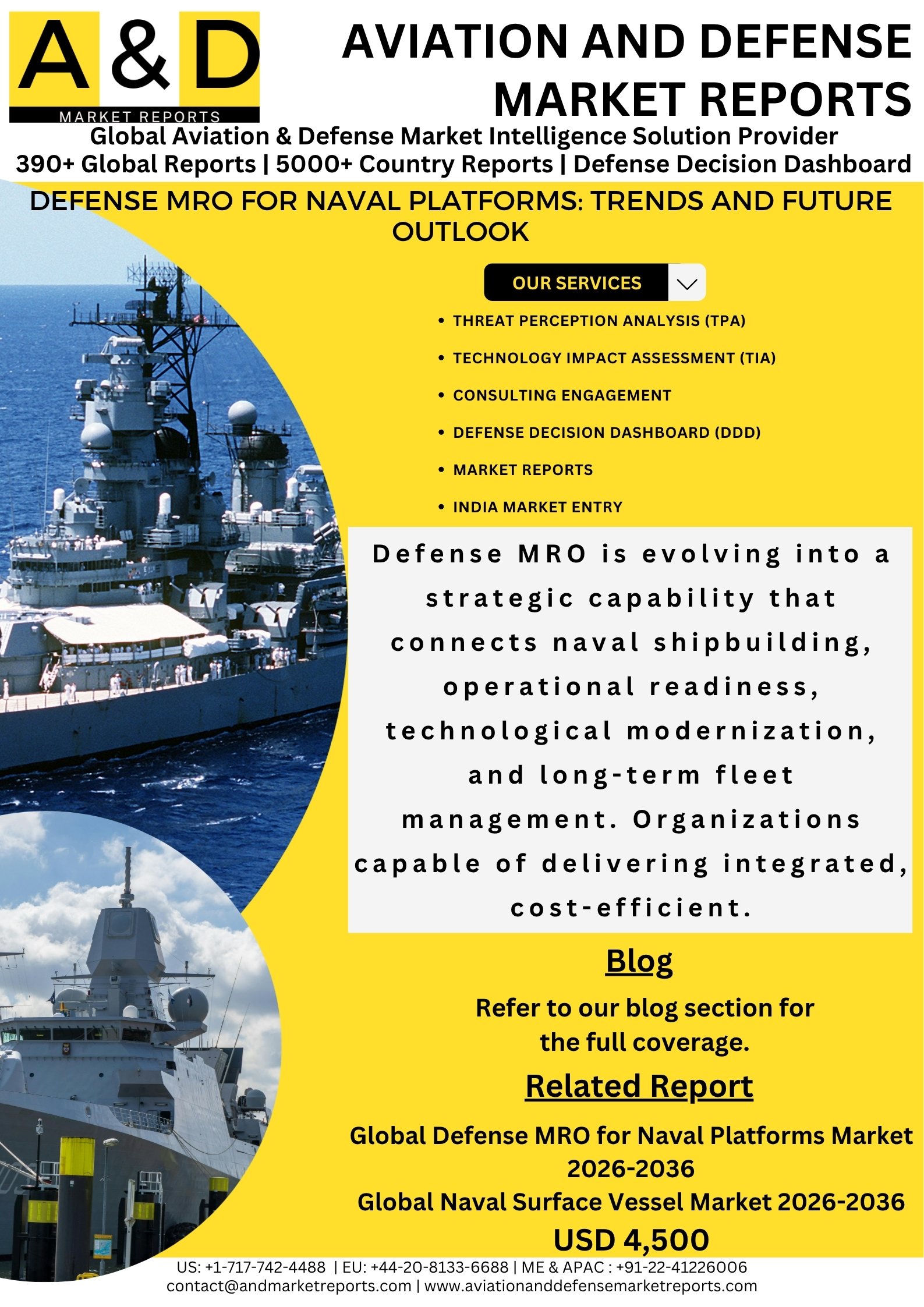
Defense Maintenance, Repair, and Overhaul (MRO) for naval platforms encompasses a comprehensive range of services aimed at maintaining the operational readiness, reliability, and service life of military vessels. These activities cover surface combatants, aircraft carriers, submarines, amphibious ships, patrol vessels, and auxiliary fleets operated by naval forces worldwide. As maritime security challenges intensify and naval technologies become increasingly sophisticated, MRO has emerged as a critical element of defense infrastructure.
Naval MRO involves routine inspections, equipment servicing, component replacement, structural repairs, system modernization, and comprehensive overhauls. Unlike commercial ship maintenance, defense MRO requires specialized capabilities to support advanced propulsion systems, combat management technologies, radar, sonar, electronic warfare equipment, and secure communication networks. The growing emphasis on fleet readiness, lifecycle cost optimization, and operational availability is driving demand for advanced naval maintenance solutions.
Evolution of Defense MRO – Naval Platforms
The evolution of naval MRO reflects the transformation of naval warfare and shipbuilding technologies. Historically, maintenance activities focused primarily on mechanical repairs, hull inspections, engine servicing, and basic equipment replacement. Conventional naval vessels relied heavily on mechanical systems, making maintenance largely dependent on manual inspections and scheduled servicing.
The introduction of guided missiles, nuclear propulsion, advanced radar, integrated combat systems, and sophisticated underwater technologies significantly expanded MRO requirements. Modern naval platforms incorporate interconnected digital systems that require specialized diagnostics, software updates, cybersecurity measures, and electronic component maintenance.
The transition toward predictive maintenance and digital fleet management represents another major development. Navies are increasingly adopting data-driven approaches to identify potential equipment failures before they affect operational performance. This evolution has transformed MRO from a primarily reactive activity into a strategic capability supporting long-term fleet sustainability.
Importance of Defense MRO – Naval Platforms
Naval MRO plays a fundamental role in maintaining maritime defense capabilities. Military vessels operate in demanding environments characterized by saltwater corrosion, extreme temperatures, mechanical stress, and prolonged deployments. Regular maintenance is essential to ensure that propulsion systems, navigation equipment, weapons, and communication technologies function reliably under operational conditions.
One of the primary benefits of MRO is extending the service life of expensive naval assets. Building new warships and submarines requires substantial investment, specialized infrastructure, and lengthy production schedules. Effective maintenance and modernization enable defense forces to preserve existing platforms while reducing the immediate need for fleet replacement.
MRO also contributes to mission readiness by minimizing unexpected equipment failures and reducing vessel downtime. Furthermore, upgrades to combat systems, sensors, and communication technologies allow older platforms to remain relevant against emerging threats. Consequently, naval MRO has become an essential element of defense planning, procurement strategies, and lifecycle management.
Key Components of Modern Defense MRO – Naval Platforms
Modern naval MRO comprises several interconnected service categories that support the operational performance of military vessels.
- Hull and Structural Maintenance: Includes corrosion control, underwater inspections, structural repairs, painting, welding, and damage assessment to preserve vessel integrity.
- Propulsion System Maintenance: Covers diesel engines, gas turbines, nuclear propulsion systems, gearboxes, propellers, shafts, and auxiliary machinery.
- Combat System Upgrades: Involves maintaining and modernizing missile launchers, naval guns, fire-control systems, radar equipment, and integrated combat management systems.
- Electrical and Electronic Systems: Includes power generation, distribution networks, navigation systems, communication equipment, and electronic warfare technologies.
- Submarine Maintenance: Requires specialized services for pressure hulls, sonar systems, propulsion technologies, life-support equipment, and underwater communication systems.
- Software and Cybersecurity Maintenance: Focuses on software updates, system integration, vulnerability management, and protecting connected naval platforms against cyber threats.
- Overhaul and Modernization: Encompasses comprehensive vessel refurbishment, mid-life upgrades, equipment replacement, and performance enhancement programs.
These components collectively support the availability, safety, and technological relevance of modern naval fleets.
Technological Advancements Driving Market Growth
Technological innovation is reshaping the defense MRO market for naval platforms. Predictive maintenance solutions powered by artificial intelligence (AI), machine learning, and advanced analytics enable maintenance teams to identify abnormal operating conditions and anticipate equipment failures.
Digital twins are increasingly being explored to create virtual representations of naval vessels and their critical systems. These models allow engineers to simulate operating conditions, evaluate equipment performance, and assess maintenance requirements without interrupting actual operations.
Robotics and remotely operated vehicles are improving underwater inspections by reducing the need for divers in hazardous environments. Additive manufacturing is also creating opportunities for producing specialized replacement components, particularly when conventional supply chains face delays.
Additionally, advanced diagnostic tools, automated inspection systems, and secure digital maintenance platforms are improving repair accuracy and operational efficiency. As naval vessels become more connected and technologically complex, these advancements are expected to strengthen demand for specialized MRO services.
Growing Defense MRO – Naval Platforms Production Supporting Market Expansion
The expansion of global naval shipbuilding programs is creating a growing installed base of military vessels requiring long-term maintenance and support. Countries are investing in new frigates, destroyers, submarines, aircraft carriers, and offshore patrol vessels to strengthen maritime security and protect strategic interests.
Every new naval platform introduces recurring requirements for inspections, component replacement, technical support, and periodic overhauls throughout its operational lifecycle. As a result, increased shipbuilding activity generates demand for MRO services extending well beyond the initial delivery of vessels.
Domestic shipbuilding initiatives and localization programs are also encouraging the development of regional maintenance infrastructure. Governments are investing in shipyards, dry docks, repair facilities, and specialized engineering capabilities to reduce dependence on overseas service providers.
This relationship between naval production and lifecycle support is reinforcing the importance of MRO within broader defense industrial strategies.
Increasing Demand for Defense MRO – Naval Platforms and Upgrades
The growing demand for naval MRO is driven by fleet aging, evolving maritime threats, and the need to maintain operational availability. Several naval forces continue operating vessels that require extensive maintenance and modernization to meet contemporary mission requirements.
Upgrading existing platforms is often a practical approach to extending operational relevance while managing capital expenditure. Modernization programs may include replacing legacy radar systems, integrating advanced communication networks, upgrading propulsion components, and improving electronic warfare capabilities.
The expansion of submarine fleets and the growing deployment of unmanned maritime systems are also introducing new maintenance requirements. Furthermore, increased operational deployment in strategically important maritime regions is placing additional pressure on maintenance schedules and repair infrastructure.
These factors are encouraging defense organizations to adopt comprehensive lifecycle support contracts and long-term partnerships with specialized MRO providers.
Regional Market Developments
Regional market growth is influenced by naval modernization priorities, defense budgets, domestic shipbuilding capabilities, and maritime security requirements.
North America: The region remains an important market, supported by extensive naval fleets, advanced shipyards, and sustained investment in submarine maintenance, aircraft carrier overhauls, and combat system modernization.
Europe: European countries are strengthening naval maintenance capabilities through fleet renewal programs, collaborative defense initiatives, and investments in submarine and surface vessel modernization. Regional shipyards are also expanding their capabilities to support increasingly sophisticated naval platforms.
Asia-Pacific: The region represents a significant growth area, driven by naval expansion, maritime security concerns, and investments in indigenous shipbuilding. Countries such as India, China, Japan, and South Korea are developing domestic shipyard infrastructure and advanced maintenance capabilities.
Middle East: Countries are investing in naval fleet modernization, maritime surveillance, and maintenance infrastructure to support growing defense requirements across strategically important waterways.
Latin America: Regional defense organizations are focusing on extending the operational life of existing fleets, modernizing patrol vessels, and strengthening domestic naval repair capabilities.
Competitive Landscape of the Market
The defense naval MRO market includes shipbuilders, defense contractors, specialized shipyards, engineering companies, and technology providers. Competition is shaped by technical expertise, infrastructure availability, contract execution capabilities, security compliance, and long-term customer relationships.
Major industry participants include BAE Systems, Huntington Ingalls Industries, General Dynamics, Lockheed Martin, Thales, Naval Group, thyssenkrupp Marine Systems, and other regional shipbuilding and maintenance organizations.
Companies are increasingly emphasizing integrated lifecycle support, digital maintenance solutions, modernization services, and long-term sustainment agreements. Strategic partnerships between original equipment manufacturers, naval shipyards, and defense agencies are also becoming important for delivering comprehensive maintenance capabilities.
Challenges Affecting Market Growth
Despite favorable demand conditions, several challenges influence the expansion of the naval MRO market. High maintenance costs, limited dry-dock availability, and lengthy repair schedules can constrain operational readiness and increase lifecycle expenditure.
The shortage of skilled technicians, naval engineers, and specialized maintenance personnel presents another significant challenge. Modern vessels require expertise across mechanical engineering, electronics, software, cybersecurity, and advanced materials.
Supply chain disruptions and the limited availability of obsolete components can further delay repairs, particularly for aging platforms. Additionally, integrating modern technologies into legacy vessels involves technical complexity, compatibility concerns, and extensive testing requirements.
Strict defense regulations, classified technical information, and cybersecurity requirements also increase the complexity of maintenance operations.
Future Outlook of Defense MRO – Naval Platforms
The future of defense MRO for naval platforms will be shaped by digital transformation, fleet modernization, and the growing emphasis on lifecycle sustainability. Predictive maintenance, AI-driven diagnostics, digital twins, robotics, and advanced manufacturing are expected to become increasingly important across naval maintenance operations.
As defense forces expand their fleets and extend the service lives of existing vessels, demand for specialized repair, overhaul, and modernization services is expected to remain significant. The development of indigenous shipyards and regional maintenance ecosystems will further support market expansion, particularly in Asia-Pacific and other emerging defense markets.
The integration of cybersecurity, software sustainment, and advanced combat system maintenance will also broaden the scope of naval MRO beyond traditional mechanical services.
Ultimately, defense MRO is evolving into a strategic capability that connects naval shipbuilding, operational readiness, technological modernization, and long-term fleet management. Organizations capable of delivering integrated, cost-efficient, and technologically advanced maintenance solutions will play an increasingly important role in supporting the next generation of global naval capabilities.