Introduction
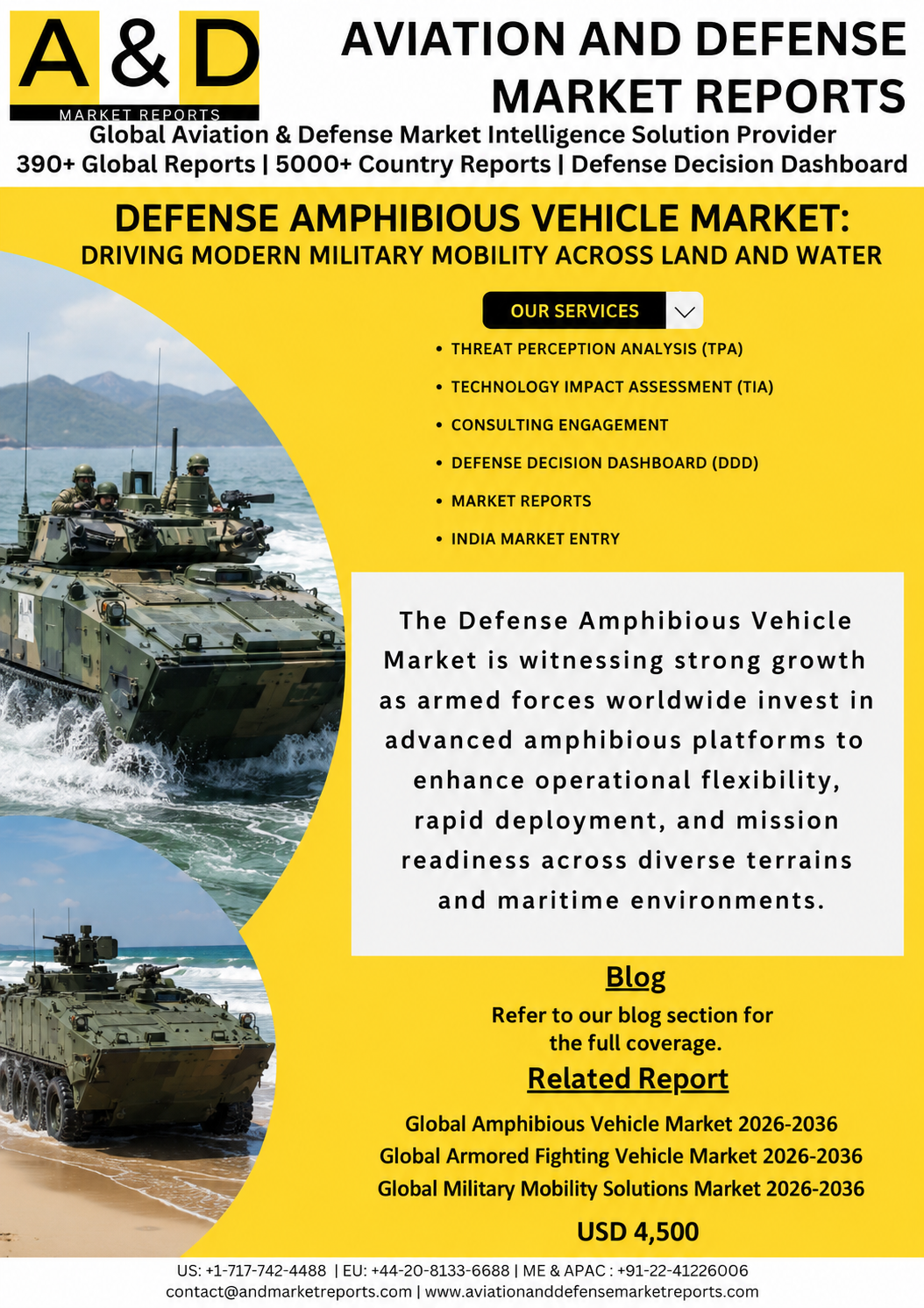
Defense amphibious vehicles have become an essential component of modern military operations, enabling armed forces to seamlessly transition between land and water environments during combat, reconnaissance, logistics, and humanitarian missions. These specialized military platforms are engineered to operate effectively across diverse terrains, including rivers, coastal regions, marshlands, beaches, and flood-prone areas, providing operational flexibility that conventional armored vehicles cannot achieve. As military organizations worldwide increasingly prioritize rapid deployment capabilities and expeditionary warfare, demand for advanced amphibious vehicles continues to grow.
The evolution of military strategies toward multi-domain operations, combined with rising geopolitical tensions and expanding naval modernization programs, has accelerated investments in next-generation amphibious combat platforms. Countries are strengthening their amphibious assault capabilities to protect maritime interests, conduct island defense operations, and enhance disaster response readiness. Consequently, manufacturers are focusing on improving vehicle survivability, mobility, firepower, and digital connectivity to meet evolving operational requirements.
Evolution of Defense Amphibious Vehicle
The history of defense amphibious vehicles dates back to World War II, when military forces developed specialized landing vehicles capable of transporting troops and equipment directly from naval vessels to shore. These early vehicles played a decisive role in large-scale amphibious assaults and demonstrated the strategic importance of seamless land-water mobility.
Over the decades, technological progress transformed amphibious platforms from basic transport vehicles into sophisticated combat systems. Modern amphibious combat vehicles incorporate advanced armor protection, improved propulsion systems, enhanced suspension technologies, integrated communication systems, and powerful weapon stations. Military forces now require vehicles capable of operating in contested littoral environments while supporting mechanized infantry, reconnaissance units, and expeditionary forces.
Recent modernization programs have introduced hybrid propulsion concepts, modular mission configurations, unmanned technologies, and digital battlefield integration, significantly expanding the operational capabilities of amphibious vehicles.
Importance of Defense Amphibious Vehicle
Defense amphibious vehicles provide armed forces with unmatched operational flexibility during coastal assaults, river crossings, and expeditionary missions. Their ability to move efficiently between water and land eliminates the need for separate transportation systems, enabling faster deployment and improved battlefield responsiveness.
These vehicles are particularly valuable in regions characterized by extensive coastlines, river networks, islands, wetlands, and complex coastal terrain. They support a wide range of military operations, including amphibious assaults, peacekeeping missions, humanitarian assistance, disaster relief, border security, and special operations.
In modern warfare, rapid maneuverability often determines mission success. Amphibious vehicles enable forces to bypass damaged infrastructure, cross natural obstacles, and establish operational presence in challenging environments where traditional armored vehicles cannot operate effectively. Their strategic value continues to increase as nations focus on maritime security and power projection.
Key Components of Modern Defense Amphibious Vehicle
Modern defense amphibious vehicles integrate multiple advanced technologies to ensure high levels of mobility, survivability, and combat effectiveness. Hull designs are optimized for both hydrodynamic performance and ballistic protection, allowing vehicles to navigate water while maintaining resistance against battlefield threats.
Powertrain systems combine high-performance diesel engines with sophisticated transmission technologies that deliver efficient mobility across rugged terrain and aquatic environments. Water propulsion systems, including water jets and propellers, provide enhanced maneuverability during amphibious operations.
Advanced armor packages featuring composite materials, mine-resistant designs, and active protection systems significantly improve crew survivability against mines, improvised explosive devices, and anti-armor weapons. Modern vehicles also incorporate remote weapon stations, stabilized cannons, machine guns, anti-tank missile systems, and digital fire-control technologies.
Integrated battlefield management systems, satellite communications, GPS navigation, thermal imaging, night vision, and sensor fusion technologies enable commanders to maintain real-time situational awareness and coordinate operations more effectively.
Technological Advancements Driving Market Growth
Continuous technological innovation remains a major factor driving the growth of the defense amphibious vehicle market. Artificial intelligence is increasingly being integrated into navigation, threat detection, predictive maintenance, and autonomous mobility systems. These technologies enhance operational efficiency while reducing crew workload.
Advanced lightweight composite materials improve vehicle protection without significantly increasing weight, enabling better mobility and fuel efficiency. Hybrid-electric propulsion systems are gaining attention for reducing fuel consumption, improving silent operation, and supporting future military sustainability initiatives.
Digital battlefield connectivity is another significant advancement. Modern amphibious vehicles are becoming integral components of network-centric warfare, sharing intelligence with drones, command centers, naval vessels, and other combat platforms in real time. Enhanced cyber protection and electronic warfare resilience further strengthen operational effectiveness in contested environments.
Growing Defense Amphibious Vehicle Production Supporting Market Expansion
Global defense modernization programs have significantly increased the production of amphibious combat vehicles. Governments are investing in fleet replacements, capability upgrades, and indigenous manufacturing initiatives to strengthen military readiness while reducing dependence on foreign suppliers.
Domestic production programs encourage technology transfer, local industrial participation, and long-term maintenance capabilities. Several countries are collaborating with international defense manufacturers to develop advanced amphibious vehicles that meet specific operational requirements while supporting national defense industries.
Rising defense budgets, increasing procurement programs, and expanding export opportunities continue to stimulate manufacturing capacity, creating favorable conditions for long-term market expansion.
Increasing Demand for Defense Amphibious Vehicle and Upgrades
Many armed forces continue to operate aging amphibious fleets that require modernization to address emerging battlefield threats. Upgrade programs are becoming increasingly popular as they provide cost-effective alternatives to complete fleet replacement while extending operational service life.
Modernization efforts typically include enhanced armor protection, improved engines, advanced communications, digital command systems, remote weapon stations, and upgraded navigation technologies. These improvements significantly enhance mission effectiveness while reducing lifecycle costs.
Growing military emphasis on rapid deployment, expeditionary operations, coastal security, and multi-domain warfare continues to generate sustained demand for both newly manufactured vehicles and modernization programs worldwide.
Regional Market Developments
North America remains a leading market for defense amphibious vehicles due to continuous investments in expeditionary warfare capabilities, naval modernization, and armored vehicle replacement programs. Ongoing research into next-generation amphibious combat systems further supports regional market growth.
Europe is strengthening amphibious capabilities through multinational defense cooperation, modernization initiatives, and increased defense spending in response to evolving security challenges. Several countries are upgrading their mechanized forces with advanced amphibious platforms capable of supporting NATO operations.
The Asia-Pacific region is expected to witness substantial market growth owing to territorial disputes, expanding naval capabilities, island defense strategies, and increasing indigenous defense manufacturing. Countries throughout the region continue investing in modern amphibious combat vehicles to strengthen maritime security and rapid response capabilities.
The Middle East, Africa, and Latin America are also gradually expanding procurement activities, particularly for border security, disaster response, and coastal defense operations.
Competitive Landscape of the Market
The defense amphibious vehicle market is highly competitive, with established defense manufacturers focusing on technological innovation, strategic partnerships, government contracts, and continuous product development. Companies compete by offering improved survivability, enhanced mobility, digital integration, modular mission configurations, and reduced lifecycle costs.
Manufacturers are investing heavily in research and development to integrate artificial intelligence, autonomous technologies, advanced armor systems, hybrid propulsion, and next-generation electronic architectures. International collaborations, joint ventures, and licensed production agreements continue to expand market opportunities while strengthening regional defense industries.
Challenges Affecting Market Growth
Despite strong growth potential, the defense amphibious vehicle market faces several challenges. High development and procurement costs remain major barriers, particularly for countries with limited defense budgets. The integration of advanced technologies also increases maintenance complexity and lifecycle expenses.
Stringent regulatory requirements, lengthy procurement processes, and evolving military specifications can delay vehicle development and production schedules. Additionally, global supply chain disruptions affecting electronic components, specialized materials, and propulsion systems may influence manufacturing timelines and overall market growth.
Manufacturers must also address cybersecurity risks, electronic warfare threats, and increasingly demanding operational requirements while maintaining affordability and reliability.
Future Outlook of Defense Amphibious Vehicle
The future of defense amphibious vehicles will be shaped by increasing automation, digital transformation, and next-generation mobility technologies. Artificial intelligence, autonomous navigation, predictive maintenance, and unmanned operational capabilities are expected to become standard features in future platforms.
Hybrid-electric propulsion, advanced composite armor, active protection systems, and enhanced battlefield networking will further improve operational effectiveness. Growing emphasis on expeditionary warfare, maritime security, disaster response, and multi-domain operations will continue driving procurement and modernization programs worldwide.
As geopolitical uncertainties persist and military organizations seek greater operational flexibility, defense amphibious vehicles will remain critical assets supporting modern armed forces. Continuous innovation, strategic investments, and expanding international defense cooperation are expected to sustain long-term market growth while enabling military forces to meet increasingly complex operational challenges across land and maritime environments.