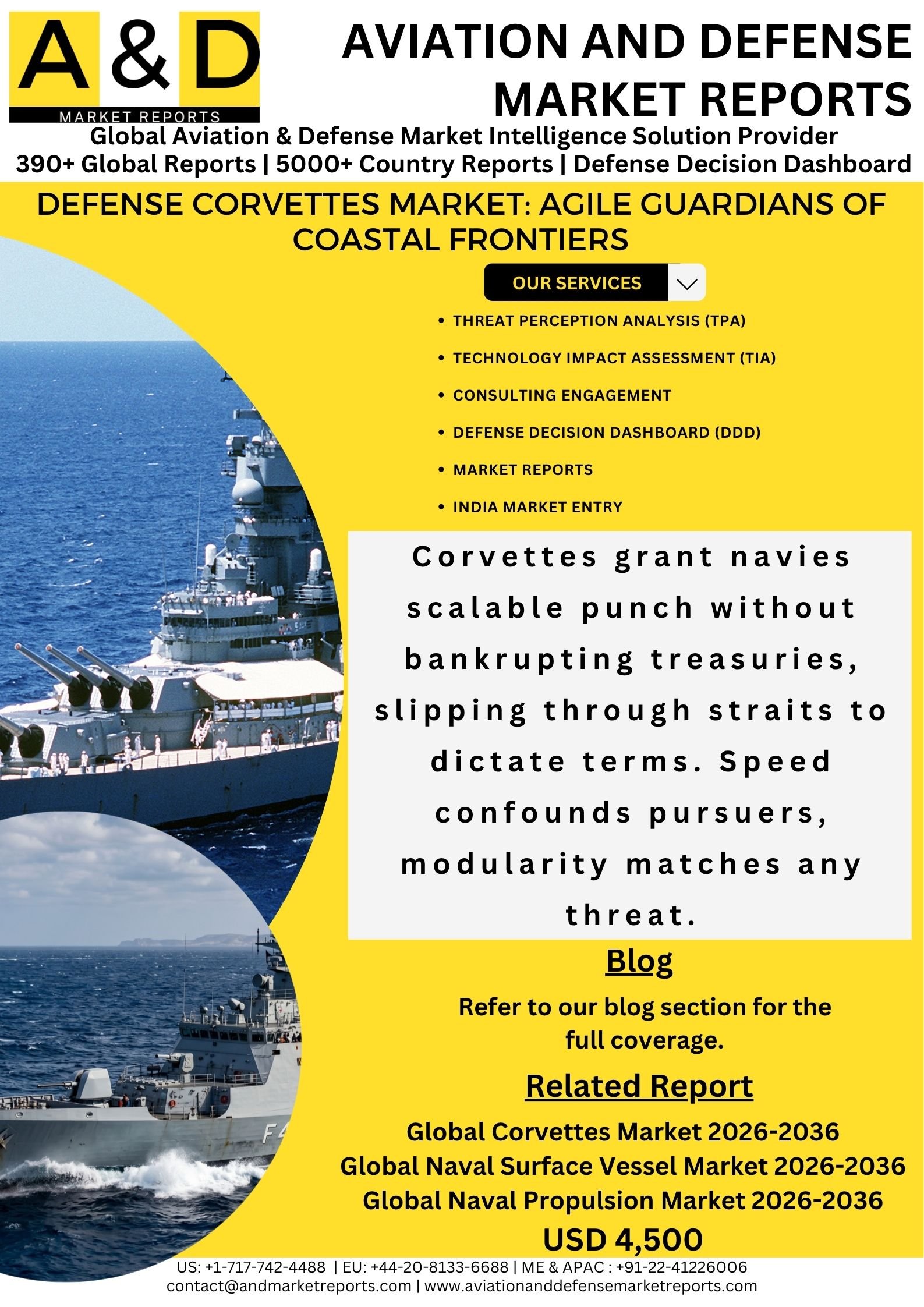
Defense corvettes stand as versatile workhorses in modern navies, blending speed, firepower, and affordability to patrol territorial waters, counter asymmetric threats, and project power in littoral zones. Smaller than frigates, yet punchier than patrol boats, these multi-role vessels excel in anti-surface warfare, submarine hunting, air defense, and maritime interdiction, often operating independently or screening larger fleets. The transition toward the ‘Distributed Maritime Operations’ doctrine places corvettes as essential command nodes for uncrewed surface swarms. The market surges amid rising maritime disputes, piracy hotspots, and demands for cost-effective fleet modernization, favoring modular designs that adapt to evolving missions through plug-and-play weapon modules and sensor upgrades.
Core Design Principles
Corvettes prioritize shallow drafts for near-shore agility, reduced radar cross-sections via angled hulls and composite materials, and high-speed diesel engines or gas turbines for rapid dashes. Vertical launch systems house anti-air missiles, while deck guns and anti-ship missiles target surface threats. Sonar domes and towed arrays hunt submarines silently.
Integrated mast arrays fuse radar, electro-optics, and electronic warfare into stealthy spires. Combat management systems weave sensor feeds into unified tactical pictures, automating threat prioritization. Hangars shelter helicopters or drones for over-the-horizon strikes.
Evolution from Escorts to Multi-Role Titans
Historically sailing as convoy escorts against submarines, corvettes evolved through Cold War missile boats into today’s networked combatants. Stealth shaping and digital backbones transformed them from fragile scouts into survivable predators, slipping inside enemy bubbles to launch salvos.
Post-Cold War budgets shrank fleets, spotlighting corvettes’ value: lower acquisition costs, simpler logistics, and export appeal. Hybrid electric propulsion now extends loiter times silently, while unmanned surface vessels extend their reach as loyal scouts. Littoral dominance defines their renaissance.
Mission Spectrum Secured
Coastal defense patrols enforce exclusive economic zones against smugglers and intruders. Anti-piracy sweeps project authority off chokepoints. Amphibious support screens landings, guns suppressing beach defenses. Modern corvettes are heavily tasked with asymmetric air defense, acting as critical shields against low-cost, high-volume drone and loitering munition swarms.
Air defense umbrellas shield merchant convoys from drones and cruise missiles. ASW screens hunt submarines shadowing carriers. Humanitarian ops deliver aid swiftly, helos winching survivors. Their jack-of-all-trades flexibility shines in gray-zone skirmishes.
Market Drivers Accelerating Builds
Territorial frictions in crowded seas spur fleet expansions, nations bulking littoral forces affordably. Asymmetric threats—swarms of fast boats, suicide drones—demand agile counters. Export pipelines flow to emerging powers seeking turnkey solutions with local offsets. Budget squeezes favor corvettes over pricier blue-water ships. Modular upgrades future-proof hulls economically. Regional alliances standardize designs for interoperability. The Naval modernization waves crest globally.
Technological Leaps Arming Hulls
Active stealth coatings absorb radar pulses. AI-driven decoys spoof incoming missiles.Directed-energy lasers zap drones mid-swarm.
Hypersonic anti-ship missiles outpace defenses from VLS cells. Quantum sensors detect subs through layers. Also, Cyber-hardened networks repel hacks autonomously. The Unmanned wingmen launch from decks, multiplying firepower.
Operational Challenges Navigated
Crew endurance limits long patrols, automation rotates watches. Harsh littorals batter hulls, corrosion-resistant alloys endure. Supply chains stretch for remote ops, containerized logistics simplify resource movement.
Electronic warfare saturates bands, cognitive EW adapts frequencies dynamically. Minefields lurk shallowly, unmanned sweepers clear paths. Training simulators hone swarm tactics virtually.
Prime Builders Shaping Waves
Naval Group crafts stealthy Gowind platforms with vertical launch versatility. Fincantieri’s Freedom variants blend Italian elegance with American modules. Damen Schelde yields modular Sigma frames customized per buyer.
HD Hyundai exports KDX batches eastward. ThyssenKrupp Marine Systems fuses German precision into MEKO hulls. Strategies blend co-production deals with tech transfers, locking long-term support. Yards hum with export orders.
Regional Hotspots Demanding Defenses
Asia-Pacific hotspots fuel rapid builds amid island chains and submarine races. Middle East patrols guard oil lanes against proxies. Europe bolsters Baltic sentinels versus hybrid threats. Africa counters piracy off horns. Latin America secures drug routes. Alliances pool resources for joint designs. Global littorals bristle with hulls.
Sustainability Afloat
Hybrid drives sip fuel quietly. Recyclable composites lighten wakes. Solar skins trickle-charge batteries. Predictive maintenance apps slash dry-dock times. Biofouling paints minimize drag cleanly. Green navies sail responsibly.
Emerging Horizons Launched
Drone mothership corvettes unleash swarms autonomously. Hypersonic boost-gliders strike from horizons. Loyal wingmen form wolfpacks under human oversight. Blockchain traces ammo lineages securely. AR glasses overlay fire solutions.
Unmatched Littoral Mastery
Corvettes grant navies scalable punch without bankrupting treasuries, slipping through straits to dictate terms. Speed confounds pursuers, modularity matches any threat. They own the fight close ashore.
Markets propel these agile sentinels forward, hulls slicing contested waves. From chokepoints to coastlines, corvettes command maritime margins decisively. Deploy the edge—littoral supremacy beckons.