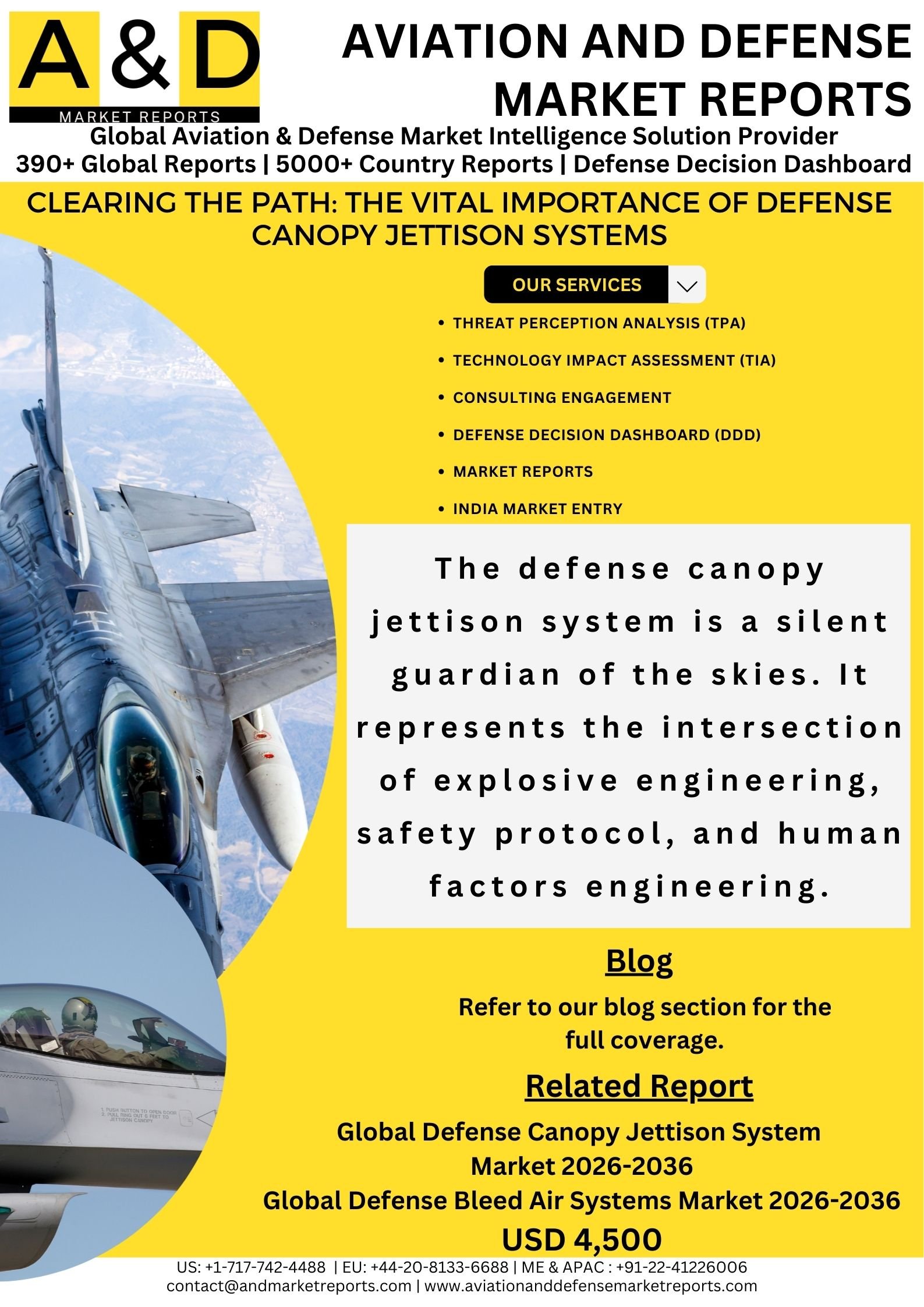
In the high-stakes world of military aviation, pilot safety stands as the utmost priority. While aircraft design focuses on performance and lethality, the mechanisms that preserve human life during catastrophic failures are equally critical. Among these life-saving technologies, the canopy jettison system holds a unique position. It serves as the gateway to survival, ensuring that a pilot can escape a compromised aircraft without obstruction. This blog explores the functionality, significance, and evolution of these essential defense systems.
The cockpit canopy protects the crew from wind, debris, and pressure. However, in an emergency, this protective shell becomes a barrier. Ejection seats require a clear path. If the canopy remains intact, the seat cannot travel upward safely. Therefore, removing the canopy rapidly is a prerequisite for successful ejection in many aircraft configurations. The system must function flawlessly regardless of altitude, speed, or aircraft orientation. The physics involved are complex, as the transparency material is designed to be incredibly strong to withstand bird strikes and aerodynamic forces during high-speed flight. This strength must be overcome instantly when survival is at stake.
Bird Strike-Resistant Canopy Materials
Advanced canopies use stretched acrylic or polycarbonate laminates, tested to MIL-STD-810 for bird impacts at Mach speeds. Innovations like self-healing polymers from suppliers such as PPG Aerospace reduce micro-cracks, balancing strength with jettison compatibility.
These systems typically utilize explosive mechanisms. Linear shaped charges are embedded within the canopy frame or along the transparency material itself. When activated, these charges detonate simultaneously, slicing through the strong polymer or glass material in fractions of a second. The speed of this operation is vital. Every millisecond counts when an aircraft is descending uncontrollably or engulfed in flames. The system must function flawlessly regardless of altitude, speed, or aircraft orientation. The explosive cords are carefully positioned to ensure the canopy breaks into manageable pieces that will not strike the pilot during ejection. This precise fragmentation is the result of extensive engineering and testing.
Linear Shaped Charge Technology
Linear shaped charges (LSCs) employ RDX or HMX explosives in copper-lined cords, detonating at 8,000 m/s to create a focused plasma jet. Manufacturers like Ensign-Bickford Aerospace refine these for minimal residue, ensuring clean cuts in 2-5 milliseconds.
The jettison system does not operate in isolation. It is deeply integrated with the ejection seat and the aircraft’s emergency power supply. In many modern fighters, the sequence is automated. Pulling the ejection handle initiates a chain reaction. The canopy blows off, and immediately after, the seat rocket motor ignites. This sequencing prevents the pilot from colliding with the canopy debris. Some advanced designs allow the seat to penetrate the canopy directly, but jettison remains the preferred method for larger transparencies to minimize injury risk from shards. The integration requires seamless communication between various avionics systems to ensure the correct order of operations is followed under extreme stress.
Ejection Seat Sequencing Advances
Martin-Baker’s US16E seat sequences jettison in 0.1 seconds before rocket ignition, using drogue guns for stabilization. Zero-zero capability saves pilots from stalls or ground emergencies, with over 7,500 lives credited globally.
While rapid deployment is necessary during emergencies, accidental activation on the ground poses severe risks to ground crew and pilots. Therefore, sophisticated safety interlocks are installed. These mechanical or electronic locks prevent the system from arming unless specific conditions are met, such as the aircraft being airborne or the weight being off the landing gear. Maintenance personnel follow strict protocols to ensure these safety pins are in place during servicing. This balance between accessibility during crisis and security during routine operations is a core design challenge. Engineers must ensure that the system cannot be triggered by vibration, lightning strikes, or electrical surges during normal missions.
Safety Interlock Mechanisms
RFID-enabled pins and squat-switch sensors arm systems only above 100 knots. Collins Aerospace’s electronic interlocks use encrypted signals, preventing EMP or lightning triggers while allowing quick ground safing.
The canopy material itself must be strong enough to withstand bird strikes and high-speed airflow yet fragile enough to shatter cleanly under the force of the jettison charge. Engineers constantly research new polymers and composite materials to optimize this balance. The goal is to maintain structural integrity during normal flight while ensuring predictable fragmentation during emergency egress. The weight of the system also matters. Adding heavy explosive cords affects the aircraft’s center of gravity and overall performance. Lightweight solutions are constantly sought to maintain agility. Material science plays a huge role here, as new transparent ceramics and reinforced plastics offer different challenges and opportunities for jettison designers.
Lightweight Canopy Innovations
Next-gen materials like Dow’s Tyril polycarbonate reduce weight by 20% versus glass, with embedded nanowires for de-icing. These maintain bird-strike resistance while optimizing CG for agile platforms like the Tejas Mk2.
Defense aviation demands rigorous maintenance schedules. Canopy jettison systems undergo frequent inspections to verify the integrity of the explosive cords and the connectivity of the firing circuits. Corrosion, vibration, and temperature extremes can degrade components over time. Technicians use specialized testing equipment to check continuity without actually triggering the system. Reliability is non-negotiable. A failure during an emergency is not an option. Consequently, redundancy is often built into the design, featuring multiple firing circuits or backup power sources to ensure activation even if the primary electrical system fails. This redundancy adds complexity but is essential for ensuring the system works when lives depend on it.
Redundant Power Systems
Backup capacitors and thermal batteries provide 28VDC for 0.5 seconds post-failure. BAE Systems’ designs include triple-redundant squibs, tested to -55°C to +85°C, ensuring 99.999% reliability in extreme conditions.
The future of canopy jettison technology points toward smarter, safer mechanisms. Research is exploring non-explosive actuation methods, such as high-pressure gas or mechanical fracturing tools, to reduce the logistical burden of handling explosives. Additionally, integration with health monitoring systems could allow the aircraft to assess pilot status and automate the jettison process if the crew is incapacitated. As aircraft become more autonomous, the interaction between human and machine during emergency egress will evolve. The focus remains on reducing the time between recognizing danger and clearing the cockpit. Smart sensors could detect structural failure and initiate jettison before the pilot even realizes the severity of the situation.
Nations across the globe invest heavily in these systems as part of broader defense aviation programs. The market involves specialized manufacturers who adhere to strict military standards. Collaboration between air forces and industry partners ensures that lessons learned from past incidents inform future designs. International standards help harmonize safety protocols, making it easier for allied nations to operate together while maintaining high safety benchmarks for their personnel. The supply chain for these components is highly regulated due to the explosive nature of the hardware, requiring secure storage and transportation protocols.
Psychologically, knowing the system is reliable provides immense confidence to the pilot. Flying high-performance aircraft involves inherent risks, and trust in safety equipment allows the crew to focus on the mission. This confidence is built through rigorous testing and a history of successful deployments. The knowledge that a clear exit path exists reduces anxiety during dangerous maneuvers or combat situations. This human factor is just as important as the technical specifications. A pilot who trusts their equipment is more effective and decisive in the cockpit.
Conclusion
In conclusion, the defense canopy jettison system is a silent guardian of the skies. It represents the intersection of explosive engineering, safety protocol, and human factors engineering. While rarely discussed in public forums compared to engines or weaponry, its role in preserving life is unparalleled. As military aviation continues to push the boundaries of speed and altitude, the mechanisms that bring pilots home safely must evolve in tandem. Investing in reliable, rapid, and safe canopy jettison technology remains a fundamental commitment to those who serve in the cockpit. The continued advancement of these systems ensures that even in the worst-case scenarios, hope remains for a safe return.