
Description
Global Defense Aircraft Wheels Market Overview
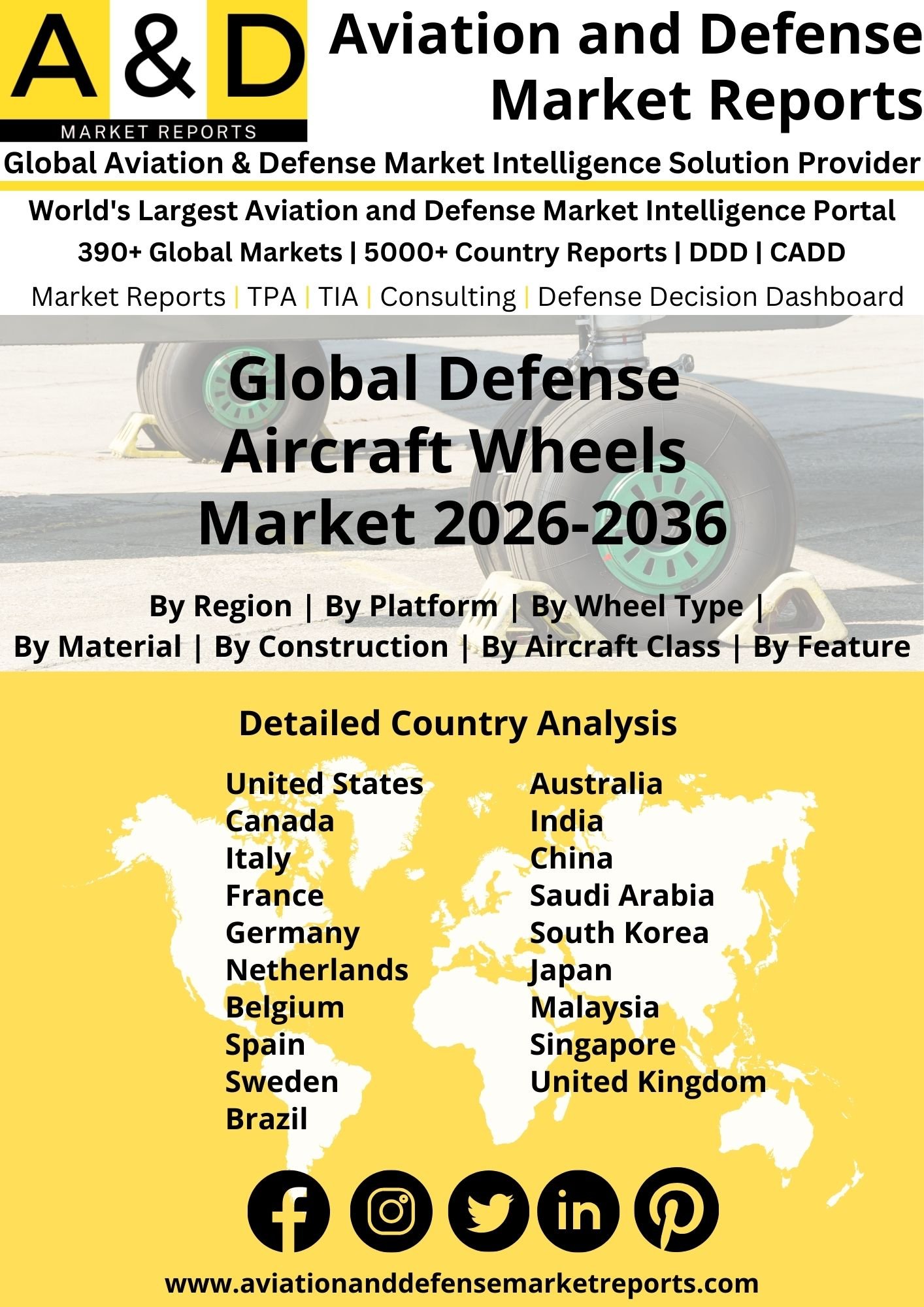
Global Defense Aircraft Wheels Market includes specialized wheels used in fighter jets, transport aircraft, helicopters, and unmanned aerial vehicles. These components are designed to handle extreme operational stress, including high-speed landings, short runways, aircraft carrier operations, and rough terrain. Reliable wheel performance is essential for safe takeoffs, landings, and ground maneuvering.
Modern defense aircraft wheels use advanced alloys and composite materials to deliver high strength with reduced weight. This balance improves fuel efficiency and overall aircraft performance. In addition, wheels are closely integrated with braking systems and landing gear assemblies, ensuring stability and precise control during demanding operations. Their durability directly supports mission readiness by minimizing downtime and maintenance delays.
Global Defense Aircraft Wheels Market Drivers
Technological advancement remains a primary growth driver. Continuous improvements in materials science have enhanced heat resistance, load-bearing capacity, and wear performance. These innovations allow aircraft to operate safely in combat zones and extreme climates, from desert bases to icy airstrips.
Fleet modernization programs are also accelerating demand. Many countries are upgrading legacy aircraft and investing in next-generation platforms. These advanced aircraft require high-performance wheels capable of supporting greater payloads and faster landing speeds.
Rising defense budgets further contribute to market expansion. Governments are prioritizing rapid deployment capabilities and operational resilience. As a result, reliable landing systems, including wheels, are seen as essential components in maintaining air superiority.
Global Defense Aircraft Wheels Market Technology Trends
A key trend is the shift toward lightweight, high-strength materials. Reduced wheel weight lowers overall aircraft mass, which improves maneuverability and fuel efficiency without sacrificing durability. This development is particularly important for high-altitude missions and carrier-based operations.
Additive manufacturing, commonly known as 3D printing, is also gaining traction. This method allows manufacturers to produce complex wheel geometries and prototype designs quickly. It supports faster production cycles and more flexible supply chains, which is valuable for defense fleets requiring customized solutions.
Another emerging trend involves hybrid and electric propulsion systems in military aviation. These new power systems may require wheels designed to manage different weight distributions and performance characteristics. At the same time, sustainability initiatives are encouraging the use of retreadable wheels and environmentally friendly materials to extend service life.
Market Growth Outlook
The market outlook remains strong due to increasing investment in aircraft performance and survivability. Continuous engineering improvements are enhancing resistance to impact, heat, and structural fatigue. These features ensure dependable performance in high-tempo combat scenarios.
Integrated landing solutions are also shaping future growth. Modern wheels are being paired with smart sensors, anti-skid braking systems, and automated ground controls. This integration improves aircraft handling, reduces turnaround time, and supports coordinated multinational operations.
Aircraft survivability is another focus area. Wheels designed for rapid repair or low maintenance requirements provide operational advantages in contested environments. Their reliability ensures that aircraft can return to service quickly after demanding missions.
Market Recent Developments
Recent advancements highlight stronger yet lighter composite materials capable of enduring repeated high-impact landings. These improvements increase fleet agility and operational flexibility.
Digital monitoring integration is another significant development. Predictive maintenance sensors and real-time performance analytics help identify potential issues before failure occurs. This capability enhances logistics planning and reduces unexpected downtime.
Sustainability is also becoming more important. Manufacturers are exploring recyclable materials and energy-efficient production techniques while maintaining strict military performance standards.
Overall, defense aircraft wheels remain fundamental to military aviation. As air forces modernize fleets and adopt new technologies, the demand for durable, intelligent, and high-performance wheel systems is expected to grow steadily.