
Global Defense Meteorological Sensors (Crosswind) Market

$4,500.00

Enquire Now

Global Defense Meteorological Sensors (Crosswind) Market focuses on specialized sensors measuring crosswind conditions for military applications. These devices enhance precision in artillery, aviation, and naval operations by providing real-time wind data. Key players innovate compact, rugged systems integrated into defense platforms, driven by demands for accuracy in harsh environments.

Go To Country Report Page Track this market real time on DDD
Global Defense Meteorological Sensors (Crosswind) Market Forecast & Market Size (In Value/ USD (Million/ Billion))
Global Defense Meteorological Sensors (Crosswind) Market Forecast & Market Size (In Volume/ Units)
Country Wise Defense Meteorological Sensors (Crosswind) Market Forecast & Market Size (In Value/ USD (Million/ Billion))
Country Wise Defense Meteorological Sensors (Crosswind) Market Forecast & Market Size (In Volume/ Units ‘000)

Description

Global Defense Meteorological Sensors (Crosswind) Market Overview

Global Defense Meteorological Sensors (Crosswind) Market focuses on specialized sensors measuring crosswind conditions for military applications. These devices enhance precision in artillery, aviation, and naval operations by providing real-time wind data. Key players innovate compact, rugged systems integrated into defense platforms, driven by demands for accuracy in harsh environments.

Global Defense Meteorological Sensors (Crosswind) Market Technology Trends

Advancements in defense meteorological sensors for crosswind measurement emphasize miniaturized, high-precision technologies. LIDAR and Doppler-based systems lead innovations, offering non-contact, long-range detection with superior resolution over traditional anemometers. Integration of AI algorithms improves data processing, enabling predictive analytics for wind shear and turbulence.

Solid-state sensors gain traction for their durability in extreme conditions, reducing maintenance needs. Fiber-optic and laser Doppler velocimetry enhance portability for drones and unmanned systems. Multi-sensor fusion combines crosswind data with temperature and humidity, boosting overall environmental awareness.

Hyperspectral imaging refines measurements in obscured visibility, while edge computing allows onboard real-time analysis. Quantum sensing emerges as a frontier, promising unprecedented sensitivity. These trends align with 5G-enabled networks for seamless data sharing across platforms, elevating tactical decision-making in dynamic battlefields.

Market Integration Landscape

Integration of crosswind sensors into defense systems spans artillery fire control, aircraft navigation, and naval gunnery. These sensors embed seamlessly into fire-direction centers, providing vital inputs for ballistic corrections, ensuring first-round hits.

In aviation, they couple with inertial navigation and AESA radars, compensating for wind effects during precision strikes and drone operations. Naval platforms incorporate them into weapon management systems, optimizing missile trajectories amid sea-state variations.

Unmanned systems benefit from compact integrations, enhancing swarm autonomy. Challenges include standardization across NATO and allied forces, addressed through modular interfaces like MIL-STD connectors. Cybersecurity protocols safeguard data feeds, while open architectures facilitate upgrades. Overall, integration fosters network-centric warfare, linking sensors to command ecosystems for superior environmental intelligence.

Drivers of Global Defense Meteorological Sensors (Crosswind) Market Growth

Rising geopolitical tensions fuel demand for precise munitions, spotlighting crosswind sensors as critical enablers. Modern conflicts highlight the need for all-weather accuracy, propelling adoption in hypersonic and long-range artillery programs.

Electrification of platforms accelerates integration, as electric actuators demand finer environmental compensation. Drone proliferation, especially in ISR and loitering munitions, requires lightweight sensors for extended endurance.

Climate variability intensifies requirements for robust, adaptive systems capable of extreme weather profiling. Allied interoperability pushes standardized solutions, expanding export markets. Budget reallocations toward precision-guided technologies prioritize sensor upgrades over legacy systems.

Sustainability mandates reduce logistical footprints, favoring low-power, durable designs. Finally, AI-driven warfare evolves sensor roles from measurement to predictive tools, sustaining long-term growth.

Market Future Outlook

The market trajectory points toward ubiquitous integration in next-generation platforms, with AI-enhanced sensors delivering predictive crosswind modeling. Hypersonic defense and space-domain operations will demand ultra-high-frequency measurements, spurring quantum and photonic breakthroughs.

Swarming autonomy in UAVs elevates multi-node sensor networks, leveraging 5G/6G for low-latency fusion. Climate-resilient designs address rising environmental extremes, incorporating adaptive calibration.

Sovereign production rises in emerging powers, balancing US/European dominance. Export controls evolve with dual-use tech scrutiny. Overall, convergence with directed energy weapons and cognitive EW systems positions crosswind sensors as foundational to hyper-precision warfare.
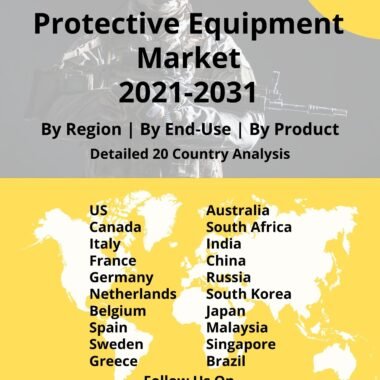

Table of Contents

Defense Meteorological Sensors (Crosswind) Market – Table of Contents

Defense Meteorological Sensors (Crosswind) Market Report Definition           

Defense Meteorological Sensors (Crosswind) Market Segmentation 


–By Region

–By Platform

–By Mode

–By Integration


Defense Meteorological Sensors (Crosswind) Market Analysis for next 10 Years

The 10-year Defense Meteorological Sensors (Crosswind) Market analysis would give a detailed overview of Defense Meteorological Sensors (Crosswind) Market growth, changing dynamics, technology adoption overviews and the overall market attractiveness is covered in this chapter.

Market Technologies of Defense Meteorological Sensors (Crosswind) Market

This segment covers the top 10 technologies that is expected to impact this market and the possible implications these technologies would have on the overall market.

Global Defense Meteorological Sensors (Crosswind) Market Forecast  

The 10-year Defense Meteorological Sensors (Crosswind) Market forecast of this market is covered in detailed across the segments which are mentioned above.

Regional Defense Meteorological Sensors (Crosswind) Market Trends & Forecast

The regional counter drone market trends, drivers, restraints and Challenges of this market, the Political, Economic, Social and Technology aspects are covered in this segment. The market forecast and scenario analysis across regions are also covered in detailed in this segment. The last part of the regional analysis includes profiling of the key companies, supplier landscape and company benchmarking. The current market size is estimated based on the normal scenario.

North America

– Drivers, Restraints and Challenges

– PEST

– Market Forecast & Scenario Analysis

– Key Companies

– Supplier Tier Landscape

– Company Benchmarking

Europe

Middle East

APAC

South America

Country Analysis of Defense Meteorological Sensors (Crosswind) Market

This chapter deals with the key defense programs in this market, it also covers the latest news and patents which have been filed in this market. Country level 10 year market forecast and scenario analysis are also covered in this chapter.

US

– Defense Programs

– Latest News

– Patents

– Current levels of technology maturation in this market

– Market Forecast & Scenario Analysis

Canada

Italy

France

Germany

Netherlands

Belgium

Spain

Sweden

Greece

Australia

South Africa

India

China

Russia

South Korea

Japan

Malaysia

Singapore

Brazil

Opportunity Matrix for Defense Meteorological Sensors (Crosswind) Market

The opportunity matrix helps the readers understand the high opportunity segments in this market.

Expert Opinions on Defense Meteorological Sensors (Crosswind) Market Report

Hear from our experts their opinion of the possible analysis for this market.

Conclusions

About Aviation and Defense Market Reports


Countries Covered in Global Defense Meteorological Sensors (Crosswind) Market

Canada

Italy

France

Germany

Netherlands

Belgium

Spain

Sweden

Greece

Australia

South Africa

India

China

Russia

South Korea

Japan

Malaysia

Singapore

Brazil


Regions covered in Global Defense Meteorological Sensors (Crosswind) Market

Europe

Middle East

APAC

South America

Segments covered in Global Defense Meteorological Sensors (Crosswind) Market

–By Region

–By Platform

–By Type

Aviation and Defense Market Reports


TPA | TIA | Consulting | Market Reports | Defense Decision Dashboard


Our Defense Report - Our Team Has Worked on More Than 250+ Individual Products / Markets