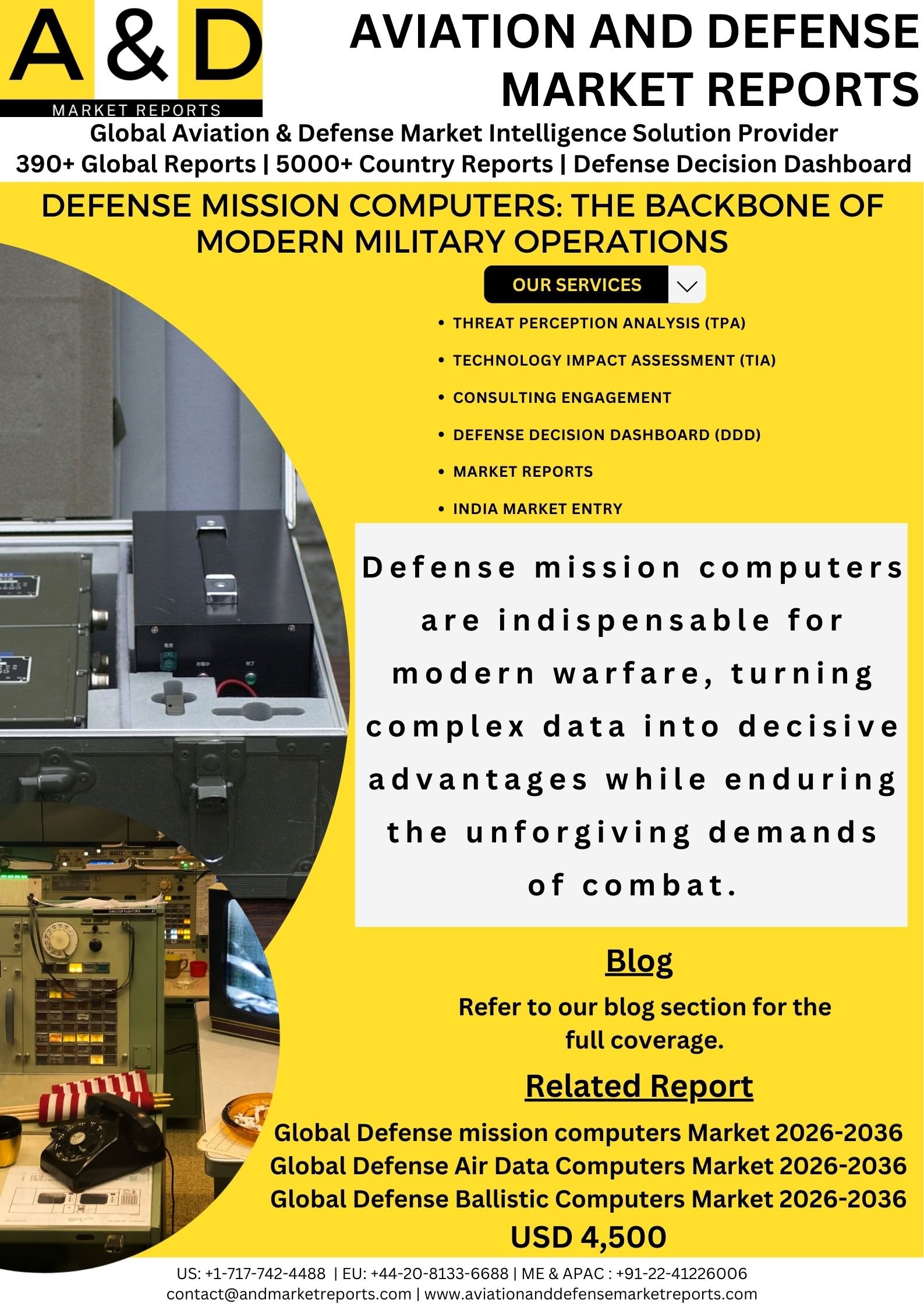
In today’s high-stakes defense landscape, where split-second decisions can determine mission success or failure, defense mission computers serve as the central nervous system of military platforms. These specialized, rugged computing systems process vast amounts of data in real time, integrate sensors, manage weapons, enable communications, and provide situational awareness across air, land, sea, and space domains. Unlike commercial computers, mission computers are engineered to withstand extreme conditions while delivering uncompromising performance and security.
What Are Defense Mission Computers?
Defense mission computers, also known as rugged mission processors or military-grade mission computers, are high-performance embedded systems designed specifically for defense applications. They act as the primary processing unit that governs a platform’s operational systems, coordinating functions like sensor fusion, navigation, targeting, weapons control, and data sharing.
These systems are built to meet stringent military standards, such as **MIL-STD-810** for environmental resilience (shock, vibration, temperature extremes) and often incorporate cybersecurity features to protect classified information. They prioritize **Size, Weight, and Power (SWaP)** optimization, making them suitable for space-constrained environments like fighter jets, unmanned vehicles, or naval vessels.
Mission computers transform raw sensor data into actionable intelligence, enabling operators—whether pilots, commanders, or autonomous systems—to maintain a common operational picture of the battlefield.
Key Features and Design Requirements
The harsh realities of military operations demand exceptional durability and reliability from mission computers.
– Ruggedization — Sealed enclosures, fanless cooling, and resistance to dust, moisture, shock, vibration, and extreme temperatures (often -40°C to +71°C or beyond) ensure uninterrupted operation in deserts, arctic conditions, or high-altitude flights.
– High-Performance Processing — Modern units feature multi-core processors (e.g., Intel Core i7 or Xeon), GPUs for AI tasks, and support for real-time data processing. Many integrate NVIDIA accelerators for edge AI applications like object detection or threat classification.
– Modularity and Open Architectures — Standards like **OpenVPX**, **SOSA** (Sensor Open Systems Architecture), and modular designs allow easy upgrades, interoperability across platforms, and reduced lifecycle costs. This shift from proprietary to open systems enables one mission computer to serve multiple aircraft or vehicles.
– Security and Reliability — Hardware-based encryption, secure boot, and redundancy features protect against cyber threats and ensure fault tolerance in mission-critical scenarios.
– Interfaces and I/O — Extensive connectivity for sensors, datalinks, displays, and payloads supports seamless integration.
These features make mission computers mission-enablers, boosting operational efficiency and tactical edge.
Defense Mission Computers – Applications Across Defense Platforms
Defense mission computers find use in diverse environments:
– Aircraft and Avionics — In fighter jets, helicopters, and UAVs, they handle flight management, sensor fusion, targeting, and display processing. For example, they provide pilots with real-time battlefield views and control autonomous flight in drones.
– Ground Vehicles and Unmanned Systems — Mounted on tanks, UGVs, or command vehicles, they support navigation, obstacle avoidance, path planning, and vehicle autonomy.
– Naval and Maritime — On ships or submarines, they manage command-and-control, radar integration, and electronic warfare.
– Space and C5ISR — Compact units enable satellite operations, space missions, or command centers with reliable computing in zero-gravity or radiation-heavy settings.
Their versatility allows deployment from tactical edge to strategic headquarters.
Leading Manufacturers and Examples
Several companies lead in developing defense mission computers, offering COTS (commercial off-the-shelf) and custom solutions.
– Curtiss-Wright— Their DuraCOR series provides small form factor (SFF) rugged mission computers, MIL-STD-qualified for C5ISR applications with modular designs and powerful graphics processing.
– Collins Aerospace (RTX) — Offers adaptable mission computers like the FMC-4000 series for flight missions and integrated processing units proven in harsh helicopter and fixed-wing environments.
– Kontron — Delivers compact and modular defense computers, including the COBALT family for application-specific I/O in military profiles.
– Mercury Systems — Focuses on next-generation, open-architecture mission computers that are platform-agnostic, supporting rapid upgrades and AI integration.
Other notable players include Core Systems for battle-tested rugged solutions, Neousys for extreme-rugged AI GPU computers, and Argon (Spectra Defense) for SWaP-optimized ACB series mission computers.
These manufacturers emphasize trusted supply chains, long lifecycles, and compliance with defense standards.
Future Trends: AI, Edge Computing, and Autonomy
The evolution of defense mission computers is accelerating with emerging technologies. AI at the edge enables real-time inferencing for autonomous navigation, predictive maintenance, and threat detection without relying on distant networks. Rugged GPU-integrated systems process vision-based data in warzones.
Trends include greater adoption of open standards for faster integration, reduced costs, and future-proofing. As platforms become more networked, mission computers will support secure data sharing across domains, enhancing joint operations.
Cyber resilience and software-defined capabilities will grow, allowing over-the-air updates and adaptability to new threats.
Conclusion
Defense mission computers are indispensable for modern warfare, turning complex data into decisive advantages while enduring the unforgiving demands of combat. As threats evolve and technology advances, these systems will remain at the heart of military superiority—reliable, secure, and ready for any mission.