
Description
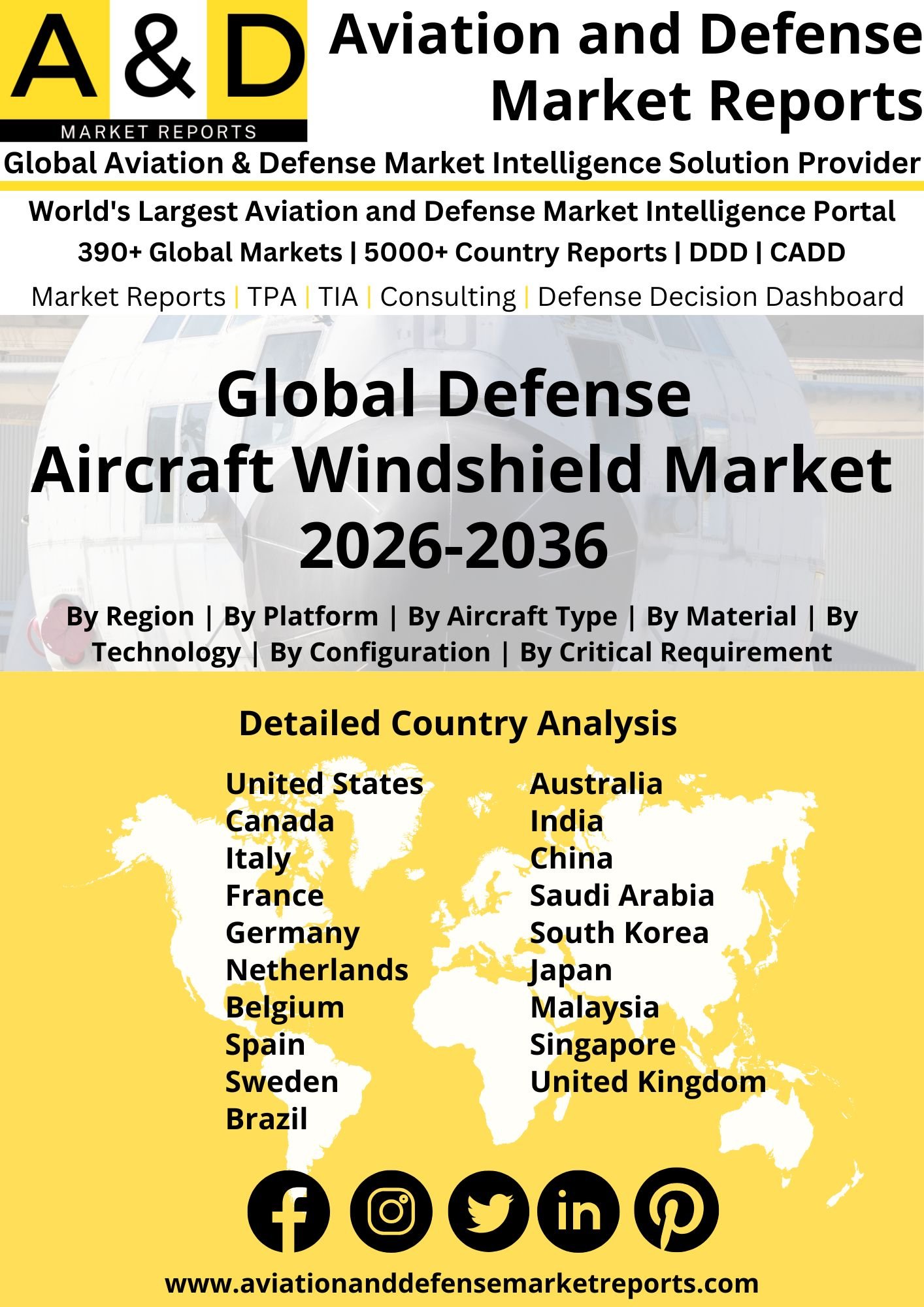
Global Defense Aircraft Windshield Market Overview
The global defense aircraft windshield market plays an important role in military aviation. Windshields provide pilots with clear forward visibility during flight. At the same time, they protect against strong winds, debris, bird strikes, and ballistic threats. Because military aircraft operate at high speeds and altitudes, windshields must withstand heavy pressure and extreme temperatures.
Modern defense aircraft windshields use advanced transparent materials. These materials offer high strength without reducing optical clarity. As a result, pilots can maintain clear vision even in poor weather or combat conditions. In addition, windshields support heads-up displays and other avionics systems. This integration allows flight data to appear directly in the pilot’s line of sight, which improves reaction time and decision-making.
Windshields also contribute to overall mission success. Strong structural integrity ensures safety during rapid maneuvers or sudden impacts. Furthermore, integration with sensors and communication systems improves situational awareness. By combining visual clarity with advanced technology, these systems enhance navigation, targeting, and coordination with allied forces.
Growth Drivers in the Global Defense Aircraft Windshield Market
Technological advancement is a key driver of the global defense aircraft windshield market. Improved materials and coatings increase impact resistance while reducing weight. Therefore, aircraft can perform better in harsh environments such as high altitudes or combat zones.
Rising global defense spending is another major factor. Many nations are modernizing their air fleets to meet evolving security threats. As aircraft systems become more advanced, demand for high-performance windshields continues to grow.
The need for better situational awareness also supports market expansion. Modern windshields improve visibility and support early threat detection. This allows pilots to identify risks from greater distances. Consequently, aircraft gain a tactical advantage in dynamic combat situations.
Technology Trends in the Global Defense Aircraft Windshield Market
Material innovation remains a leading trend in the global defense aircraft windshield market. Lightweight composites now provide stronger impact protection and better resistance to environmental damage. Anti-fog, anti-scratch, and thermal-resistant coatings further improve performance. As a result, windshields maintain clarity during demanding missions.
Another important trend is system integration. Windshields now work closely with heads-up displays, augmented reality systems, and onboard sensors. Through this integration, pilots receive real-time flight and targeting information. Faster access to data supports quicker and more accurate decisions.
There is also a growing focus on survivability and stealth. Advanced coatings can reduce radar reflection while maintaining transparency. Meanwhile, improved designs enhance protection without increasing drag. These features allow aircraft to operate with lower detection risk in high-threat environments.
Future Outlook Market
The outlook for the global defense aircraft windshield market remains positive. Continuous research is improving transparency materials, coatings, and integration technologies. These advancements increase durability, reliability, and operational efficiency.
At the same time, global security concerns are driving sustained defense investment. As air forces modernize and adopt more advanced aircraft, high-performance windshield systems will remain essential. Over the coming years, steady innovation and rising military budgets are expected to support long-term market growth and technological progress.