
Description
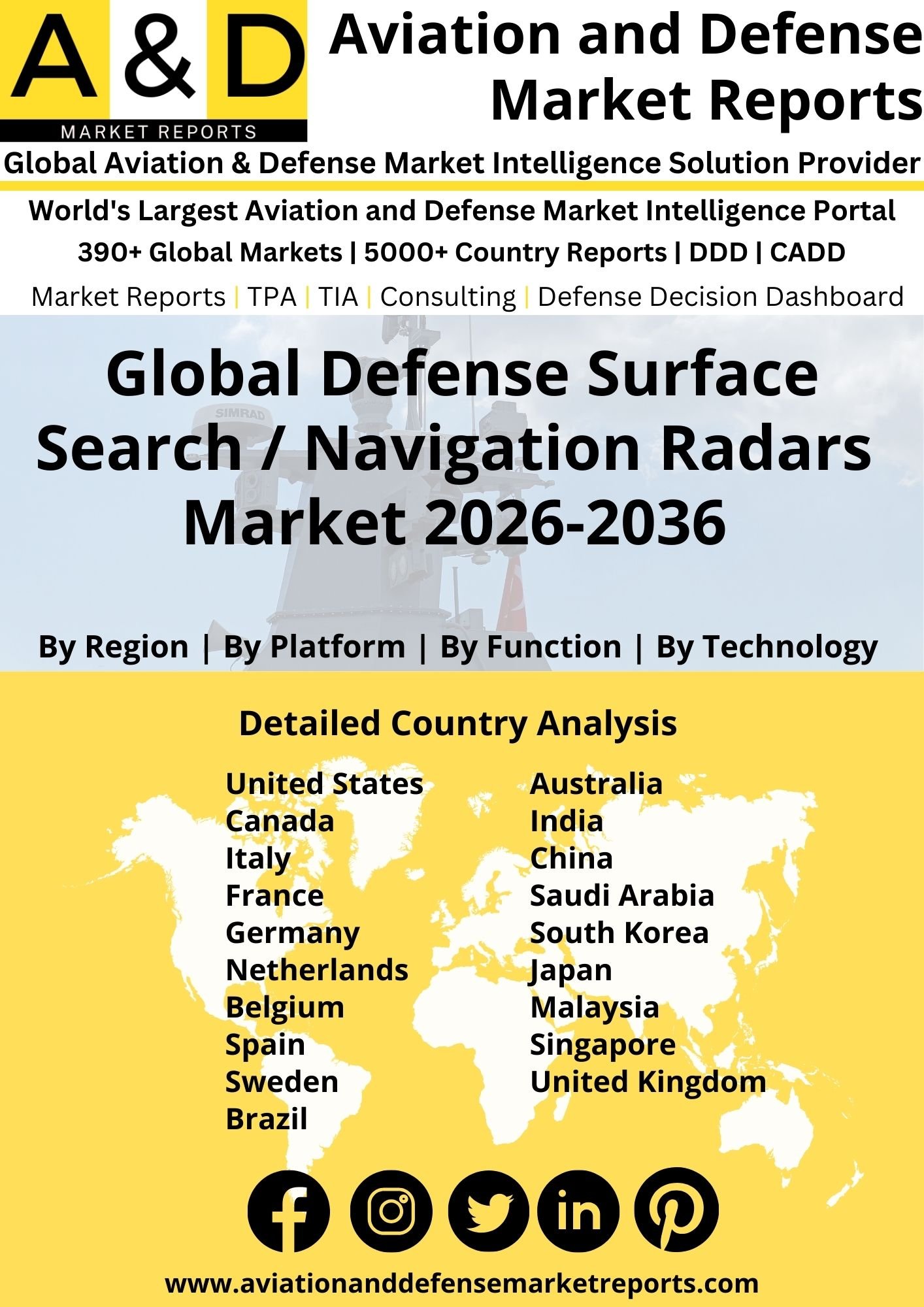
Global Defense Surface Search / Navigation Radars Market Overview
The Global Defense Surface Search / Navigation Radars Market centers on maritime radar systems that support safe navigation and surface target detection. These radars act as the main situational awareness tool for ships at sea. Although they do not control weapons, they remain vital for both safety and mission readiness. In the past, fleets relied on magnetron-based scanners. Today, however, solid-state systems deliver clearer images and stronger clutter suppression. As naval operations expand into crowded waters, demand for dependable navigation radar continues to grow.
Global Defense Surface Search / Navigation Radars Market Technology Trends
In recent years, technology upgrades have reshaped the Global Defense Surface Search and Navigation Radars Market. Manufacturers now use solid-state transmitters and digital processing to improve reliability. As a result, maintenance needs have decreased. In addition, frequency-modulated continuous wave designs provide sharp short-range resolution. This feature is especially useful in congested sea lanes. Moreover, low probability of intercept helps reduce electromagnetic exposure. Modern radars also include automatic tracking, rain clutter control, and small target highlighting. Therefore, crews can detect fast boats and low-profile threats with greater confidence.
Global Defense Surface Search / Navigation Radars Market Integration Landscape
Beyond hardware improvements, integration defines the Global Defense Surface Search and Navigation Radars Market. Navigation radars feed data into integrated bridge and combat systems. Consequently, operators see a shared and consistent surface picture. Radar contacts also link with Automatic Identification System data to confirm vessel identity. Furthermore, naval platforms combine radar inputs with electro-optical sensors and electronic support measures. This layered fusion strengthens awareness and improves response time. At the same time, it supports both navigation safety and tactical planning.
Radars Market Growth Drivers
Several forces support expansion of the Global Defense Surface Search and Navigation Radars Market. First, naval modernization programs continue across many regions. In parallel, coast guard fleets are upgrading aging vessels. Because ships operate more often in littoral zones, they require strong close-range detection with low false alarms. Additionally, harsh weather and ice navigation demand durable and reliable radar systems. Stealth requirements also influence design choices, encouraging low-sidelobe antennas and reduced signature housings. Together, these factors sustain long-term procurement activity.
Market Future Outlook
Looking ahead, the Global Defense Surface Search and Navigation Radars Market will move toward greater automation. Artificial intelligence will assist crews by classifying contacts more quickly. At the same time, tighter integration with electro-optical systems will allow faster visual confirmation. Over time, multi-function solid-state arrays may combine navigation and surveillance roles into a single system. Even so, the core mission will remain unchanged. Surface search and navigation radars will continue to ensure safe transit while supporting surface threat monitoring in complex maritime environments.