
Description
Global Defense Helmet Mounted Displays (HMD) Market Overview
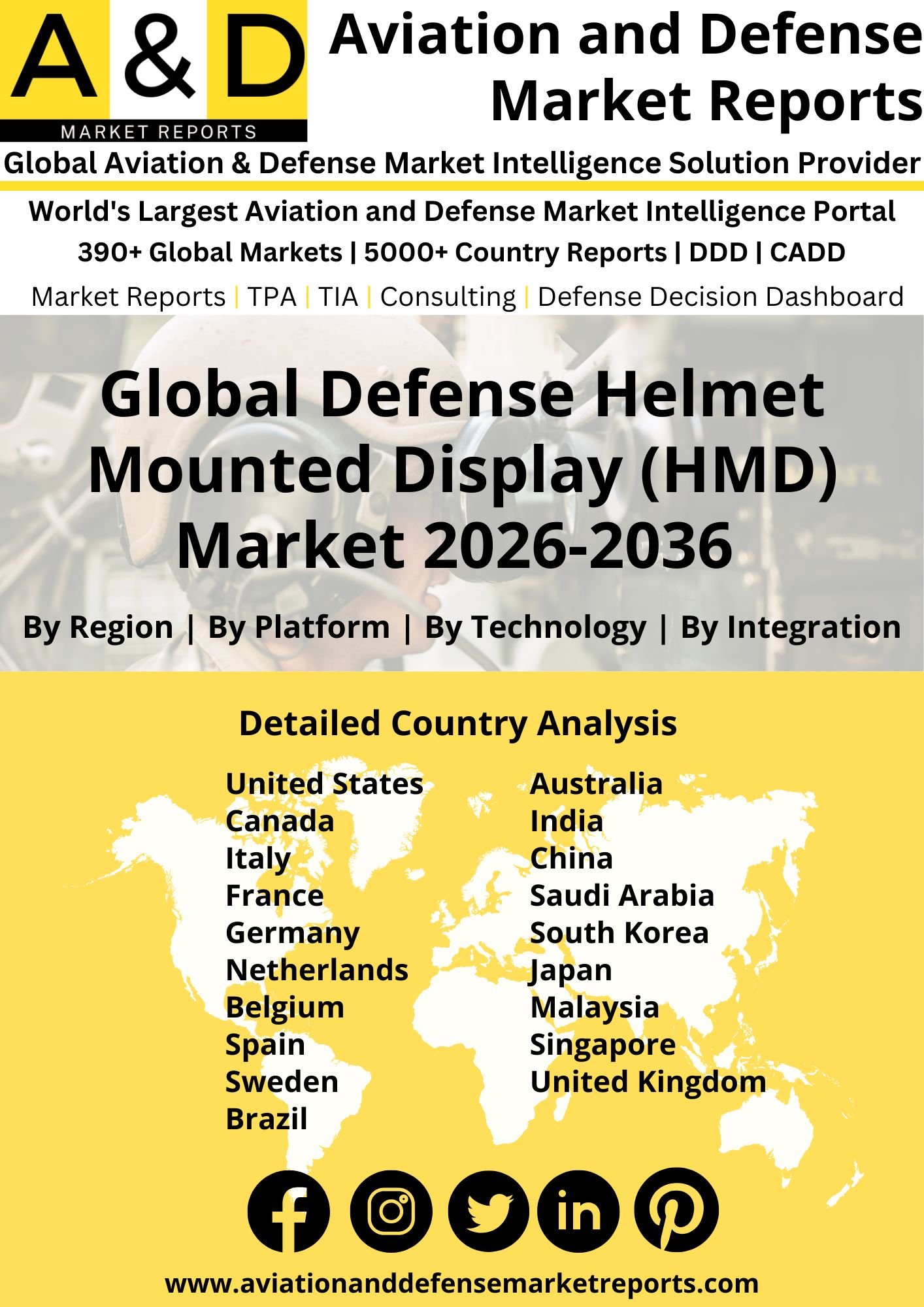
The Global Defense Helmet Mounted Displays (HMD) Market covers advanced wearable display systems used by military pilots and soldiers. These systems project critical data directly into the user’s field of view. As a result, users access targeting, navigation, and sensor information without looking away. HMDs improve situational awareness in combat, low-light conditions, and high-speed operations. Moreover, they support faster reactions and accurate threat engagement. These capabilities give defense forces a clear tactical advantage in modern warfare.
Global Defense Helmet Mounted Displays (HMD) Market Drivers
Growth in the Global Defense Helmet Mounted Displays (HMD) Market is driven by military modernization and soldier digitization programs. First, defense forces demand better situational awareness on complex battlefields. Therefore, HMD adoption continues to rise. These systems allow warfighters to stay focused on threats while viewing real-time data. In addition, improvements in lightweight displays and sensor integration boost comfort and reliability. Rising defense spending further accelerates adoption, as nations upgrade equipment to support precision and survivability.
Market Trends
Several trends shape the Global Defense Helmet Mounted Displays (HMD) Market. One major trend involves improved display performance. New systems offer higher resolution and wider fields of view. As a result, users see clearer images in darkness, fog, or urban terrain. Another key trend is sensor fusion. HMDs now integrate data from night vision, thermal imaging, drones, and radar. Consequently, users gain a unified battlefield view. Designers also focus on lightweight and ergonomic structures. This reduces fatigue and improves long-duration performance.
Market Growth Outlook
The Global Defense Helmet Mounted Displays (HMD) Market shows strong growth potential. Demand continues to rise for networked and connected soldier systems. Therefore, HMDs play a central role in data sharing across units and platforms. Advances in optics and processing improve reliability in harsh conditions. Moreover, AI and edge computing enhance real-time analysis. These factors increase mission success while reducing cognitive load. As defense strategies evolve, HMDs become essential tools for information dominance.
Market Recent Developments
Recent developments in the Global Defense Helmet Mounted Displays (HMD) Market highlight rapid technological progress. Manufacturers now deliver clearer visuals and faster data processing. In addition, HMDs integrate more deeply with tactical networks and unmanned systems. This supports faster threat detection and better coordination. Modular designs also gain traction, allowing easier upgrades and longer service life. Furthermore, mixed reality features improve perception without increasing detectability. As a result, HMDs strengthen warfighter effectiveness across air and ground operations.