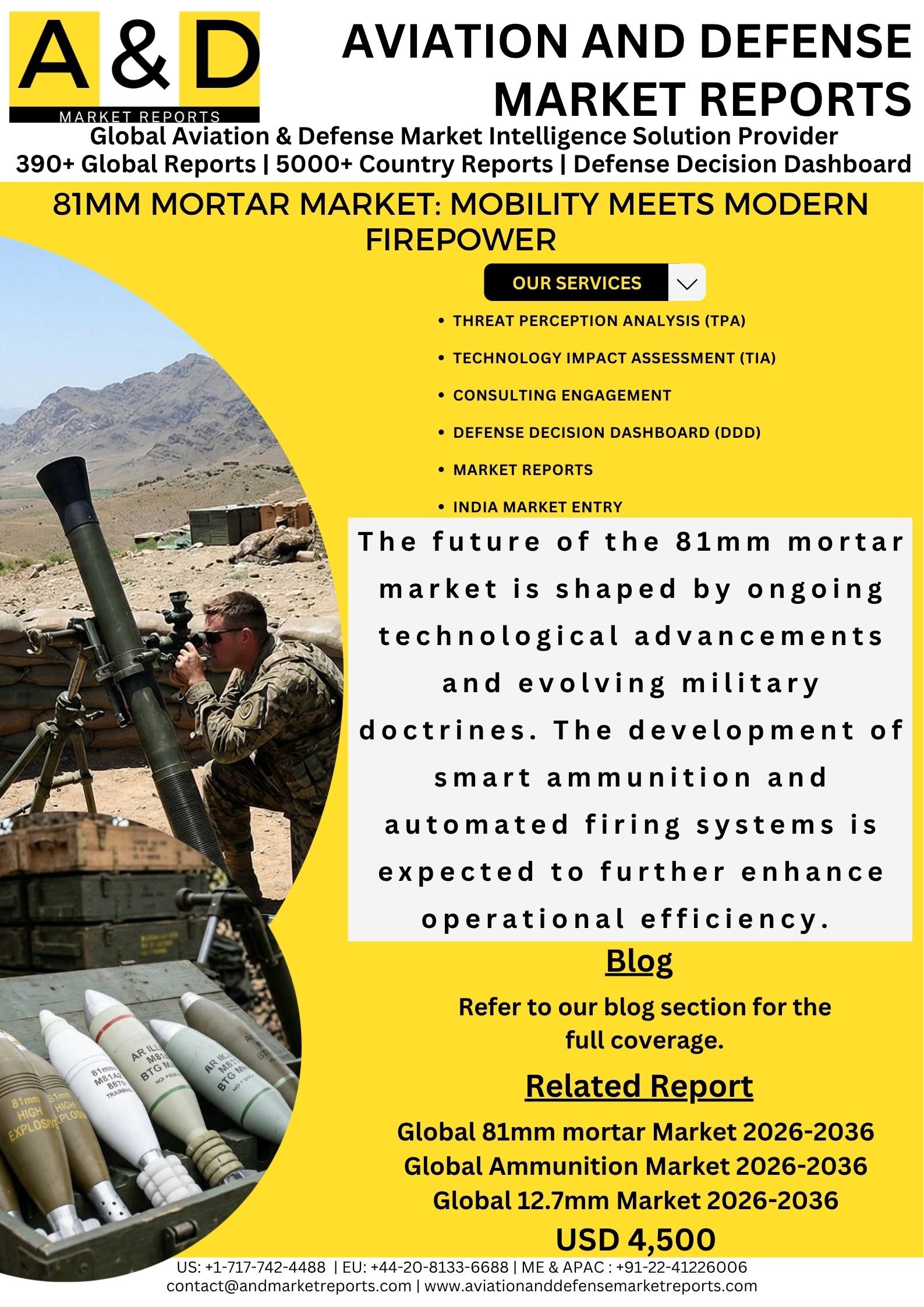
The 81mm mortar market represents a critical segment within modern indirect fire weapon systems, offering a balance between mobility, firepower, and operational flexibility. Widely deployed by infantry units across the world, 81mm mortars serve as an essential battlefield asset capable of delivering high-angle fire support in diverse combat environments. These systems are valued for their ability to operate in rugged terrains where heavier artillery cannot be deployed efficiently. As defense forces continue to modernize and adapt to evolving threats, the demand for versatile and rapidly deployable weapon systems has strengthened the position of 81mm mortars in global defense procurement strategies.
Evolution of 81mm Mortar Systems:
The development of 81mm mortars can be traced back to early 20th-century warfare, where the need for portable artillery became evident. Over time, these systems have undergone significant transformation in terms of materials, firing mechanisms, and targeting capabilities. Early designs relied heavily on manual calculations and basic sighting tools, limiting accuracy and response time. Modern variants, however, incorporate advanced fire control systems, digital targeting aids, and improved barrel designs that enhance both range and precision. This evolution reflects a broader shift toward integrating traditional weapon platforms with modern technologies to meet the demands of contemporary warfare.
Operational Advantages and Battlefield Role:
One of the primary strengths of 81mm mortars lies in their operational versatility. These systems are lightweight enough to be transported by infantry units while still delivering substantial firepower. They are particularly effective in mountainous, urban, and forested terrains where line-of-sight weapons face limitations.
Mortars can engage targets hidden behind obstacles, making them indispensable for suppressing enemy positions and providing cover for advancing troops. Additionally, their ability to deliver various types of ammunition, including high-explosive, smoke, and illumination rounds, enhances their tactical utility across multiple mission scenarios.
Technological Advancements in Modern Mortars:
Recent advancements in technology have significantly improved the performance and effectiveness of 81mm mortar systems. Digital fire control systems now allow for faster target acquisition and more accurate firing solutions. Integration with GPS and battlefield management systems enables coordinated operations and reduces the likelihood of errors. Enhanced ammunition designs, including guided and precision rounds, have further increased the lethality and efficiency of these systems. These innovations have transformed the 81mm mortar from a basic support weapon into a sophisticated component of network-centric warfare.
Global Demand and Market Drivers:
The global demand for 81mm mortars is driven by several key factors, including rising defense budgets, ongoing military modernization programs, and the increasing need for flexible combat solutions. Many countries are investing in upgrading their infantry capabilities, which includes the acquisition of advanced mortar systems.
The growing emphasis on rapid deployment and mobility has also contributed to the popularity of 81mm mortars, as they can be quickly transported and deployed in various operational settings. Additionally, asymmetric warfare and counterinsurgency operations have highlighted the importance of adaptable and responsive fire support systems.
Regional Market Trends:
Different regions exhibit varying trends in the adoption and development of 81mm mortar systems. In North America and Europe, the focus is on modernization and integration with advanced communication and targeting networks. These regions are investing in precision-guided munitions and digital fire control systems to enhance operational effectiveness. In contrast, countries in Asia-Pacific and the Middle East are expanding their mortar inventories to strengthen their defense capabilities amid regional security concerns. These regions are also exploring indigenous production and technology transfer agreements to reduce dependency on external suppliers.
Competitive Landscape and Key Players:
The 81mm mortar market is characterized by the presence of several established defense manufacturers and emerging players. Companies are focusing on innovation, product differentiation, and strategic partnerships to maintain a competitive edge.
Key areas of competition include system portability, firing range, accuracy, and integration capabilities. Manufacturers are also investing in research and development to introduce next-generation mortar systems that align with modern military requirements. Collaboration with defense agencies and participation in international defense exhibitions play a crucial role in expanding market presence.
Challenges and Constraints:
Despite its growth potential, the 81mm mortar market faces certain challenges. Budget constraints in some regions can limit procurement and modernization efforts. Additionally, the increasing focus on advanced missile and drone systems may divert attention and resources away from traditional artillery platforms.
Regulatory restrictions and export controls can also impact the global trade of mortar systems. Furthermore, the need for skilled personnel to operate and maintain advanced mortar systems presents an additional challenge for some defense forces.
Integration with Modern Warfare Concepts:
The integration of 81mm mortars into modern warfare frameworks has significantly enhanced their relevance. These systems are now part of broader network-centric operations, where real-time data sharing and coordinated targeting are essential.
Mortars can be linked with unmanned aerial vehicles and surveillance systems to improve target accuracy and response time. This level of integration ensures that mortar units can operate effectively alongside other combat systems, contributing to a cohesive and efficient battlefield strategy.
Future Outlook of the 81mm Mortar Market:
The future of the 81mm mortar market is shaped by ongoing technological advancements and evolving military doctrines. The development of smart ammunition and automated firing systems is expected to further enhance operational efficiency. As armed forces continue to prioritize mobility and rapid response capabilities, the demand for lightweight and versatile mortar systems is likely to increase. Additionally, the incorporation of artificial intelligence and advanced analytics into fire control systems may redefine how mortars are deployed and utilized in combat scenarios.